All statistics correct on 10 September 2026
Of the 22 drivers on the Formula 1 grid in 2026, who will still be there four years from now – and who replaces those who are not?
Predicting exactly who will be driving for each team at the first round of the 2030 F1 World Championship is almost an impossible task. But can we predict with a little more certainty how many of today’s drivers will still be there?
To give some context to our four year look into the future, let’s go four years backwards first – how many of the 2022 grid are still there in 2026?
Of the 20 drivers who started the 2022 Bahrain Grand Prix, 14 started the 2026 season (Sebastian Vettel was absent from that first race due to Covid, with Nico Hülkenberg taking his place). A 70% survival rate over four years – helped by the fact that no one moved between the end of 2023 and the beginning of 2024, a first in F1 – is probably more than I would have instinctively guessed. We could see something similar between 2026 and 2030.
The increasing longevity of F1 careers probably helps that stability.
Fernando Alonso is 45. Lewis Hamilton is 41. Nico Hülkenberg is 39. Bottas and Pérez were each brought back after a season off at 36.
Having multiple drivers active into their 40s is very rare. Before Alonso and Hamilton, only Michael Schumacher (final race aged 43), Kimi Räikkönen (42) and Pedro de la Rosa (41) had tossed their zimmer frames aside and jumped into an F1 car in the 21st century over the age of 40.
This is all a far cry from Jody Scheckter retiring at 30; James Hunt at 31; and Mika Hakkinen at 33. For context, that would be like Carlos Sainz, Pierre Gasly and Alex Albon retiring at the end of this year.
However, the current senior generation of drivers cannot go on forever and some will lose seats through performance. Opportunities will open up for new faces – the current youngsters on the grid will likely move up through the sport to bigger teams and an exciting generation coming through F2 and F3 will get their chance to shine.
So who will occupy the 22 seats in 2030?
This isn’t a prediction of where every driver will spend the next four seasons. It is simply my best guess at the 2030 F1 grid: the 22 drivers who will line up for the opening race and which team they will be driving for. I have 16 of the current 22 drivers surviving until 2030, with six new drivers joining the grid.
- So who will occupy the 22 seats in 2030?
- The Predicted 2030 Formula 1 Grid
- Which F1 Drivers Are Already Contracted to 2030?
- 2030 F1 Grid Predictions: Team by Team
- Which drivers will be gone by 2030?
- Which young drivers are most likely to reach F1 by 2030?
- Will There Be An American F1 Driver in 2030?
- 2030 F1 Grid FAQs
The Predicted 2030 Formula 1 Grid
| Team | Driver 1 | Driver 2 | Change from 2026 |
| McLaren | Lando Norris | Oscar Piastri | No change |
| Mercedes | Kimi Antonelli | Leonardo Fornaroli | George Russell out, Fornaroli in |
| Red Bull | Max Verstappen | Isack Hadjar | No change |
| Ferrari | Charles Leclerc | Ollie Bearman | Hamilton out, Bearman in |
| Williams | Alex Albon | Franco Colapinto | Sainz out, Colapinto in |
| Racing Bulls | Arvid Lindblad | Nikola Tsolov | Tsolov in, Lawson out |
| Aston Martin | George Russell | Lance Stroll | Alonso out, Russell in |
| Haas | Esteban Ocon | Rafael Câmara | Bearman out, Câmara in |
| Audi | Gabriel Bortoleto | Freddie Slater | Hulkenberg out, Slater in |
| Alpine | Pierre Gasly | Gabriele Mini | Colapinto out, Mini in |
| Cadillac | Carlos Sainz | Ugo Ugochukwu | Pérez and Bottas out, Sainz and Ugochukwu in |
Which F1 Drivers Are Already Contracted to 2030?
Two places on my 2030 grid already have considerably more certainty than the others. Lando Norris has signed with McLaren through the end of 2030, while Max Verstappen’s latest Red Bull deal also runs until the end of that season.
Charles Leclerc’s Ferrari contract extends beyond 2028 and Pierre Gasly is signed to Alpine until 2028, while most of the remaining grid becomes considerably less certain much sooner. Contracts can obviously be broken, but Norris and Verstappen are at least starting this exercise several steps ahead of everyone else.
2030 F1 Grid Predictions: Team by Team
McLaren 2030: Lando Norris and Oscar Piastri
2026: Lando Norris/Oscar Piastri
This could be a case of ‘if it isn’t broken, don’t fix it’.
Norris and Piastri will be 30 and 28 respectively at the start of the 2030 season. Both are already proven Grand Prix winners and Norris is the 2025 World Champion. They should both be entering their prime, Piastri in 2030 being the age Verstappen, Leclerc and Russell are today.
If either is to leave, it is more likely that it is at their behest rather than the team’s. If Verstappen were to leave Red Bull you could see either of the two moving to Red Bull to be the new number one.
McLaren’s main concern may be that it has nowhere to put its outstanding junior, Leonardo Fornaroli. That blockage has led to one of my bolder predictions: Fornaroli leaving the McLaren stable and heading to Mercedes. The fact that McLaren may pass on the 2024 F3 and 2025 F2 champion shows you just how strong the Norris/Piastri pairing is.
Mercedes 2030: Kimi Antonelli and Leonardo Fornaroli
2026: Kimi Antonelli/George Russell
One of my other bold predictions is that George Russell will not be at Mercedes. When Lewis Hamilton left Mercedes Russell was ready to become the team’s number one – however, it has not quite worked out like that. Kimi Antonelli jumped into the second car as an 18 year old and has not looked back, undoubtedly being quicker today than Russell.
Russell could be beginning to find himself in a Vettel at Ferrari situation. Vettel joined Ferrari as their number one in 2015, but spent his sixth and final season with them in 2020 being convincingly beaten by a 22 year old Charles Leclerc, the man Ferrari had identified as its long-term future.
Could Russell befall the same fate at the end of his sixth season with Mercedes? If Antonelli has become the clear number one by then, Mercedes may have little appetite for paying around $30m a year to retain Russell as the number two — and Russell may have even less appetite for accepting the role.
Leonardo Fornaroli is a speculative punt, but Toto Wolff has shown with the Antonelli pick that he is not afraid to give a young star a chance. You could say that with an F3 and F2 title behind him, Fornaroli is far more experienced today than Antonelli was at the beginning of the 2025 season. Mercedes have a strong stock of third drivers/development drivers/members of their junior programme, but none of these quite have Fornaroli’s potential.

Red Bull 2030: Max Verstappen and Isack Hadjar
2026: Max Verstappen/Isack Hadjar
For this prediction to come true it would mean Red Bull having a driving pairing that matches Sebastian Vettel and Mark Webber for longevity.
Max Verstappen will only be 32 when 2030 begins. Although he enjoys threatening to retire, predicting him to remain is overwhelmingly safer than predicting retirement.
Isack Hadjar remaining Verstappen’s teammate is the bolder prediction. But Hadjar might have the perfect level of ability – good enough to achieve solid results and support Verstappen, but not good enough to threaten him. Think of Bottas to Hamilton at Mercedes, or Barrichello to Schumacher at Ferrari.
This stability could create a bottleneck at Racing Bulls. Possibly the biggest threat to this prediction is a 22 year old Arvid Lindblad developing in such a way that Red Bull cannot afford to throw him away in favour of Hadjar.
Ferrari 2030: Charles Leclerc and Ollie Bearman
2026: Charles Leclerc/Lewis Hamilton
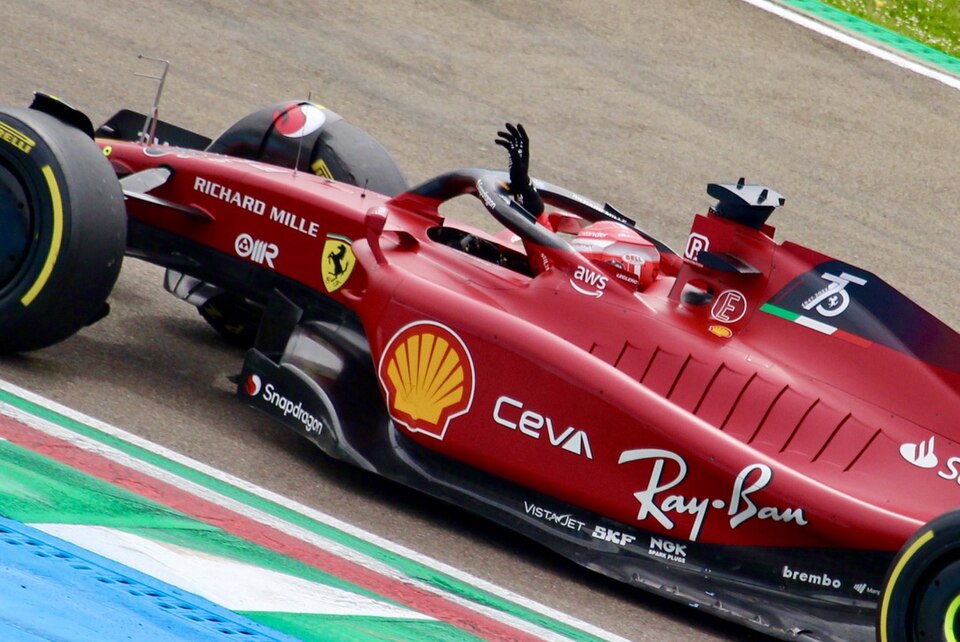
Fernando Alonso is the only man to start a Grand Prix at 45 years old since Graham Hill in 1975. Could Lewis Hamilton be the second in 55 years at the beginning of 2030? It must be highly unlikely. Expecting Hamilton to be on the grid then is a far more aggressive projection than predicting retirement.
Charles Leclerc will only be 32. In 2030 he would be going into his 12th season with Ferrari, one more than Michael Schumacher’s 11 with the team – and, with the ever expanding F1 season, he would comfortably be ahead of Schumacher in terms of race starts for the team.
Ollie Bearman could be the natural answer to the question of who replaces Lewis Hamilton at Ferrari. Bearman has already had the unusual experience of racing a Ferrari in F1. Thrown into Carlos Sainz’s car at Jeddah in 2024 aged just 18, he qualified 11th and finished seventh — ahead of both Lewis Hamilton and Lando Norris. It was about as convincing an audition as Ferrari could reasonably have asked for. He also speaks Italian, so there is no need for him to download Duolingo.
For Bearman, it is probably a case of when he replaces Hamilton, not if.
Williams 2030: Alex Albon and Franco Colapinto
2026: Alex Albon/Carlos Sainz
Predicting Williams’ future driver line-up is the most difficult so far. As a non-works team Williams could start 2030 towards the front of the grid or at the very back, either is realistic.
Alexander Albon will turn 34 in March 2030. As we saw earlier, many of the greats had retired by that age, but it now counts as middle rather than old age in modern F1. He is unlikely to be offered a seat at one of the bigger works teams, so in this exercise I assume he stays as the Williams team leader.
Carlos Sainz will be 35. I have not assumed he will be in retirement – I have assumed he will move on as remaining at Williams for a sixth season would be an anomaly in his F1 career (he has done three years at Toro Rosso, just over a year at Renault, two years at McLaren and four years at Ferrari).
Williams have a number of drivers in the young driver programme (which team doesn’t…?) but projecting any of Luke Browning, Kean Nakamura-Berta, Oleksandr Bondarev or Alessandro Giusti into an F1 seat feels quite bold today.
Franco Colapinto is known to Williams, he raced for them nine times in 2024 and did better than was anticipated. Projecting him into a Williams seat says as much about the depth of the Alpine and Williams junior pipeline as it does about his abilities – Gabriele Minì and Alex Dunne are just better prospects.
Racing Bulls 2030: Arvid Lindblad and Nikola Tsolov
2026: Liam Lawson/Arvid Lindblad
The Racing Bulls prediction requires a careful study of their young driver conveyor belt and progress from the junior formula, to Racing Bulls, to Red Bull.
Arvid Lindblad will only be 22 in 2030. Four years at Racing Bulls (or whatever they will be called by 2030) is long but not unprecedented, and he will be younger then than many rookies are today. The main thing blocking his progress upwards would be Hadjar’s continuing performance at Red Bull.
Lawson is the only driver I have disappearing from the 2026 grid who will not be in his 40s by then. He will be 28 when the 2030 season starts, realistically too old to be part of a ‘junior’ team and not quick enough to demand a place at Red Bull. With the cast of thousands in the Red Bull young driver programme, he will surely be overtaken (figuratively and literally) by one of them.
That man may well be Nikola Tsolov. The Bulgarian (no Bulgarian has raced in F1) is Red Bull’s only F2 junior and has consistently stepped up. He was 22nd in the 2023 F3 season, 11th in 2024 and second in the 2025 F3 season. He is currently leading this year’s F2 championship.
Ernesto Rivera, Mattia Colnaghi and Fionn McLaughlin are all teenagers in F3 who could be realistic prospects in 2030 and beyond.
Aston Martin 2030: George Russell and Lance Stroll
2026: Fernando Alonso/Lance Stroll
Fernando Alonso will turn 49 during 2030. No one has raced in F1 at that age since 1956 – Alonso will not join that select group.
So who will replace him? There are many variables to this sequence but you could see Kimi Antonelli become Mercedes’ number one, with George Russell then being pushed out/refusing to take on a number two role. Aston Martin will have a big number one driver hole when Alonso retires, and that could easily be filled by a proven race-winning driver in his early 30s. A works team investing hugely in F1 may be enticing to Russell, particularly if neither Ferrari nor Red Bull has an obvious vacancy.
Where to begin with Lance Stroll? 2026 is Stroll’s tenth season in F1. If Alonso beats him this year (after the Italian Grand Prix Alonso has three points, Stroll none) he will only have beaten Sergey Sirotkin (six points versus one point) as a teammate in 2018. In the eight losses before this season, in only half of those seasons has he earned at least half the number of points his teammate achieved.
So why is he still in F1? His father’s money helped bankroll his route into Williams, before Lawrence Stroll led the consortium that bought Force India and eventually turned it into Aston Martin. It is perfectly possible that Stroll has had enough of F1 by 2030 – but he is unlikely to be forced out.

Haas 2030: Esteban Ocon and Rafael Câmara
2026: Esteban Ocon/Ollie Bearman
Of all the people from the 2026 grid that I have retained in 2030, Esteban Ocon was the closest to being left out. His dismissal would not have been on the basis of age (he’ll be 33 at the start of 2030) but on performance. He lost narrowly on points to Ollie Bearman in Bearman’s first season in F1 and is on course to lose to Bearman again this year. In fact, in the eight F1 seasons he has completed he has only beaten a teammate on points once (Fernando Alonso at Alpine in 2022). But, to his credit, that does not necessarily tell the whole story – he has lost narrowly on a number of occasions and in Sergio Pérez, Daniel Ricciardo, Fernando Alonso, Pierre Gasly and Ollie Bearman he has had some formidable opposition. If only he had had the chance to pad his statistics versus Lance Stroll.
I see Ocon remaining because drivers like him have a habit of remaining useful to midfield teams because they provide experience and a known performance level. This would not be unprecedented at Haas, with the team relying on Romain Grosjean and Kevin Magnussen (two drivers comparable with Ocon) for a number of years.
On the assumption that Ollie Bearman moves on to bigger and better things at Ferrari, his replacement may well be another Ferrari prospect: Rafael Câmara. Câmara won the F3 title in 2025 and is currently fighting at the front of F2 at 21 years of age.
The wildcard here is Haas’ deepening relationship with Toyota. Toyota Gazoo Racing are now the team’s title partner and the partnership is built around what Haas calls ‘People, Product, Pipeline’ – developing drivers, engineers and mechanics as well as sharing technical resources. This is more than just a sponsorship arrangement. With a formal driver programme (the ‘TGR Haas Driver Development Program’) experience has already been given to a number of Japanese drivers.
Japanese manufacturers have a long history of using their involvement in F1 to create opportunities for Japanese drivers, from Honda helping Satoru Nakajima and Takuma Sato onto the grid to Toyota developing Kamui Kobayashi and Kazuki Nakajima. By 2030, Haas may feel pressure – or simply have good sporting reason – to use one seat for a driver developed through the TGR-Haas pipeline.
Audi 2030: Gabriel Bortoleto and Freddie Slater
2026: Nico Hülkenberg/Gabriel Bortoleto
On the assumption that Audi do not require the services of 42 year old Nico Hülkenberg (he has the most race starts without an F1 win – 262 after the Italian Grand Prix – how many will he get to?) there will be a vacancy at Audi sometime between now and 2030.
Gabriel Bortoleto will start 2030 aged 25 and with five seasons of F1 experience behind him. His 2023 F3 title and 2024 F2 title suggest Audi have a driver with significant potential.
There is the possibility that Audi’s heavy investment and marquee name attracts a George Russell or Carlos Sainz to partner Bortoleto – but, assuming they land elsewhere, Freddie Slater is the obvious prediction. Slater is one of only two drivers in the Audi young driver programme today and wins very often (2022 Ginetta Junior Winter Series; 2023 Ginetta Junior Championship; 2024 Formula 4 UAE Championship; 2024 Italian F4 Championship; and 2025 Formula Regional European Championship) – he also leads this year’s F3 Championship. He will only be 21 at the start of 2030.
The Bortoleto/Slater combination would potentially give Audi one of the youngest and highest-upside pairings on the grid. Plus, a Brazil/United Kingdom driver pairing to follow Nelson Piquet and Nigel Mansell (Williams; 1986 and 1987); Ayrton Senna and Damon Hill (Williams; 1994); Rubens Barrichello and Eddie Irvine (Jordan; 1993-1995); and Rubens Barrichello and Jenson Button (Honda; 2006-2008; and Brawn; 2009) amongst others, would be fun.
Alpine 2030: Pierre Gasly and Gabriele Minì
2026: Pierre Gasly/Franco Colapinto
In 2030, a 34 year old Pierre Gasly could be performing the role that Hülkenberg, Pérez and Bottas find themselves performing today – a reliable team benchmark that is not a Verstappen or Leclerc but is a solid driver who can be relied upon.
There is an argument that you could be more effusive about Gasly than just calling him ‘solid’. In his eight full seasons in F1 to date, outside of being comprehensively beaten by Verstappen in their partial 2019 season together, he has beaten all of his teammates – with clear water between him and his teammate in five of those seasons.
Is he World Champion material? Probably not. But he is a very good F1 driver.
Seeing an experienced French driver racing for the only French owned team in 2030 does not seem like too bold a prediction.
Alpine have a deep young driver programme and it is safer to assume that one of these will emerge and force his way into the team than it is to assume Colapinto will reach a fifth full season with the team.
Gabriele Minì will turn 25 in 2030 and may have made the step up by then. He is currently third in the F2 Championship; after second place in F3 in 2024. However, Alpine also have Paul Aron (third in the 2024 F2 Championship) and Alex Dunne (fifth in the 2025 F2 Championship) in their stable. I am more confident that one of Alpine’s young drivers will occupy this seat than I am that the driver will specifically be Minì.
Cadillac 2030: Carlos Sainz and Ugo Ugochukwu
2026: Valtteri Bottas/Sergio Pérez
It seems highly unlikely that Cadillac will start the 2030 season with two 40 year olds at the wheel.
It made complete sense for Cadillac to start their maiden F1 season with the experience of Valtteri Bottas and Sergio Pérez. Their absolute speed may be diminishing but two experienced drivers are far less likely to make silly mistakes than two rookies; and are far more likely to help develop both the team and the car.
Think of what Mick Schumacher and Nikita Mazepin brought to Haas as a new driver pairing in 2021 – then think of the complete opposite. This is what Cadillac have with Bottas and Pérez.
When Bottas and Pérez leave what will the team be looking for to replace them?
Someone like Carlos Sainz has raced for several major teams, won Grand Prix and at 35 will have over 300 Grand Prix starts under his belt. He could be the perfect second-generation Cadillac signing whose career arc has shown he is not afraid of a new project.
Cadillac has also made no secret of wanting an American driver eventually. I have gone for Ugo Ugochukwu rather than the team’s current test driver Colton Herta — a prediction I come back to in more detail below.
Which drivers will be gone by 2030?
Before working out who takes the vacant seats, we first need to create some.
I have six of the current 22 drivers disappearing from the grid by 2030: Fernando Alonso, Lewis Hamilton, Nico Hülkenberg, Valtteri Bottas, Sergio Pérez and Liam Lawson.
Five of those selections require relatively little imagination.
By the start of the 2030 season, Alonso will be 48, Hamilton 45, Hülkenberg 42 and both Bottas and Pérez will be 40. Alonso is already the oldest F1 driver since Graham Hill, and expecting him to continue for another four seasons would take us into territory the sport has barely visited since the 1950s.
Alonso has made predicting his retirement look foolish on several previous occasions, so perhaps this paragraph will eventually be added to the collection. But somewhere there has to be a limit, I am going to assume 48 is it.
Hamilton at 45 would hardly be much less remarkable. Michael Schumacher was 43 when he made his final F1 start and Kimi Räikkönen was 42. Hamilton may still have several seasons ahead of him, but four more after 2026 feels a stretch. It also creates what looks like one of the more obvious succession opportunities on the grid, with Ollie Bearman waiting in Ferrari’s system.
Hülkenberg is slightly harder to dismiss. At 42 he would be younger than Hamilton and Alonso, and his return to F1 with Haas has already demonstrated why experienced drivers should not automatically be discarded because of the date on their birth certificate. But Audi has one of the most exciting young prospects in the sport in Freddie Slater. At some point, experience is likely to make way for the future.
Then there is Cadillac.
Pérez and Bottas were already an unusual pairing when Cadillac brought them back for 2026 after both spent 2025 without a race seat. Cadillac made no secret of why it wanted them: between them they offered more than 500 Grand Prix starts, 16 victories and an enormous amount of experience to a completely new team.
That makes perfect sense in year one. It makes rather less sense in year five.
Both would be 40 by 2030, and Cadillac should by then be a very different operation. General Motors’ own power unit is due to arrive in 2029, while the team has also spoken openly about creating a pathway for an American driver. The veterans who helped establish the team are therefore obvious candidates to make way for whatever Cadillac wants to become next.
Which leaves Liam Lawson.
Lawson is the odd one out because he will only be 28 in 2030. That is hardly old in F1 terms, although it may be old to still occupy a seat designed partly to develop Red Bull’s next generation.
I am instead betting against his ability to survive another four years inside the Red Bull driver machine.
Arvid Lindblad is already alongside him at Racing Bulls, Isack Hadjar has the senior Red Bull seat, and Nikola Tsolov is leading F2. Even good drivers can find themselves without a chair when the music stops in the Red Bull system.
Lawson could easily prove this prediction wrong. He might end up elsewhere on the grid, or establish himself strongly enough that Red Bull has no reason to replace him. But if I have to identify one current driver under 30 who will have disappeared by 2030, he is my pick.
So that gives us six departures – five largely because time eventually catches everyone, and one because F1 can be considerably less patient.
Which young drivers are most likely to reach F1 by 2030?
Removing six drivers from the current grid is the easy bit. Finding six people good enough to replace them is rather harder. Fortunately, there is no shortage of candidates.
The current F2 championship is led by Nikola Tsolov, with Rafael Câmara in second and Gabriele Minì in third. All three are already attached to F1 teams and all three make my 2030 grid.
Further down the ladder, Freddie Slater and Ugo Ugochukwu are first and second respectively in F3. Then there is Leonardo Fornaroli, who has already completed the junior ladder altogether after winning F3 in 2024 and F2 in 2025.
Those are the six I have picked. They will not necessarily be the six who make it – four years is an enormous amount of time in junior motorsport – but each has a reasonably plausible route to one of the seats I expect to become available.
Leonardo Fornaroli
Current affiliation: McLaren
2030 prediction: Mercedes
Fornaroli has perhaps the strongest CV of anyone currently outside F1.
He won the F3 Championship in 2024 before stepping up to F2 and immediately winning that Championship as well. McLaren subsequently signed him to its development programme and made him an F1 reserve driver for 2026.
The problem is not getting close to F1. It is finding somewhere to actually race.
If Lando Norris and Oscar Piastri remain at McLaren, there is no obvious seat available. Fornaroli could therefore become one of those slightly unusual commodities in F1: a young driver developed by one leading team who ultimately ends up racing for another.
I have gone relatively big and put him at Mercedes alongside Kimi Antonelli, replacing George Russell.
Nikola Tsolov
Current affiliation: Red Bull
2030 prediction: Racing Bulls
This is probably the easiest of the six newcomers to justify.
Tsolov is leading F2, is already a member of the Red Bull Junior Team and Racing Bulls team principal Alan Permane has described him as the driver who is “next in line” for an opportunity.
The Red Bull system is notoriously unforgiving, but it is also very good at actually putting its best juniors into F1 cars. With Liam Lawson and Arvid Lindblad occupying the Racing Bulls seats today, Tsolov does not need to wait until 2030 for his opportunity. I suspect he gets one considerably earlier.
My prediction is simply that he is still there when 2030 begins.
Rafael Câmara
Current affiliation: Ferrari
2030 prediction: Haas
Câmara sits only a few points behind Tsolov in the F2 Championship and is already part of the Ferrari Driver Academy.
That immediately gives him an obvious route.
Ferrari has used Haas as a stepping stone before, most obviously with Ollie Bearman. In my predicted grid Bearman has moved on to Ferrari by 2030, conveniently creating a vacancy at exactly the team where another Ferrari prospect would make sense.
Câmara has also already driven Haas machinery, so this is hardly a completely theoretical connection.
A lot can change between now and 2030, but Câmara replacing Bearman at Haas is one of the cleaner pieces of succession in the whole prediction.
Freddie Slater
Current affiliation: Audi
2030 prediction: Audi
If Tsolov is the obvious Racing Bulls prediction, Slater may be the equivalent at Audi.
Slater is only 18, currently leads F3 and was chosen as the first driver signed to Audi’s new Driver Development Programme when it was launched in 2026. Audi described the programme as part of its long-term attempt to develop future F1 drivers.
His timing could scarcely be better.
Nico Hülkenberg is 39 today and would be 42 by 2030. Gabriel Bortoleto, meanwhile, will still only be 25. Audi therefore has several years in which to develop Slater before potentially pairing him with Bortoleto.
It is obviously far too early to treat that as inevitable, but Bortoleto and Slater is one of my favourite predicted 2030 partnerships.
Gabriele Minì
Current affiliation: Alpine
2030 prediction: Alpine
Minì may have the hardest internal competition of the six.
He is currently third in F2 and has been part of the Alpine Academy since 2023.
But Alpine also has Alex Dunne, Paul Aron and Kush Maini in and around its F1 development structure. There is a reasonable argument that any of them could ultimately get a race seat.
My prediction is therefore less that Minì is unquestionably the next Alpine driver and more that one of Alpine’s current young drivers eventually replaces Franco Colapinto.
If forced to choose one today, I am taking Minì.
Keeping Pierre Gasly alongside him would also give Alpine the familiar F1 combination of an experienced team leader and a young driver with something to prove.
Ugo Ugochukwu
Current affiliation: None
2030 prediction: Cadillac
This is comfortably the most speculative selection.
Ugochukwu is 19, American and currently second in F3, behind Slater. He has already won at Macau and has previous links to McLaren, although he is no longer part of its development programme.
What makes him particularly interesting is his nationality.
Cadillac has already spoken about wanting to create a pathway for an American driver into F1. Colton Herta is the obvious candidate today, while Jak Crawford is considerably closer to being F1-ready than Ugochukwu.
But we are predicting 2030, not 2027.
Ugochukwu has time on his side. If he continues his current progression through F3 and F2, Cadillac could eventually have the opportunity to put one of America’s strongest young prospects into an American F1 team.
I have taken the gamble.
Who else could make it?
The six above are hardly alone.
Paul Aron has substantial F1 testing experience and is already Alpine’s reserve. Alex Dunne is fourth in F2 and part of the Alpine Academy. Jak Crawford is Aston Martin’s reserve and perhaps the American closest to an F1 seat today. Luke Browning occupies the equivalent role at Williams.
Then there are drivers slightly further away, including Ernesto Rivera, Kean Nakamura-Berta and Oleksandr Bondarev, whose progress over the next two seasons could completely change this list.
That is the difficulty with predicting junior drivers four years in advance. Somewhere in F3, Formula Regional or perhaps even F4 is probably a driver who will look completely obvious by 2029 and barely features in the conversation today.
For now, though, my six are Fornaroli, Tsolov, Câmara, Slater, Minì and Ugochukwu.

Will There Be An American F1 Driver in 2030?
F1 has rarely been more interested in America. There are now three US races, Cadillac has joined the grid and F1 appears increasingly determined to turn itself into something Americans might discuss between NFL games.
There is just one slight problem – there isn’t an American driver.
Cadillac did not try to solve that problem immediately. For its first season it went about as far in the opposite direction as possible, bringing Sergio Pérez and Valtteri Bottas back after both had spent 2025 without a race seat.
It was probably sensible. Starting an F1 team from scratch is difficult enough without also asking your drivers to work out what all the buttons do. Pérez and Bottas arrived with more than 500 Grand Prix starts between them and gave Cadillac exactly what it needed: experience.
But that clearly isn’t intended to be the long-term plan.
Cadillac has made no secret of wanting an American driver eventually. CEO Dan Towriss has said creating a pathway for an American is “important” to the team, while former team principal Graeme Lowdon said there was no reason Cadillac would not have an American driver “in time”.
The most obvious candidate if a spot were to open up tomorrow is Colton Herta.
Herta left a successful IndyCar career to move into F2, became Cadillac’s test driver and has been given several FP1 appearances during 2026. Cadillac could hardly have made the pathway clearer. Herta just has to prove he is quick enough to use it.
So far, that part has been less convincing.
He has struggled in F2 and his F1 practice appearances have been solid rather than particularly eye-catching. In his first FP1 outing at Barcelona he finished 1.78 seconds slower than Bottas’ fastest lap. His second go in Hungary resulted in him being 1.03 seconds behind Pérez. In F1 one second is an age – but we must consider that FP1 times need to be treated cautiously because programmes differ. Cadillac seems happy with his feedback, adaptation and professionalism, but nothing in the timing sheets has yet made the case that he is obviously ready to replace Pérez or Bottas.
There is nothing disastrous about that – switching from IndyCar to F2 at 26 was always going to be difficult – but neither has he yet produced much evidence that Cadillac should be clearing one of its race seats for him.
2030 is still a long way away. By then Herta will be 30, and there are younger Americans coming.
Jak Crawford is already arguably closer to an F1 seat. He finished second in F2 in 2025 and is now Aston Martin’s reserve driver, with plenty of F1 mileage already behind him. If Aston Martin eventually chooses someone else – George Russell, for example – Crawford could suddenly become a very attractive option for Cadillac.
Then there is Sebastian Wheldon, son of two-time Indianapolis 500 winner Dan Wheldon. He is only 17, but his links to Andretti and the wider TWG organisation make him an obvious name to keep an eye on.
My pick, though, is Ugo Ugochukwu.
The 19-year-old New Yorker is currently second in F3 and is building an impressive racing CV (third in the 2022 F4 British Championship; first in the 2023 Euro 4 Championship; and winner of the 2024 Macau Grand Prix). Also, perhaps just as importantly for this prediction, he is no longer tied to McLaren’s driver programme.
That gives Cadillac time. Ugochukwu does not need to be ready next year. He probably does not even need to be ready the year after that. He has four seasons to get through F3, establish himself in F2 and make himself impossible for an American F1 team to ignore.
This could obviously look ridiculous quite quickly. Herta may suddenly work out F2, Crawford may become impossible to ignore, or another American may appear from somewhere entirely.
But I would be surprised if Cadillac reaches 2030 without seriously trying to put an American in one of its cars.
And if I have to choose which one today, I am going with Ugo Ugochukwu alongside Carlos Sainz.
2030 F1 Grid FAQs
Who will be driving in Formula 1 in 2030?
My predicted 2030 F1 grid contains 16 drivers who are already racing in F1 in 2026 and six new arrivals: Leonardo Fornaroli, Nikola Tsolov, Rafael Câmara, Freddie Slater, Gabriele Minì and Ugo Ugochukwu. There are also several major team moves, including George Russell to Aston Martin, Carlos Sainz to Cadillac and Ollie Bearman to Ferrari.
How many of the 2026 F1 drivers will still be racing in 2030?
I have predicted that 16 of the 22 drivers on the 2026 grid will still be in F1 in 2030, although several will have changed teams. The six I expect to have left the grid are Fernando Alonso, Lewis Hamilton, Nico Hülkenberg, Sergio Pérez, Valtteri Bottas and Liam Lawson. Five of those six would be 40 or older during the 2030 season.
Will Lewis Hamilton still be racing in F1 in 2030?
Probably not. Hamilton would be 45 years old during the 2030 season. Drivers continuing into their 40s are extremely unusual in modern F1, and even Michael Schumacher was only 43 when he made his final Grand Prix start. My prediction is that Hamilton leaves Ferrari before 2030 and is eventually replaced by Ollie Bearman.
Will Fernando Alonso still be racing in F1 in 2030?
It seems extremely unlikely. Alonso would be 48 at the start of the 2030 season and turn 49 during it. He has already demonstrated considerably more longevity than almost any modern F1 driver, but another four seasons would take him into largely unprecedented territory. I have George Russell replacing him at Aston Martin.
Who will drive for Ferrari in 2030?
My prediction is Charles Leclerc and Ollie Bearman. Leclerc will still only be 32, while Bearman gives Ferrari an obvious successor to Lewis Hamilton. Bearman has already reached F1 through the Ferrari system and, if he continues to develop at Haas, promoting him would be a much simpler option than Ferrari searching elsewhere for Hamilton’s replacement.
Who will drive for Mercedes in 2030?
I have predicted Kimi Antonelli and Leonardo Fornaroli. The bigger call is George Russell leaving rather than Antonelli staying. If Antonelli develops into Mercedes’ clear number one, Russell may have little interest in remaining as an expensive and highly accomplished number two. My prediction is that Russell moves to Aston Martin and Mercedes brings in Fornaroli, who could find his own path to a McLaren seat blocked by Lando Norris and Oscar Piastri.
Which young drivers could reach Formula 1 by 2030?
The six new drivers I have put on the 2030 grid are Leonardo Fornaroli, Nikola Tsolov, Rafael Câmara, Freddie Slater, Gabriele Minì and Ugo Ugochukwu. Tsolov, Câmara and Minì are already fighting near the front of F2, while Slater and Ugochukwu are two of the leading F3 prospects. Four years is plenty of time for the pecking order to change, but these are the six I would back today.
Will there be an American F1 driver in 2030?
I think so. My prediction is that Ugo Ugochukwu drives for Cadillac alongside Carlos Sainz. Colton Herta and Jak Crawford may have clearer routes to F1 today, but Ugochukwu is much younger and has the time to progress through F3 and F2 before 2030. If he continues to develop, an American prospect joining an American manufacturer would be an obvious fit.
Which F1 drivers are already contracted for 2030?
Lando Norris and Max Verstappen are already contracted to McLaren and Red Bull respectively through the end of the 2030 season. Other long-term deals include Charles Leclerc at Ferrari beyond 2028 and Pierre Gasly at Alpine through 2028, although F1 contracts can of course change long before their nominal end dates.
 The Penwarden Review
Leave a comment