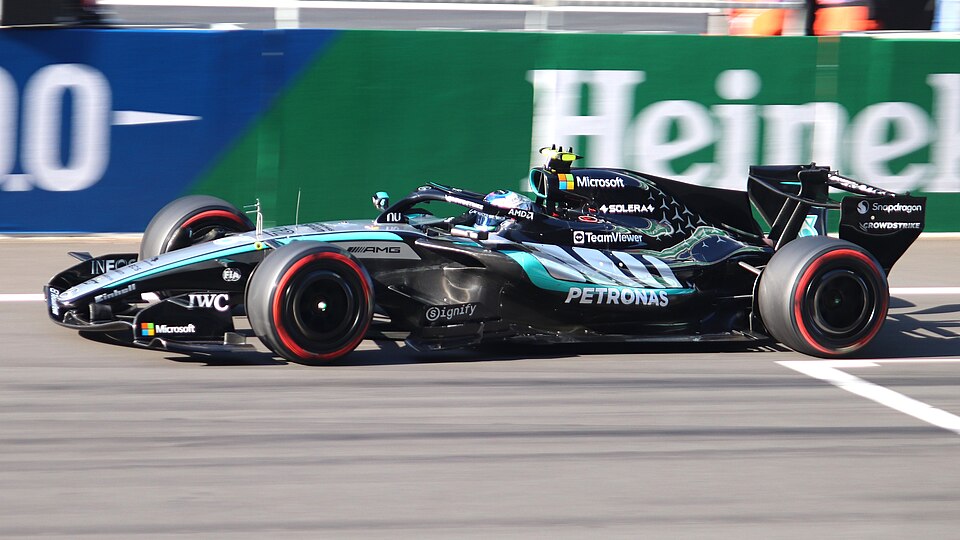
When Kimi Antonelli turned 20 in August 2026, he had already won six Formula One Grands Prix, stood on the podium 13 times and taken six pole positions, all while leading the World Championship in only his second season. Max Verstappen, the obvious comparison whenever an unusually young F1 driver starts doing unusually impressive things, had won one race at the same age. Sebastian Vettel had started one. Fernando Alonso had won none. Lewis Hamilton, Michael Schumacher, Ayrton Senna and Alain Prost had not even started an F1 race.
Antonelli has since won twice more and, after 14 races of the 2026 season, has eight victories and an 81-point championship lead over George Russell. If he converts that advantage into the title, he will become the youngest F1 World Champion in history by an enormous margin, breaking a record currently held by Sebastian Vettel, who was 23 when he won his first title in 2010.
There are, fairly obviously, some problems with using any of this as evidence that Antonelli was better than all of those drivers at 20. Cars have changed, seasons have become longer and the path from karting to Formula One has become considerably quicker, while it is also worth remembering that Antonelli has spent his F1 career driving a Mercedes rather than a Minardi, Toro Rosso or Toleman. If you gave a 20-year-old Ayrton Senna the 2026 Mercedes, I am not prepared to confidently predict that he would have spent his weekends battling Gabriel Bortoleto for 11th.
But if the question is simply which driver had assembled the greatest Formula One CV before his 20th birthday, there is not much of an argument. It is Antonelli, and by quite some distance.
The more interesting question is whether that actually tells us how good he is.
How good is Kimi Antonelli? The short answer
Kimi Antonelli has almost certainly assembled the greatest F1 record ever achieved by a driver before turning 20, with six wins, 13 podiums and six poles before his 20th birthday. Max Verstappen had won only once at the same age, while Lewis Hamilton, Michael Schumacher and Ayrton Senna had not yet made their F1 debuts.
That does not necessarily mean Antonelli was a better 20-year-old driver. Hamilton achieved more in his first 36 F1 starts, Schumacher produced extraordinary results without having the dominant car and Verstappen spent his first 23 races driving a Toro Rosso. Antonelli’s statistics are unprecedented for his age; deciding how much of that is Antonelli and how much is Mercedes is considerably harder.
Kimi Antonelli vs F1 greats: the key numbers
| Comparison | Antonelli | Best Historical Comparions |
| F1 record before age 20 | 6 wins, 13 podiums, 6 poles | Verstappen: 1 win, 7 podiums |
| First 36 F1 starts | 6 wins | Hamilton: 9 wins |
| Second F1 season | 8 wins after 14 races | Hamilton: 5 wins in 2008 |
| World Championship at 20 | Leading 2026 | No comparable driver |
Those three comparisons – age, F1 experience and second-season performance – give us a much better idea of Antonelli’s place in history than any one statistic on its own.
Kimi Antonelli’s F1 record at 20
Antonelli turned 20 on 25 August 2026, two days after finishing second at the Dutch Grand Prix, and by that point he had made 36 Grand Prix starts, won six races, collected 13 podiums and taken six pole positions. Most remarkably, he was already leading the 2026 World Championship, having gone from an occasionally brilliant but inconsistent rookie season to the fastest driver in the fastest car within the space of a few months.
Here is how his Formula One record before turning 20 compares with some of the greatest drivers of the modern era.
| Driver | F1 starts before 20 | Wins | Podiums | Poles |
| Kimi Antonelli | 36 | 6 | 13 | 6 |
| Max Verstappen | 54 | 1 | 7 | 0 |
| Lando Norris | 19 | 0 | 0 | 0 |
| Fernando Alonso | 11 | 0 | 0 | 0 |
| Sebastian Vettel | 1 | 0 | 0 | 0 |
| Charles Leclerc | 0 | 0 | 0 | 0 |
| Oscar Piastri | 0 | 0 | 0 | 0 |
| Lewis Hamilton | 0 | 0 | 0 | 0 |
| Michael Schumacher | 0 | 0 | 0 | 0 |
| Ayrton Senna | 0 | 0 | 0 | 0 |
| Alain Prost | 0 | 0 | 0 | 0 |
It is a ridiculous table, particularly because Verstappen was supposed to have made this sort of comparison impossible for the next few decades. Antonelli had five more victories before turning 20 despite making 18 fewer starts, while Hamilton, Schumacher, Senna and Prost had a combined total of precisely zero Formula One appearances at the same age.
That last statistic is completely true and almost completely useless, which is a fairly good summary of the difficulty with this entire exercise.
Kimi Antonelli vs Max Verstappen at 20
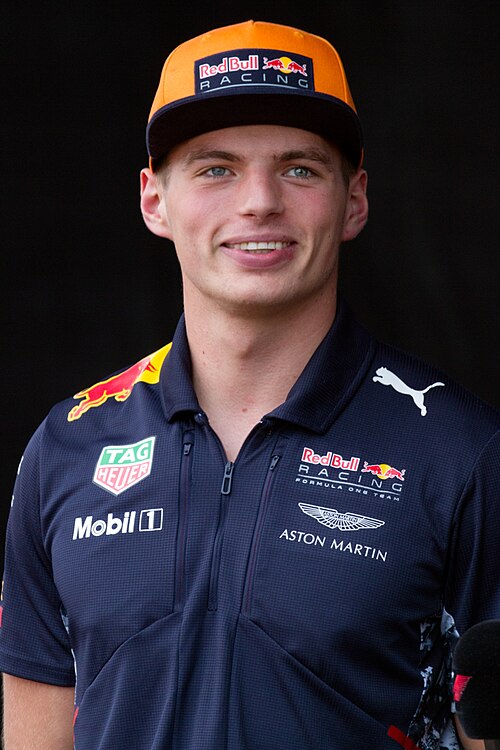
Max Verstappen at the 2017 Malaysian Grand Prix, the day he turned 20. Photo: Morio/Wikimedia Commons, CC BY-SA 4.0.If anyone was going to make Antonelli’s age records look vaguely normal, it should have been Max Verstappen, who became the youngest driver in Formula One history when he made his Toro Rosso debut aged 17 and was still only 18 when Red Bull promoted him in 2016. He then did the perfectly sensible thing of winning his first race for the senior team in Spain, becoming F1’s youngest-ever Grand Prix winner in the process.
By his 20th birthday Verstappen had already accumulated 54 Grand Prix starts, but the comparison with Antonelli is nevertheless surprisingly one-sided. Antonelli had six wins to Verstappen’s one, 13 podiums to seven and six poles to none, despite having competed in considerably fewer races.
On paper, Antonelli wins by a landslide. Unfortunately, Formula One is not played on paper.
Verstappen spent his first 23 races in a Toro Rosso, before moving into a Red Bull that was capable of winning races but was competing against the Mercedes team that won 19 of 21 Grands Prix in 2016. Antonelli, by contrast, has spent his entire career at Mercedes and has been given what is now clearly the best car on the grid during his second season.
The gap between their statistics is therefore real, but it is not remotely an apples-to-apples measure of ability. What it establishes beyond much argument is that Antonelli has achieved considerably more in Formula One by 20 than Verstappen did; deciding which of them was actually the better driver at that age requires rather more imagination.
How did Antonelli compare with Hamilton, Schumacher and Senna at 20?
The comparison becomes even stranger when we go further back, because Lewis Hamilton turned 20 in January 2005 having won the British Formula Renault championship and completed one season in the Formula 3 Euro Series, while Michael Schumacher reached the same age in January 1989 with Formula König as his most significant single-seater championship. Ayrton Senna had not even begun the European single-seater career that would eventually take him through Formula Ford and British F3 before he reached Formula One.
In other words, Antonelli had six F1 victories at an age when Hamilton was racing in Formula 3, Schumacher was still several years away from his Jordan debut and Senna had yet to begin racing cars in Europe. That is fascinating, but it tells us at least as much about the changing structure of motor racing as it does about the relative ability of the four drivers.
Modern drivers start karting incredibly young, move through a much more clearly defined development system and, if they are sufficiently good and sufficiently well backed, can now reach Formula One as teenagers. Hamilton did not make his debut until he was 22, Schumacher was also 22 and Senna was 24, so comparing their F1 records at 20 with Antonelli’s is inevitably going to make Antonelli look as though he arrived from another planet.
Fortunately, there is a better comparison.
Antonelli vs Hamilton, Schumacher and Verstappen after 36 F1 starts
Antonelli’s 36th Grand Prix was his final race as a teenager, which gives us a convenient way of removing age from the equation and asking what some of the greats had actually achieved after exactly the same amount of Formula One experience.
| Driver | Wins after first 36 starts | Broad picture |
| Lewis Hamilton | 9 | Already World Champion |
| Kimi Antonelli | 6 | Championship leader at 20 |
| Alain Prost | 5 | Established as a regular winner |
| Ayrton Senna | 4 | Multiple winner and exceptional qualifier |
| Sebastian Vettel | 3 | Toro Rosso winner, then Red Bull contender |
| Michael Schumacher | 2 | Regular podium threat in a non-dominant Benetton |
| Charles Leclerc | 2 | Already winning with Ferrari |
| Fernando Alonso | 1 | Minardi season followed by breakthrough at Renault |
| Max Verstappen | 1 | 23 starts in Toro Rosso before Red Bull |
| Oscar Piastri | 1 | Established at McLaren |
| Lando Norris | 0 | Early McLaren years |
This is the point at which Antonelli stops looking like a statistical freak and starts looking like one member of a very small group of drivers who were already doing extraordinary things almost immediately. It also produces one fairly clear winner.
Lewis Hamilton’s first 36 races were even better
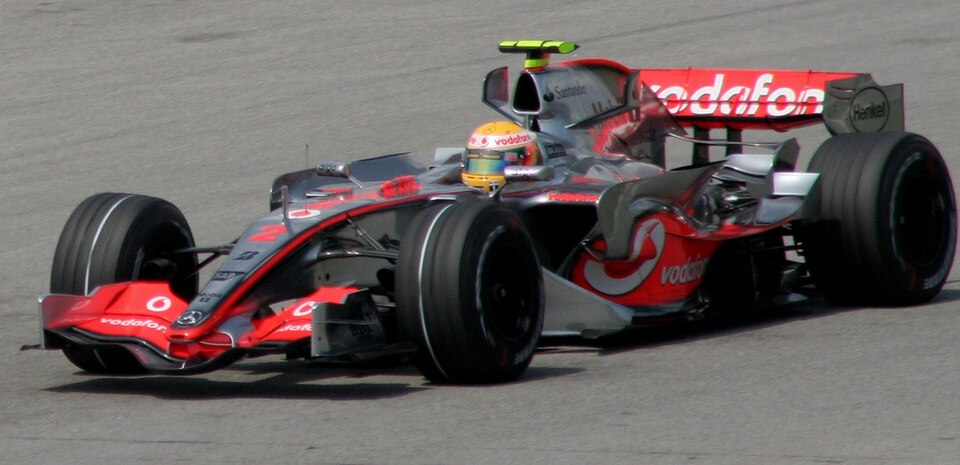
Lewis Hamilton in the McLaren MP4-22 at the 2007 Malaysian Grand Prix, during his remarkable rookie F1 season. Photo: Tom!!/Wikimedia Commons, CC BY 2.0.It is easy, after nearly two decades of Hamilton winning races, to forget quite how strange his arrival in Formula One was. McLaren did not ease him into the sport alongside a harmless veteran and give him a year to learn where all the buttons were; his first teammate was Fernando Alonso, the reigning two-time World Champion, and Hamilton promptly outqualified him 9–8, won four races to Alonso’s four and finished the season level with him on 109 points.
Hamilton then won another five races in 2008 and became World Champion in only his second season, meaning that by the time he reached his 36th Grand Prix he had nine victories, 22 podiums, 13 poles and a World Championship to his name.
Antonelli’s first 36 races were extraordinary, particularly because he completed them before turning 20, but Hamilton’s were better. He won more races, took considerably more poles and podiums and, most importantly, had already won the World Championship after spending his rookie season going directly up against one of the best drivers of his generation.
If we are looking for the greatest opening 36 races of an F1 career, Hamilton remains the benchmark.
Why Michael Schumacher’s early statistics are misleading
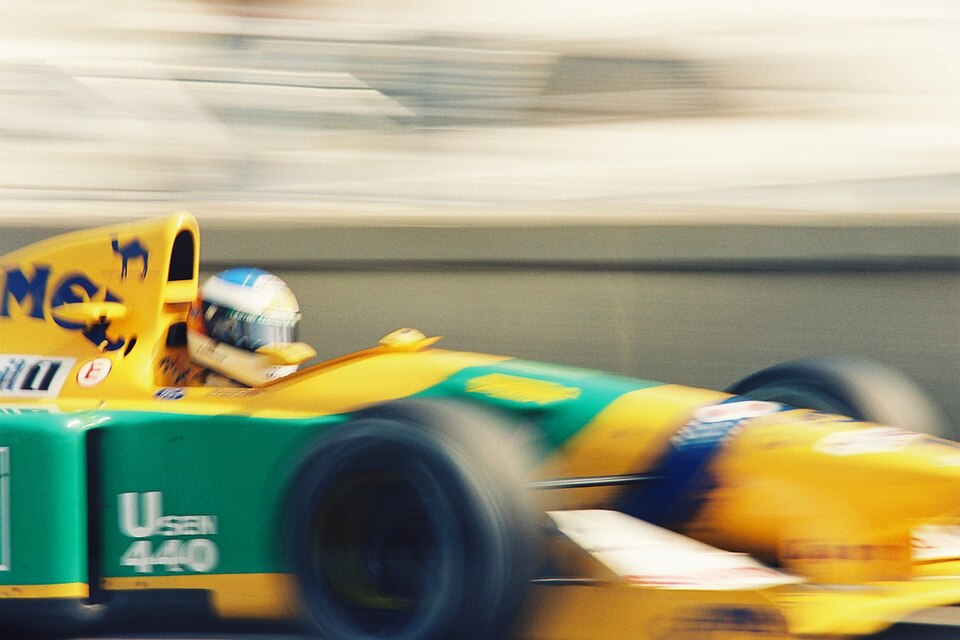
Michael Schumacher in the Benetton B192 at the 1992 Monaco Grand Prix, during his first full Formula One season. Photo: Iwao/Wikimedia Commons, CC BY 2.0.Michael Schumacher’s first 36 starts are almost the opposite of Hamilton’s, because the headline numbers do not look particularly spectacular: he had won only twice and had not taken a pole position, with his victories coming at Spa in 1992 and Estoril in 1993.
What Schumacher was doing instead was finishing on the podium with remarkable regularity in a Benetton that was competing against vastly stronger Williams machinery. In 1992, his first full season, Schumacher won only once but finished on the podium eight times in 16 races and ended the World Championship third, behind only Nigel Mansell and Riccardo Patrese and ahead of Ayrton Senna.
The following season made the teammate comparison even more striking, as Schumacher scored 52 points to Patrese’s 20 and took nine podiums while Patrese managed two. Patrese was hardly an anonymous second driver drafted in to make Schumacher look good; he was a six-time Grand Prix winner who had finished second in the World Championship only the year before.
This is why raw win totals are such a dangerous way of comparing young drivers. Antonelli had three times as many victories after 36 starts as Schumacher, but it would be very difficult to argue that the difference proves he was three times as impressive (and a Schumacher obsessed child in the late 90s and early 2000s, I would say this…).
How much of Antonelli’s success is the Mercedes?
The obvious argument against Antonelli’s numbers is that he has the best car, and it would be silly to pretend otherwise. Mercedes has won 10 of the first 14 races of 2026 and leads the Constructors’ Championship comfortably, while Antonelli and George Russell occupy the top two places in the Drivers’ Championship. Antonelli’s eighth victory of the season in Madrid extended his championship advantage over Russell to 81 points.
There is, however, a fairly substantial problem with dismissing Antonelli’s performances as the inevitable consequence of driving the Mercedes.
George Russell has the other one.
That would not have been a particularly helpful argument for Antonelli during 2025, when Russell comfortably beat his rookie teammate and Antonelli frequently looked exactly like what he was: an enormously talented teenager learning Formula One while sitting next to one of the most accomplished drivers on the grid. The transformation in 2026 has therefore been remarkable, because Antonelli has gone from being clearly the weaker Mercedes driver to regularly beating Russell in both qualifying and races.
Through the first 13 rounds, Antonelli led their qualifying head-to-head 7–6 and their race head-to-head 9–4, before qualifying ahead of Russell again and winning in Madrid while his teammate finished fifth. Russell is not a convenient number two: he has won Grands Prix, beaten Hamilton across a season and comprehensively handled Antonelli only a year ago, which makes the reversal particularly significant.
The Mercedes explains why Antonelli can win races. It does not explain why Antonelli is beating George Russell.
That may be the most important statistic in this entire exercise.
Antonelli’s second F1 season vs Hamilton, Verstappen and the greats
There is one more way of making the comparison fairer, which is to forget both age and number of starts and instead ask what each driver achieved during his second season in Formula One, once the novelty of being an F1 driver had worn off but before years of experience could begin to distort the comparison.
| Driver | Second F1 season | Wins | Podiums | Poles | WDC finish |
| Kimi Antonelli | 2026* | 8 | 12 | 6 | 1st currently |
| Lewis Hamilton | 2008 | 5 | 10 | 7 | 1st |
| Alain Prost | 1981 | 3 | 6 | 2 | 5th |
| Ayrton Senna | 1985 | 2 | 6 | 7 | 4th |
| Charles Leclerc | 2019 | 2 | 10 | 7 | 4th |
| Oscar Piastri | 2024 | 2 | 8 | 0 | 4th |
| Michael Schumacher | 1992 | 1 | 8 | 0 | 3rd |
| Sebastian Vettel | 2008 | 1 | 1 | 1 | 8th |
| Fernando Alonso | 2003 | 1 | 4 | 2 | 6th |
| Max Verstappen | 2016 | 1 | 7 | 0 | 5th |
| Lando Norris | 2020 | 0 | 1 | 0 | 9th |
*2026 season ongoing after 14 Grands Prix.
Antonelli has therefore already won more races during his second F1 season than Hamilton, Schumacher, Senna, Prost, Vettel, Alonso or Verstappen managed across the entirety of theirs, and he has done it with nine Grands Prix still remaining.
Hamilton is once again the comparison that matters most, because his five victories in 2008 were enough to make him World Champion, whereas Antonelli has already won eight and is increasingly disappearing over the horizon in the championship. Statistically, Antonelli is having the better second season, but Hamilton’s McLaren was not dominating Formula One in 2008, Ferrari won eight races and Felipe Massa took the championship fight to the final corner of the final lap of the season.
Antonelli and Russell, by contrast, are first and second in the championship in a Mercedes that has won 10 of 14 races. The statistics favour Antonelli; the context makes the comparison much closer.
Was Kimi Antonelli always this good?
The argument that Antonelli has simply benefited from reaching Formula One earlier than previous generations would be more convincing if Mercedes had rushed him through the junior categories despite fairly ordinary results, but almost the opposite happened. Antonelli won the Italian and ADAC Formula 4 championships in 2022, followed those with the Formula Regional Middle East and Formula Regional European championships in 2023, and was then considered sufficiently advanced for Mercedes to skip Formula 3 altogether and move him directly into Formula 2.
His F2 season was not nearly as dominant, although he still won twice, and Mercedes nevertheless decided that another year in the junior categories would teach him less than putting him directly into the seat vacated by Hamilton. At the time it looked like an enormous gamble; with Antonelli now leading the World Championship at 20, it looks slightly less adventurous.
The remarkable thing about his route to F1 is therefore not merely that Mercedes kept moving him up quickly, but that for most of his junior career Antonelli kept giving them very little reason not to.
How did Antonelli’s junior career compare with Leclerc, Norris and Piastri?
Antonelli did not have the only extraordinary junior career in this group, and looking beyond Formula One makes the comparison with some of his contemporaries much fairer. Charles Leclerc had not started an F1 race when he turned 20 but had already won GP3 and Formula 2 in consecutive seasons, both as a rookie, while Oscar Piastri had won Formula Renault and FIA Formula 3 before his 20th birthday and would add the Formula 2 championship later that year.
Lando Norris’s record may be even more remarkable. Before turning 20 he had won a karting world championship, MSA Formula, the Toyota Racing Series, Formula Renault NEC, Formula Renault Eurocup and European Formula 3, before finishing second in Formula 2 and reaching Formula One at 19. If the question were simply who had accumulated the most impressive collection of junior trophies by 20, Norris would have a perfectly serious claim.
Max Verstappen went to the other extreme, essentially refusing to bother with the conventional ladder at all. He moved from karting into European Formula 3 in 2014, finished third in his first season of car racing and was in Formula One the following year aged 17, meaning that he never won Formula 4, Formula Regional, Formula 3 or Formula 2 because he barely spent enough time outside F1 to attempt them.
Antonelli sits somewhere between the two approaches. He accumulated championships at a ridiculous rate and then, like Verstappen, started skipping steps.
So is Kimi Antonelli the best 20-year-old F1 driver ever?
There are really three different questions hiding inside that one question, and treating them as interchangeable is where the comparison starts going wrong.
If we ask who had achieved the most in Formula One by his 20th birthday, the answer is Antonelli and it is not particularly close. Verstappen is the only serious historical comparison and Antonelli’s six victories, 13 podiums and six poles comfortably beat Verstappen’s one victory, seven podiums and no poles.
If we ask who had the greatest overall racing CV at 20, I would still take Antonelli, although Norris, Leclerc and Verstappen make the discussion much more interesting once junior racing is included.
If we ask who was actually the best racing driver at 20, I don’t think the evidence allows us to answer it. Verstappen spent most of his teenage Formula One career in a Toro Rosso, Hamilton was not given an F1 car until he was 22, Schumacher arrived at the same age and Senna did not make his debut until 24. Put 20-year-old Hamilton, Schumacher or Senna into the 2026 Mercedes and there is no sensible way of knowing what would have happened.
That is the danger of confusing achievement with ability.
How good could Kimi Antonelli become?
This is also where the temptation to extrapolate Antonelli’s career becomes difficult to resist, particularly when looking ahead to what the F1 grid could look like in 2030. Antonelli will only be 24 at the beginning of that season, meaning that if Mercedes remains competitive he could conceivably arrive there with several World Championships and dozens of Grand Prix victories already behind him.
That possibility is one of the reasons I have Antonelli as a central figure in my prediction of the F1 Grid in 2030. Four years sounds like a long time in Formula One until you remember that Antonelli will still be younger in 2030 than Senna was when he won his first Grand Prix.
There is, however, an obvious historical warning against simply drawing a straight line upwards from here. Sebastian Vettel won four consecutive World Championships between the ages of 23 and 26 and, at that point, it was entirely reasonable to wonder whether Schumacher’s seven titles were under serious threat. Vettel never won another one.
Formula One careers are too dependent on machinery, regulation changes, teammates, reliability and being in precisely the right team at precisely the right moment to extrapolate Antonelli’s first two seasons across the next 15 years. Antonelli could win six championships from here, he could win one or he could somehow win none.
The interesting thing is that the first option no longer sounds ridiculous.
Final verdict: just how good is Kimi Antonelli?
The simplest statistics give us one answer: at 20, nobody in this comparison had achieved anything remotely comparable in Formula One, and Antonelli has already assembled a record that Verstappen’s unprecedented teenage career had previously made difficult to imagine anyone beating.
The more sophisticated comparisons temper that conclusion without really making Antonelli look much less impressive. Hamilton’s first 36 races were better and remain the benchmark for an immediate F1 impact; Schumacher’s early results become more impressive rather than less impressive once the machinery is considered; Verstappen’s teenage numbers were suppressed by spending his first 23 races in a Toro Rosso; and comparing Antonelli with Senna or Prost at 20 tells us considerably more about how the route into Formula One has changed than it does about the respective drivers.
But Antonelli keeps surviving every test we throw at him. Compare him by age and he wins easily; compare him by F1 experience and only some of the greatest drivers in the history of the sport have done more; compare second seasons and his statistics are unprecedented; blame the car and you are still left trying to explain why a 20-year-old is beating George Russell in the other one.
None of that means Kimi Antonelli will become the next Hamilton, Schumacher or Verstappen, and after fewer than 40 Grands Prix it would be fairly ridiculous to pretend that we know how his career will end.
But the comparison itself is no longer ridiculous.
And that might be the most impressive thing about him.
FAQs
How old is Kimi Antonelli?
Kimi Antonelli was born on 25 August 2006 and turned 20 during the 2026 Formula One season, two days after finishing second in the Dutch Grand Prix. If he wins any of the three Grand Prix in the United States this year, he will not legally be allowed to drink the champagne that he sprays.
How many F1 races had Kimi Antonelli won by age 20?
Antonelli had won six Grands Prix before his 20th birthday, having taken victories in China, Japan, Miami, Canada, Monaco and Belgium during the opening part of the 2026 season. He has since increased his total to eight victories in 2026.
How many F1 races had Max Verstappen won by age 20?
Max Verstappen had won one Grand Prix before turning 20, taking his famous maiden victory at the 2016 Spanish Grand Prix on his Red Bull debut. His second victory came at the 2017 Malaysian Grand Prix immediately after his 20th birthday.
Was Kimi Antonelli more successful than Lewis Hamilton at 20?
Antonelli was vastly more successful in Formula One at the same age because Hamilton had not yet made his F1 debut when he turned 20, but that is largely a consequence of the different routes the two drivers took to the sport. Once they are compared after the same number of F1 starts, Hamilton comes out ahead, having won nine races and already become World Champion.
Who is the youngest F1 World Champion?
Max Verstappen currently holds the record, having won his first World Championship in 2021 at the age of 24. Antonelli would break that record by more than four years if he converts his current 2026 championship lead into the title.
Did Kimi Antonelli race in Formula 3?
No. After winning championships in Formula 4 and Formula Regional, Antonelli moved directly into Formula 2, skipping FIA Formula 3 entirely before joining Mercedes in Formula One.


Leave a comment