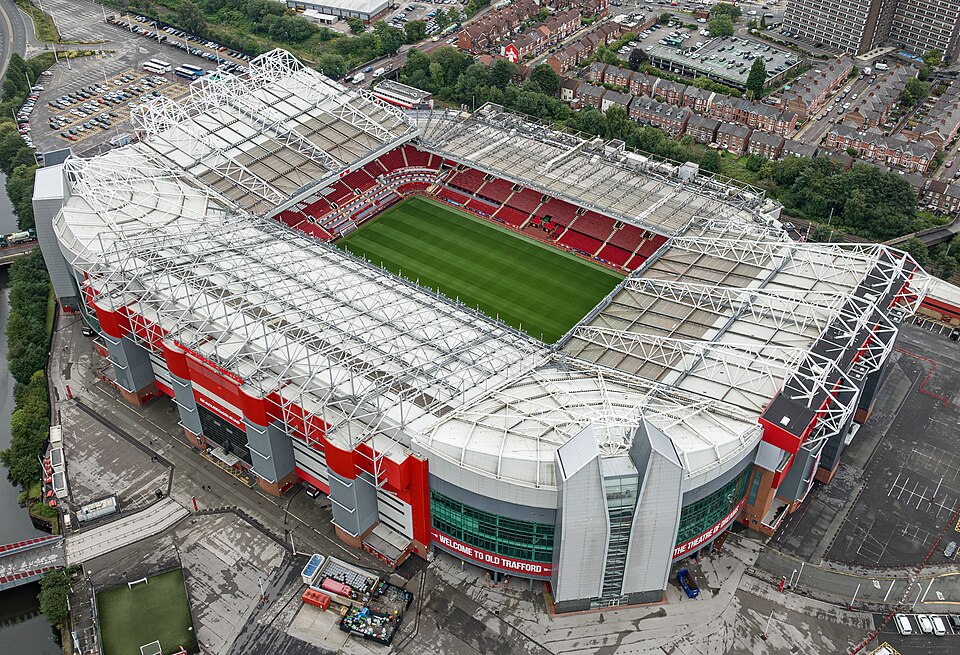
In September 2026, Manchester United sounded the bugle and announced record annual revenues of £677.6 million. Generating £1.86 million in revenue every day sounds like an impressive achievement for a club that had sacked another manager and not played a single match in European competition during the previous season.
However, there was a rather important qualification. The United bigwigs had pulled the old trick that every politician loves, using nominal rather than inflation-adjusted numbers – comparing apples with oranges, or Joshua Zirkzee with Ruud van Nistelrooy.
United have gone backwards in the boardroom as much as they have gone backwards on the pitch. Adjusted for inflation, their revenues have actually declined for three consecutive years, and the £627 million generated in 2018/19 would be worth approximately £823 million today. Over the same period, Liverpool and Arsenal have both increased their revenues in real terms, overtaking United in the process.
Despite bringing in almost £680 million, United still managed to lose £47 million before tax, spend more cash on investments than they generated from their operations and increase their borrowing during the summer transfer window. All this despite spending the past two years significantly reducing costs.
United’s September SEC filing ran to well over 100 pages, containing enough financial figures to send even Kieran Maguire to sleep. Rather than repeat them all, I want to concentrate on three things:
– Revenue: Why does United’s enormous income still fail to produce a pre-tax profit?
– Cash: How can a club generate substantial cash from its operations but still need to borrow?
– Debt: How much does United actually owe, once we include the money it still has to pay for players?
Each tells a slightly different story, but together they suggest that something isn’t quite right. The car hasn’t broken down on the hard shoulder, but there are several warning lights flashing on the dashboard. If Manchester United went for an MOT, the tester would be doing an awful lot of head-shaking.
Revenue – £678 million, but still making a loss
The headline revenue figures are straightforward:
| 2025/2026 | |
| Commercial revenue | £317.3m (46.8%) |
| Broadcasting revenue | £206.8m (30.5%) |
| Matchday revenue | £153.5m (22.7%) |
| TOTAL REVENUE | £677.6m |
The fact that United could generate £677.6 million without playing a single match in European competition demonstrates the extraordinary commercial strength of the club. Most football clubs would be delighted to generate a fraction of that sum, and there are very few sporting organisations anywhere in the world capable of bringing in so much money.
Revenue Versus Inflation
Reporting record revenue makes it sound as though everything is rosy in the Old Trafford garden, but when you look beyond the headline figure, United’s financial performance is considerably less impressive.
| Financial year | Reported revenue | Inflation-adjusted revenue |
| 2012/13 | £363.2m | £523.8m |
| 2013/14 | £433.2m | £611.9m |
| 2014/15 | £395.2m | £554.9m |
| 2015/16 | £515.4m | £722.2m |
| 2016/17 | £581.3m | £800.9m |
| 2017/18 | £589.8m | £790.9m |
| 2018/19 | £627.1m | £823.3m |
| 2019/20 | £509.0m | £659.1m |
| 2020/21 | £494.1m | £633.6m |
| 2021/22 | £583.2m | £707.1m |
| 2022/23 | £648.4m | £715.8m |
| 2023/24 | £661.8m | £701.8m |
| 2024/25 | £666.5m | £688.2m |
| 2025/26 | £677.6m | £677.6m |
United’s supposedly record-breaking revenue is almost 18% lower in real terms than it was seven years ago. In 2018/19, the club generated £627 million, equivalent to approximately £823 million in 2025/26 money. Although United have brought in more pounds than ever before, those pounds do not have the same purchasing power they once did.
If you receive a £5 pay rise, but your weekly food shop goes up by £6, you are not better off. United have experienced something similar. Their nominal revenues have increased in each of the past three years, but once inflation is considered, they have actually declined in every one of those years.
Revenue Versus Rivals
Inflation hasn’t been the only thing eating away at United’s financial advantage – Liverpool and Arsenal have both grown considerably faster over the past decade.
| Club | 2012/2013 (inflation adjusted to 2024/2025) | 2024/2025 (inflation adjusted to 2024/2025) | Real growth |
| Manchester United | £524m | £688m | 31% |
| Liverpool | £297m | £726m | 144% |
| Arsenal | £404m | £714m | 76% |
In 2012/13, United generated approximately 76% more revenue than Liverpool and 30% more than Arsenal. By 2024/25, both clubs had overtaken United, with Liverpool’s inflation-adjusted revenues having increased by 144% over those twelve years, compared with just 31% at Old Trafford.
This decline in United’s relative financial standing is reflected in Deloitte’s Football Money League. United were the world’s highest-revenue football club in both 2015/16 and 2016/17, before dropping to third in 2017/18, fourth in 2019/20, fifth in 2020/21 and eventually eighth in 2024/25, their lowest position since the rankings began in 1997.
This brings us to an interesting comment made by Ed Woodward in May 2018:
“Playing performance doesn’t really have a meaningful impact on what we can do on the commercial side of the business.”
Woodward was confident that United’s commercial machine could continue thriving regardless of what happened on the pitch. Eight years later, that confidence looks rather misplaced.
Admittedly, Woodward was referring specifically to commercial revenue rather than the club’s overall turnover, but even that part of the business has struggled to keep pace with inflation. United generated £275.1 million in commercial revenue in 2018/19, equivalent to approximately £361 million in 2025/26 money. In 2025/26, they generated just £317.3 million, a real-terms decline of approximately 12%.
Of course, the figures don’t prove that United’s poor performances on the pitch caused their disappointing commercial growth, but it is difficult to argue that their prolonged struggles have done the business any favours. Meanwhile, Liverpool and Arsenal have enjoyed greater success on the pitch and substantially improved their financial positions.
So Why Are United Still Losing Money?
Unfortunately, United’s problem isn’t simply that they have failed to increase their revenues. The club’s operating expenses totalled £701.9 million in 2025/26, including £302 million in employee costs (£10 million to Bruno Fernandes, and a £15 million redundancy payment to Dave in the training ground cafe), £159.2 million in other operating expenses and £211.8 million in amortisation. The latter largely represents the annual accounting cost of footballers’ transfer fees, something I will return to when examining United’s cash flow.
Interestingly, United’s wage bill is now considerably lower than those of their two great rivals. In 2024/25, Liverpool spent £427.7 million on staff costs, while Arsenal spent £346.8 million. United, by comparison, spent £302 million in 2025/26, despite generating broadly similar revenues. Admittedly, the figures relate to different financial years, and Liverpool’s wage bill included bonuses associated with winning the Premier League, but the difference is nevertheless considerable.
Much of this reflects Sir Jim Ratcliffe’s enthusiasm for reducing expenditure, which has included a substantial redundancy programme. In 2023/24, United employed an average of 1,140 people, a figure that had fallen to just 808 by 2025/26, a reduction of 29%. Over the same period, total employee benefit expenses fell from £377.1 million to £307.6 million.
The cost-cutting has not been entirely painless, either financially or otherwise. United recorded another £8.2 million in exceptional expenses during 2025/26, including £5.2 million in loss-of-office costs associated with departures from the club, including Ruben Amorim – his tenure already feels like a lifetime ago.
Despite these substantial savings, United’s ordinary operating expenses still exceeded their revenues by £24.2 million. Fortunately, selling footballers can be a profitable business, and United recorded £46.9 million in accounting profits on player disposals, turning that operating loss into an operating profit of £22.6 million.
Unfortunately, there was another rather substantial expense to account for: £69.6 million in net finance costs, more than enough to wipe out United’s £22.6 million operating profit and leave the club with a £47 million pre-tax loss. Not all these costs involved cash leaving the business during the year, with the figure including a £10 million unrealised foreign-exchange loss on United’s dollar-denominated borrowings. Nevertheless, servicing the club’s financial obligations remains expensive, with United paying £38.9 million in cash interest during 2025/26.
It would, however, be unfair to suggest that United’s finances are heading in only one direction. Operating expenses fell by approximately £32 million compared with 2024/25, and the club went from an £18.4 million operating loss to a £22.6 million operating profit. Ratcliffe’s cost-cutting programme has undoubtedly made United a leaner business, although whether it has made them a better football club is another question entirely.
The difficulty is that even after removing hundreds of employees and substantially reducing expenditure, United are still spending more than they earn before accounting for profits from selling players. And while the club can continue cutting administrative costs, there is only so much money to be saved from making office staff redundant when the annual amortisation charge on footballers alone is approaching £212 million.
Will Champions League Football Make the Difference?
Being in the Champions League this season should provide an enormous boost to United’s 2026/27 finances. The competition is extraordinarily lucrative, even for clubs that perform terribly.
Under the 2026/27 distribution arrangements, a club losing all eight of its league-phase matches would still be entitled to approximately £17.5 million in minimum UEFA distributions. United, who have already won two of their first four matches, will receive considerably more than that minimum.
The four guaranteed home matches could generate another £20 million or so in ticket sales, hospitality and other matchday revenue. Qualification also means avoiding the headline £10 million non-qualification deduction in the club’s Adidas sponsorship agreement.
Not all this additional revenue will translate into profit – there are significant costs associated with hosting matches, travelling around Europe and paying potential player bonuses. Nevertheless, Champions League qualification should provide a substantial financial benefit.
The question is whether that additional income will be sufficient to make United consistently profitable, or whether the cost of assembling and maintaining a competitive squad will simply consume much of the extra money.
Making a profit and generating cash are two very different things
There is an important distinction between making a profit and generating cash, something that is often overlooked when discussing the finances of football clubs. A business can report a substantial accounting profit while running short of cash, or make an accounting loss while generating millions of pounds in cash. Manchester United provide a particularly interesting example of the latter.
To understand why, let’s briefly consider two accounting concepts: depreciation and amortisation.
Consider the Millennium (Principality) Stadium in Cardiff, which opened in 1999. The Welsh Rugby Union depreciates the stadium over an estimated useful life of up to 50 years, meaning some of the original construction costs could have been fully written off in the accounts by around 2049. Yet there is every possibility (it is likely) that Wales will still be playing international rugby at the Principality Stadium long after that date, and that it will remain an enormously valuable asset. Its accounting value will have declined over those 50 years, but that doesn’t necessarily mean its real-world value has declined by anything like the same amount.
Manchester United do something similar with Old Trafford. Depreciation is an accounting expense designed to spread the cost of an asset over its estimated useful life, rather than a payment that the club must make every year. It reduces the profit reported in the accounts without reducing the amount of cash in the club’s bank account during that particular year.
Footballers are treated in much the same way, although the process is called amortisation. If United spend £50 million signing a player on a five-year contract, they would ordinarily recognise an amortisation expense of £10 million in each of those five years, regardless of whether the transfer fee was paid immediately or in instalments. The player might have been paid for several years earlier, or United might still owe the selling club millions, but the accounting expense would ordinarily remain £10 million each year.
If, after three years, United sell that player for £40 million, your instinct is that they have made a loss. But on the books they have made a profit, as he is valued at £20 million (£50 million – £10 million in each of his three years at the club) at that point.
This is particularly important because United recorded £211.8 million in amortisation and another £20.6 million in depreciation during 2025/26. These expenses reduced United’s reported profits by more than £232 million, but neither represented an equivalent cash payment during that financial year.
It helps explain how United could report a £47 million pre-tax loss while generating £216.2 million in cash from operations, before interest and tax. After accounting for cash interest payments and receipts, and tax, United were left with a net operating cash inflow of £178.7 million, more than double the £72.7 million generated in the previous financial year.
So far, so good. United’s underlying business is clearly capable of generating substantial amounts of cash, even if its profit-and-loss account suggests otherwise. Unfortunately, the reverse side of depreciation and amortisation is that businesses can spend enormous amounts of money without immediately recognising that expenditure in their profit-and-loss accounts – and Manchester United spent an enormous amount of money.
The club’s cash-flow statement shows the following:
| Cash-flow item | 2025/26 |
| Net cash from operating activities | +£178.7m |
| Payments for intangible assets | −£292.3m |
| Proceeds from intangible asset disposals | +£148.6m |
| Net cash spent on intangible assets | −£143.7m |
| Payments for property and equipment | −£85.9m |
| Cash shortfall before financing | −£50.9m |
United spent £292.3 million in cash on intangible assets (this is what a footballer is, in accountancy speak) acquired in both the current and previous seasons. This is quite different from the £211.8 million amortisation charge discussed earlier, which spreads the cost of registrations across the duration of players’ contracts.
The club also received £148.6 million from the disposal of intangible assets (principally player registrations). This should not be confused with the £46.9 million accounting profit on player sales mentioned in the previous section. Remember my £50 million player example above – when a club sells a player, its accounting profit is calculated by deducting the remaining book value of that player’s registration from the proceeds. The cash received during a particular year, meanwhile, might relate to transfers agreed several years earlier.
There is another interesting detail buried in United’s accounts. The club explains that its investing cash flow benefited from arrangements under which it received money early against transfer fees owed by other clubs. In effect, rather than waiting for future instalments to arrive, United obtained cash upfront through financing arrangements. This improved the club’s immediate cash position, although bringing future income forward comes with a financial cost and means that some cash which would otherwise have arrived in subsequent years has already been received. Businesses in other industries routinely do this – cash is king – but it is a relatively new thing in football.
Even after taking account of the £148.6 million received from disposals, United spent approximately £143.7 million more acquiring intangible assets than they received from selling them. That left just £35 million of their £178.7 million net operating cash inflow.
Unfortunately, football clubs have more to spend money on than footballers. United also spent £85.9 million on property and equipment during the year – there is, however, an important qualification. Of that £85.9 million, £63.5 million related to purchasing freehold property for United’s proposed new stadium (I’ve written separately about whether this is a good idea – looking at what has happened at Everton and Spurs, and what would happen at United and Newcastle United). Had United not made that investment, and everything else remained unchanged, they would actually have generated approximately £12.6 million more cash than they spent during the year, before financing activities.
That doesn’t make the £50.9 million cash shortfall disappear, but it does put it into perspective. Borrowing money to acquire property that might support a new stadium for the next century is rather different from borrowing money because you cannot afford to pay your players’ wages next week.
Add everything together and United’s investing activities consumed £229.6 million, some £50.9 million more than the club generated from its operating activities after interest and tax.
There is an important qualification: neither depreciation nor amortisation is an imaginary expense that should simply be ignored. Old Trafford needs maintaining and refurbishing, while a footballer’s registration generally becomes less valuable as the end of his contract approaches (think of how many of the top players have moved for free at the end of their contract in the past few years). Equally, investing in players and infrastructure is not necessarily evidence of financial mismanagement. Clubs need to invest if they want to remain competitive, and some of United’s expenditure relates to assets that could generate income for decades.
Nevertheless, the distinction is fundamental to understanding United’s finances. The club made a £47 million pre-tax accounting loss, generated £179 million in net operating cash, and still spent £51 million more on investments than that operating cash could support. All three figures are correct, but each tells a rather different story.
And when a football club consistently spends more cash than it generates, it has to find the difference somewhere. It can sell assets, persuade its owners to inject more money (I’m not sure that any of the Glazers even have a chequebook), draw down existing cash reserves or borrow. As the world already knows, Manchester United have become rather familiar with that final option.
Nearly £1 Billion in Net Financial Borrowings and Transfer Obligations
Manchester United’s borrowing has been controversial ever since the Glazer family acquired the club in 2005, loading hundreds of millions of pounds of debt onto a business that had previously been virtually debt-free. More than two decades later, United still owe an enormous amount of money, although the loans taken out to finance the original takeover are now only part of the story.
As I have written about in relation to the Welsh Rugby Union’s debts, not all debts are equal. In football, many clubs have a large portion of their debt that is owed to their owner. This is mainly done from a tax planning point of view by the owner, if they want to fund their club they can put in equity (cash, in return for more shares), or debt (cash, in return for the right to be repaid). Doing the latter is generally better for an owner when they eventually come to sell. This is debt that a football fan should not worry about too much, in the grand scheme of things.
However, Manchester United do not have any of this type of debt (on the contrary, the Glazers have taken more dividends out of the club, than they have put equity or loans in). All of United’s debt is due to third-parties.
Owners will waive debts, charge no interest and continually extend repayment terms. Third-party lenders are not in the business of doing this.
At 30 June 2026, United had £689 million in financial borrowings, comprising:
- £408.9 million in senior secured notes;
- a £168.6 million term loan;
- £110 million drawn from a revolving credit facility (which allows up to £400 million to be borrowed);
- and £1.4 million in accrued interest.
These are the sorts of debts that most people would recognise: money borrowed from banks and other lenders, which must eventually be repaid and on which the club generally pays interest.
These are not debts that have been taken on in order to finance an income-generating asset (something like Spurs’ loans used to build their new stadium). All of this cash has been borrowed, in the main, (i) to pay for the Glazers’ 2005 acquisition costs; and (ii) to fund day-to-day spending – keeping the lights on.
However, there is another substantial liability buried in United’s accounts. The club owed £375 million in outstanding transfer fees, relating to footballers acquired in previous transfer windows. When a club buys a player for £60 million, it might agree to pay the selling club £20 million immediately and the remaining £40 million over several years. This makes it easier to finance an expensive signing in the short term, but it also means that future managers and owners inherit the bills for players signed by their predecessors.
Add United’s outstanding transfer fees to its financial borrowings and the total reaches a remarkable £1.064 billion. Admittedly, other clubs owed United £67.9 million in transfer fees, while United had £67.2 million in cash. Deducting both figures leaves the club with approximately £929 million in net financial borrowings and transfer obligations.
| Financial position at 30 June 2026 | Amount |
| Financial borrowings | £689.0m |
| Outstanding transfer fees payable | £375.0m |
| Total borrowings and transfer payables | £1,064.0m |
| Less transfer fees receivable | −£67.9m |
| Less cash | −£67.2m |
| Net financial borrowings and transfer obligations | £928.9m |
This is not the conventional definition of net debt used by United in their accounts, which excludes outstanding transfer fees. However, when assessing the club’s future financial commitments, it seems rather strange to ignore hundreds of millions of pounds that United are contractually obliged to pay other football clubs – if it looks like debt and smells like debt, it is probably debt.
And much of that money will have to be paid relatively soon. Of the £375 million outstanding transfer debt, £218.4 million falls due within twelve months of 30 June 2026, another £104.8 million within the following year and the remaining £51.9 million over the subsequent three years. These are obligations arising from transfers that have already taken place, rather than money available to spend on new footballers.
The accounts also disclose that United could be required to pay up to another £122.8 million if various performance-related conditions are satisfied, including appearances, team achievements and other contractual milestones. These are potential additional payments, rather than guaranteed liabilities, but they illustrate how the final cost of signing a footballer can continue increasing long after he arrives at Old Trafford. If United owe Brentford £10 million if they win the Premier League in the five years after signing Bryan Mbeumo, Brentford should not expect that cash any time soon…
Nor did United stop spending money when their financial year ended. The accounts disclose another £191.7 million in consideration for player and football-management registrations acquired or extended after 30 June 2026, payable over the following five years. This figure cannot simply be added to the £375 million outstanding at the year-end to produce a new debt total, but it demonstrates that United continued making substantial financial commitments during the summer.
And how did United help finance that summer’s activity? By borrowing more money.
At the end of June, United had borrowed £110 million under their £400 million revolving credit facility. Think of this as an enormous corporate overdraft: the club can draw money when it needs additional cash and repay it when funds become available. On 29 July, United borrowed another £30 million, followed by £70 million two days later and another £20 million on 28 August. After repaying £30 million on 21 September, the outstanding balance stood at £200 million.
Rather than paying for Carlos Baleba, Andrey Santos and Youri Tielemans using a debit card, they used a credit card.
In other words, between the end of June and the publication of their annual report in September, United had increased their borrowing under this facility by a net £90 million. This came immediately after a financial year in which the club had generated £178.7 million in net operating cash but spent £229.6 million on investing activities.
Borrowing money is not free, either. During 2025/26, United incurred £35.6 million in interest expenses on their secured notes, term loan and revolving credit facilities. The club also incurred £18.9 million in finance expenses arising from the unwinding of discounts on deferred player-registration payments, alongside other financing costs. Together with finance income and other accounting adjustments, United’s net finance expense reached £69.6 million, more than enough to eliminate the £22.6 million operating profit discussed earlier.
There are, of course, important qualifications. United refinanced their principal long-term borrowing arrangements in June 2026, with the senior secured notes and term loan now maturing in 2031. Their revolving facility also provides considerable flexibility, with £200 million still available to draw as at 21 September (the date of their last repayment). The existence of substantial debt does not necessarily mean a company is in immediate financial difficulty, particularly one with United’s commercial strength and ability to generate cash.
Nevertheless, there is something uncomfortable about a football club generating almost £680 million in annual revenue, undertaking substantial redundancies to reduce costs, and still increasing its borrowing during the summer transfer window. Every pound spent servicing debt or meeting transfer instalments agreed years earlier is a pound that cannot be spent elsewhere, whether on the playing squad, facilities or reducing the club’s future financial commitments.
Perhaps the most revealing feature of United’s accounts is that their current financial position is not simply the consequence of what happened during the 2025/26 season. The club is still paying for decisions taken years earlier, while making fresh commitments that will appear in the accounts of future seasons.
Jim Ratcliffe said in March 2025:
“If you look at the players we are buying this summer, that we didn’t buy, we’re buying Antony, we’re buying Casemiro, we’re buying Onana, we’re buying Hojlund, we’re buying Sancho.”
“These are all things from the past, whether we like it or not, we’ve inherited those things and have to sort that out.”
Paul Pogba’s story rather neatly encapsulates United’s problems over the past fifteen years. United allowed him to leave for Juventus in 2012 for minimal compensation, spent a then world-record £89.3 million bringing him back four years later, and watched him depart for Juventus again on a free transfer in 2022.
Remarkably, Pogba remains United’s record signing more than ten years later. In the meantime, United have spent enormous sums on the likes of Antony, Harry Maguire, Jadon Sancho and Rasmus Højlund, with relatively little sustained sporting success to show for that expenditure. The club’s problem has not simply been how much money it has spent, but how frequently that spending has failed to deliver the expected returns.
Manchester United are not just financing the football team they have today; they are still financing the (not very good) teams they assembled yesterday.
Conclusion — Is Manchester United’s Problem Revenue or Spending?
Manchester United’s accounts tell the story of a football club that generates an extraordinary amount of money, but has developed an equally extraordinary appetite for spending it. Despite bringing in almost £680 million a year, United remain burdened by the cost of players signed years ago, substantial borrowing and the continuing expense of trying to compete at the top of English and European football.
There are reasons for optimism. Ratcliffe’s cost-cutting programme has significantly reduced operating expenses, the club generates substantial cash from its ordinary activities, and a return to the Champions League should provide another considerable financial boost. United are not a business teetering on the edge of bankruptcy.
Nevertheless, the comparison with Liverpool and Arsenal is revealing. Both clubs have substantially increased their revenues in real terms over the past decade, while United have gone backwards. Meanwhile, much of the money United generate today is already committed to paying for decisions made yesterday.
Perhaps the most important distinction is between being unable to generate enough money and choosing to spend more than you generate. United could reduce transfer spending, defer investment or sell players, but doing so would make it even more difficult to return to the top of English football.
But, United’s problem is not simply revenue or spending. It is the uncomfortable relationship between the two: a club whose enormous financial resources are still insufficient to support its ambitions without borrowing more money.
Other Business of Sport Articles
• The perilous state of the WRU and Welsh rugby
•.Why building a new football stadium could be a terrible investment- and still be worth building
Leave a Reply