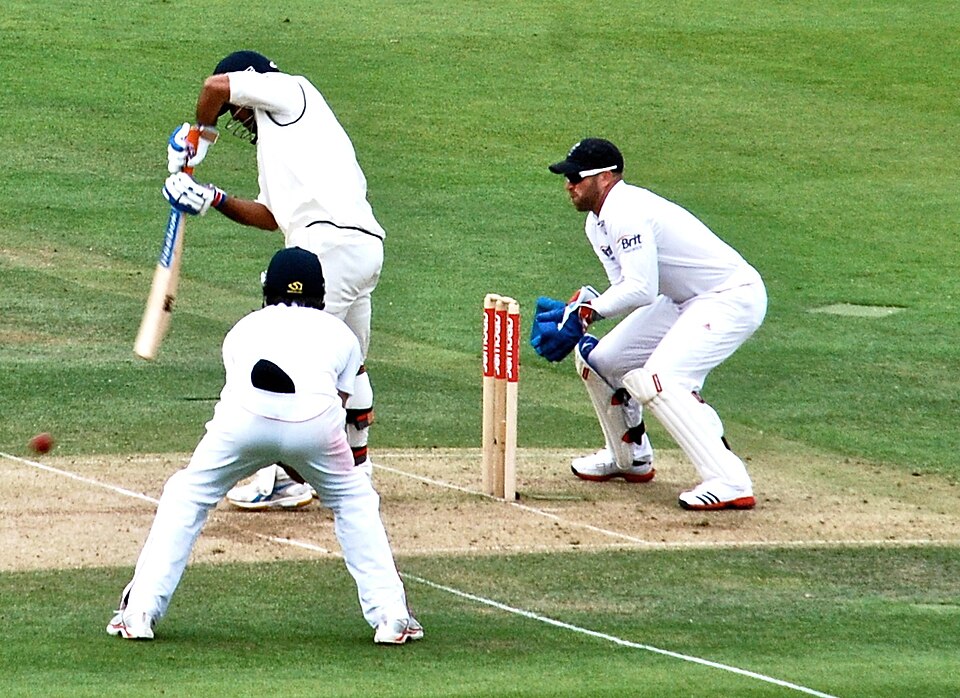
For much of the past 30 years, being the best wicketkeeper in England has not necessarily been enough to become England’s wicketkeeper.
That makes ranking the best young English wicketkeepers in 2026 slightly more complicated than doing the same exercise with batsmen, fast bowlers or spinners. The position has gradually changed from one occupied by a specialist whose batting was a useful bonus into what is effectively another place in the batting order, with selectors repeatedly deciding that a few extra runs are worth more than a few extra dismissals behind the stumps.
Jack Russell lost out to Alec Stewart. Chris Read spent much of his England career competing with keepers considered stronger with the bat. Ben Foakes, regarded by many as the finest English gloveman of his generation, discovered much more recently that being brilliant behind the stumps still did not guarantee selection. When England moved on from Foakes in 2024, they picked Jamie Smith, who was not even Surrey’s regular wicketkeeper at the time (Foakes was), because they believed his batting could transform the position at number seven.
It has been difficult to argue with much of the logic. Matt Prior demonstrated what happens when a Test side finds a wicketkeeper who can operate as a genuine middle-order batsman, while Jonny Bairstow, Jos Buttler and Smith continued the wider movement towards viewing wicketkeeping as one half of a dual role. Smith subsequently made 184 not out against India in 2025, the highest Test score by an England wicketkeeper.
Yet there are signs that the balance between the two jobs may be shifting slightly again. During the 2025/26 Ashes, Alex Carey regularly stood up to Scott Boland as Australia attempted to stop England’s batsmen advancing down the pitch. New Zealand then used Tom Blundell in much the same way in England in the 2026 summer, with Blundell standing up to Matt Henry and helping pin Joe Root and Harry Brook to the crease.
If standing up to seam bowling becomes a more regular part of Test cricket, excellent wicketkeeping becomes more than a way of taking difficult catches and conceding fewer byes. The keeper can influence where the batsman stands, how freely he uses the crease and even where his own bowler is able to pitch the ball.
That is an interesting development for England because there is suddenly an unusually deep group emerging behind Smith. James Rew has already played Test cricket at 22. His younger brother Thomas has captained England Under-19s and made an extraordinary start to first-class cricket. Matty Hurst has accumulated more senior keeping experience than almost anyone his age, while Joe Moores and Ben Mayes were playing for the England Lions at 18.
Having already ranked the 20 best young English fast bowlers and the 20 best young English batsmen, as well as looking at England’s best young spinners, it therefore seems only fair to give the wicketkeepers a turn.
There is also plenty of crossover between the lists. James Rew, Thomas Rew, Matty Hurst, Ben Mayes and Joe Moores all featured in the batting rankings, but this exercise asks a rather different question. Runs still matter enormously, but here the gloves count too.
So who are England’s best young wicketkeepers, and which of them is most likely eventually to take Jamie Smith’s gloves?
Statistics are correct to 15 September 2026 unless otherwise stated.
How have the young wicketkeepers been ranked?
This is not simply a list of the wicketkeepers who have scored the most county runs.
Players must be 23 or under on 15 September 2026 and be genuine wicketkeeping prospects rather than batsmen who happen to have kept occasionally. That distinction matters because there are some excellent young batsmen who are still nominally described as wicketkeeper-batters but are increasingly developing primarily as specialist batsmen.
Performances in senior cricket matter most, but age, wicketkeeping experience, batting ability, progress through the England pathway and long-term potential have all been considered. An 18-year-old already keeping in professional cricket or captaining England Under-19s therefore gets considerably more credit than a 23-year-old producing similar numbers.
There is one other consideration unique to this list: how valuable could the wicketkeeping itself become? For most of the modern era, selectors could reasonably ask whether one keeper might score ten more runs per innings than another. If standing up to seamers and other specialist skills become increasingly tactically valuable, the gap between an adequate wicketkeeper and an exceptional one may start to matter more again.
The 10 Best Young English Wicketkeepers in 2026
| Rank | Player | County | Age | Highest England level |
| 1 | James Rew | Somerset | 22 | Test |
| 2 | Thomas Rew | Somerset | 18 | England Lions |
| 3 | Matty Hurst | Lancashire | 22 | England Lions |
| 4 | Kai Smith | Warwickshire | 21 | UAE Under-19 / England-qualified |
| 5 | Joe Moores | Lancashire | 18 | England Lions |
| 6 | Ben Mayes | Hampshire | 18 | England Lions |
| 7 | Alex Horton | Glamorgan | 22 | England Under-19 |
| 8 | Henry Cullen | Worcestershire | 23 | County cricket |
| 9 | Haydon Mustard | Durham | 20 | England Under-19 |
| 10 | Harry Wallace | Glamorgan | 17 | England Under-19 |
When wicketkeeping really was a specialist skill
To understand how much the position has changed, it is worth going considerably further back than Russell, Stewart or Foakes.
In 1930, Somerset found themselves temporarily without their regular wicketkeeper Wally Luckes and called up a 28-year-old Great Western Railway locomotive driver called Seymour Clark. Clark had not even started playing cricket until he was 25, but somebody at his railway club had apparently noticed that he was rather good with the gloves.
Rather good may be underselling it.
Clark played five first-class matches for Somerset, kept well enough to take eight catches and was described by Wisden as having rendered useful service behind the stumps. He was apparently prepared to stand up to every bowler, even Somerset’s quickest seamers. With the bat, however, his contribution was less complicated: he batted nine times and did not score a single run. Not one. His first-class career therefore finished with a batting average of precisely 0.00.
Can you imagine how good he must have been behind the stumps?
I am imagining Ben Foakes, but with eight arms.
This was not someone you put at number eight and hoped might average 25. Clark would have batted at number 11 in a side containing Phil Tufnell and Chris Martin – the New Zealand bowler, not the Coldplay singer, although come to think of it Clark may even have batted below him. Clark himself later recalled that he thought his highest score at any level was three, and two of those runs had come from overthrows.
The most remarkable part is that Somerset still wanted him. After those five games, the county offered Clark a professional contract for the following season, which tells you everything about how independently wicketkeeping was once valued from batting. Clark declined it and went back to driving trains.
Nobody is suggesting the modern game should return to selecting wicketkeepers who cannot score a run, but Clark is an extreme example of a philosophy that lasted for much of cricket history: wicketkeeping was a specialist skill in its own right. The person wearing the gloves was there primarily because he was the best person available to catch, take, stump and organise from behind the wicket. Anything he contributed with the bat was secondary.
By the beginning of the 21st century that hierarchy had almost completely reversed.
How batting won the argument
Russell and Stewart provide perhaps the most famous English staging post in that transition. England initially asked Stewart to take over the gloves from Russell in 1991 partly because combining an established top-order batsman with the wicketkeeping role created another place elsewhere in the side, and that flexibility became increasingly difficult for selectors to ignore.
Prior then demonstrated what the position could become. Instead of accepting a wicketkeeper who might contribute some useful runs at eight, England had a player capable of changing matches from seven. Once international teams had seen the value of a keeper capable of averaging around 40 and scoring hundreds, it became much harder to select a superior gloveman who averaged 20. Adam Gilchrist also confused things for England – he opened the batting in white-ball cricket for Australia and all of a sudden that meant England’s white-ball wicketkeeper had to open to regardless of whether there was a suitable candidate. Why?! His ability to destroy bowling attacks meant being excellent behind the stumps was no longer enough; now you had to try to score 80 from 60 balls as well.
There is also an awkward developmental logic to all of this. You can sometimes take a very good batsman and turn him into a good enough wicketkeeper; taking an exceptional wicketkeeper and turning him into an international-class batsman is a much less reliable process.
That does not mean wicketkeeping is easy to learn, and specialists would rightly object to the idea that anybody can simply be handed a pair of gloves. Elite wicketkeeping requires thousands of hours of technical work, physical conditioning and concentration. But from a selector’s perspective the direction of travel is tempting. If somebody already possesses the rarest part of the modern package – the ability to make international runs – there is at least a possibility of developing his keeping until it reaches the required standard. Starting with somebody who has beautiful hands but averages 17 leaves a much larger batting problem to solve.
Former Hampshire keeper Michael Bates is almost the perfect modern example of what happens when the calculation goes against the specialist.
Bates was regarded extremely highly as a pure wicketkeeper. In 2012 he completed 57 first-class dismissals, the highest total in the country, and former Hampshire players were willing to put his glovework in the same conversation as Alan Knott, Bob Taylor and Jack Russell. His first-class batting average, however, finished at 19.94.
Hampshire subsequently signed Adam Wheater, whose stronger batting gave the county a different balance, and Bates lost his place. By the end of 2014 he had been released and his first-class career was effectively over at 25. Bates later reflected that he may simply have been born in the wrong era, while still arguing that an outstanding specialist keeper could affect matches with his gloves alone.
Bates therefore sits almost exactly halfway between Seymour Clark and Jamie Smith. Clark could score no runs at all and was still offered a county contract because his keeping was considered valuable enough. Eighty years later Bates could be one of the most highly regarded keepers in England and still struggle to retain a county place because he did not score enough. By Smith’s generation, batting ability had become one of the principal reasons for getting the gloves in the first place.
Foakes provided the clearest international example of where the balance eventually reached. Few disputed the quality of his keeping, particularly standing up to the stumps, but England still replaced him with Smith in 2024. Rob Key acknowledged that England had seen relatively little of Smith keeping for Surrey, where Foakes generally held the gloves, but believed Smith could provide exactly the sort of batting England wanted lower down the order.
Smith has largely vindicated that decision. His 184 not out against India in 2025 was not merely a good innings for a wicketkeeper; it was the highest Test score ever made by an England keeper and exactly the sort of destructive contribution England envisaged when they selected him.
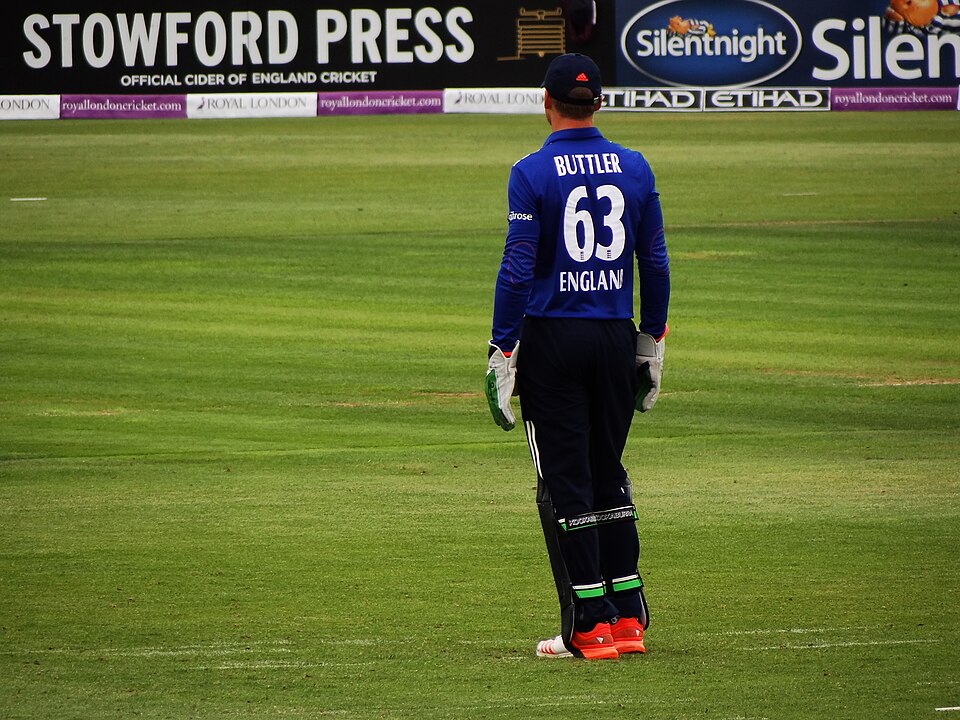
Why wicketkeepers are increasingly expected to attack
There is another reason why batting has become particularly important to wicketkeepers: where they bat.
The modern Test keeper generally appears at number six, seven or eight, with seven probably the position most closely associated with the role. That is not the same job as opening the batting or coming in at number three.
A number seven begins his innings after five wickets have already fallen. On a good day he may arrive alongside an established specialist batsman with hundreds of runs still available; on a bad one he may be batting with the tail within half an hour. Either way, he cannot build his game around the assumption that 200 deliveries will be available to compile a leisurely hundred.
That naturally favours attacking players.
A wicketkeeper who can make 45 from 55 balls before the final recognised batsman disappears may be more useful at seven than somebody technically capable of occupying the crease for four hours but who requires 130 deliveries to score the same number of runs. Once numbers eight, nine, ten and eleven arrive, the ability to manipulate strike and then accelerate becomes increasingly valuable.
Prior was excellent at it. Bairstow could do it. Buttler was selected partly because England believed he could do it better than almost anybody, and Smith’s natural aggression fits the same model.
The ideal modern wicketkeeper therefore does not merely need to bat.
He is increasingly expected to bat quickly.
That helps explain why so many of the players in this ranking – Mayes, Moores, both Rew brothers and others – are judged not just on their averages but on their ability to dominate bowling. If England eventually need a new number seven, they are unlikely to look simply for the keeper with the prettiest technique or even the best batting average. Ben Foakes has a first-class batting average over 38 but a Test batting strike rate of 47.2, England did not doubt that he could bat but they did doubt whether he could bat in the way they want their number 7 to. England (whether correct or incorrect) want someone capable of changing the score before the innings runs out of partners.
Has T20 cricket helped kill the specialist wicketkeeper?
The rise of T20 cricket may have pushed the balance even further towards batting.
Think about the basic job of a wicketkeeper in a four-day match. A side might bowl 90 overs in a day and the keeper could crouch behind the stumps for 540 deliveries, collecting ball after ball, coping with wobble, standing up to spin or medium pace and maintaining concentration for six hours.
Now think about a T20.
There are only 120 legal balls in the innings, and modern batsmen are trying to hit a very large proportion of them somewhere other than the wicketkeeper’s gloves. How many deliveries in an average T20 actually travel through to the keeper in the traditional fashion? It is a fraction of the workload he faces in red-ball cricket.
That does not make wicketkeeping unimportant in T20. In some respects it makes every individual mistake more damaging because there are so few opportunities to recover, and Jack Russell has argued that the scarcity of deliveries reaching the keeper places an even greater premium on concentration when one finally does. But the overall volume of traditional wicketkeeping work is unquestionably lower.
Meanwhile, the value of batting has exploded.
A keeper who can walk in at number six and hit 25 from ten balls may change a T20 match even if he barely touches the ball with his gloves. Franchise contracts, international selections and highlights packages therefore reward the batting part of the role in a way that is much easier to see and quantify than technically excellent glovework.
That matters because T20 is no longer a small sideshow in a young cricketer’s development. Players grow up practising ramps, reverse sweeps and range hitting, counties need wicketkeepers who can contribute to their Blast sides, and the best young players know that white-ball ability can open doors to franchise competitions around the world.
The incentives are obvious.
If you are a 17-year-old wicketkeeper who wants a professional career, becoming a better batsman potentially earns you a place in three formats, an England pathway opportunity and eventually franchise contracts. Becoming five per cent better at taking the wobbling ball outside off stump may make you a considerably better wicketkeeper without producing anything so easily visible on a scorecard.
That does not mean T20 has killed the art of keeping. It does help explain why the modern pathway increasingly produces batsmen who keep, rather than Seymour Clarks.
Why standing up to seamers could change wicketkeeping again
There may, however, be a complication.
Standing up to medium pace is not a new invention. Wicketkeepers have done it for generations, particularly to bowlers operating below genuine fast-bowling speeds, and Seymour Clark was apparently willing to stand up even to Somerset’s quickest bowlers nearly a century ago.
What has become particularly interesting is the way international teams are increasingly using the tactic specifically to restrict batsmen who move down the pitch.
England’s batsmen had made a habit of leaving their crease against seamers, attempting to disrupt length and turn good balls into half-volleys. Australia responded during the 2025/26 Ashes by bringing Carey up to Boland. Boland subsequently acknowledged that he initially disliked the arrangement before appreciating how effectively it stopped England’s batsmen moving at him.
New Zealand then offered an even clearer demonstration at the Oval in June. Blundell stood up to Henry, forcing Root and Brook to remain where they started rather than advancing down the wicket, while Henry proceeded to take 11 wickets in a crushing New Zealand victory. England have already followed the same trend themselves: Jamie Smith repeatedly stood up to Ollie Robinson against Pakistan this summer, with Robinson’s mid-70mph wobble becoming noticeably harder for batsmen to escape once they were pinned to the crease.
That changes the calculation because the wicketkeeper is no longer merely reacting to the bowling; he is helping create the conditions in which the bowler operates. A keeper capable of standing up to an 80mph seamer can effectively remove one of the batsman’s options, meaning the difference between the best gloveman and somebody who is merely competent might become visible not only in missed catches or byes but in the bowler’s figures.
None of this means England are about to rediscover a 1930 philosophy in which batting is optional. Smith, James Rew, Thomas Rew and most of the best young keepers are extremely talented batsmen precisely because modern cricket demands it.
It might simply mean that, if two players are similarly good with the bat, being the better wicketkeeper could start winning the argument again.
Which makes the ten below particularly interesting.
The ten best young English wicketkeepers ranked
10. Harry Wallace — Glamorgan
Age: 17 • County: Glamorgan • England level: England Under-19s
314 runs in three days in May • Made 39 in senior List A cricket at 17 • Son of former Glamorgan wicketkeeper Mark Wallace
Harry Wallace is the least experienced player in this ranking and the selection that requires the greatest projection, but that is also the point. At 17, Wallace has time that almost nobody else on the list possesses. He does not turn 18 until 30 October and has already played senior List A cricket for Glamorgan while becoming a regular member of England’s Under-19 setup.
His most eye-catching run of the summer came in May when he scored 62 for Newport, 153 not out for Glamorgan Under-18s and 99 not out for Glamorgan Seconds within three days, a sequence totalling 314 runs. He subsequently made 39 against Essex in the One-Day Cup, arriving with Glamorgan in considerable trouble and top-scoring among their first five batsmen.
Wallace has not yet been Glamorgan’s first-team wicketkeeper, with Alex Horton taking the gloves in his senior appearances so far. His case therefore rests more heavily on age-group keeping, where England continue to select him as a wicketkeeping option, alongside the unusually early progress he is making with the bat.
Lists like this should not simply reproduce career run totals in a different order. Wallace has genuine wicketkeeping pedigree, an increasingly interesting batting record and another five years before he reaches the age of some players above him. By then, putting him tenth could look conservative or wildly optimistic; at 17, either remains entirely possible.
There is also a minor declaration of interest: Wallace’s grandfather was one of my teachers in college and was a thoroughly lovely man. Fortunately for Harry, that has not earned him his place in the ten, but it has made me feel quite old.
9. Haydon Mustard — Durham
Age: 20 • County: Durham • England level: England Under-19s
Made 100 and 54 in the same Second XI match in September • Scored 41 and took two catches on his England Under-19 debut • Son of former England and Durham keeper Phil Mustard
The surname will be familiar to Durham supporters. Haydon Mustard is the son of Phil Mustard, who spent more than a decade keeping wicket for Durham and played ODI and T20I cricket for England, but the younger Mustard has now accumulated enough cricket of his own that the family connection is becoming less relevant.
His senior batting numbers have not yet exploded. Mustard has played first-class and white-ball cricket for Durham without securing a permanent first-team place, and his early professional record remains considerably less substantial than those of Cullen, Horton or the players towards the top of this ranking.
The reason for optimism is what has happened underneath the first team. Mustard made another Second XI hundred against the South Asian Cricket Academy in June before ending the Second XI season with 100 and 54 against Somerset, opening the batting in both innings. Durham have also continued investing in him, extending his rookie contract beyond his initial deal.
There is also proper wicketkeeping pedigree rather than a pair of gloves being added to his CV for convenience. Mustard kept for England Under-19s, making 41 and taking two catches on debut, and has continued doing the job throughout his development at Durham.
At 20, his challenge is fairly straightforward: the second-team hundreds now need to become first-team fifties and eventually first-team hundreds. If that happens, there is enough behind the stumps to make the package interesting.
8. Henry Cullen — Worcestershire
Age: 23 • County: Worcestershire
Made 72 against Hampshire in July • Followed it with 70 against Yorkshire three days later • Maiden first-class fifty came from number ten after Worcestershire fell to 150 for nine
Henry Cullen is almost the opposite of Wallace. There is relatively little need to imagine what he might look like in senior professional cricket because he has already spent several seasons playing it, particularly in the One-Day Cup, and this summer has offered increasing evidence that his batting is moving forward.
The sequence in late July was particularly impressive. Cullen made 72 as Worcestershire beat Hampshire by four runs and then top-scored with 70 against Yorkshire three days later. In September he followed those white-ball innings with his maiden first-class fifty, making 64 from number ten after Worcestershire had collapsed to 150 for nine against Northamptonshire.
That last innings is probably the most interesting of the three. Lower-order wicketkeeper runs can look attractive on a scorecard without telling us much, but rescuing an innings when nine wickets have already fallen provides useful evidence of temperament as well as technique.
Cullen’s difficulty in a ranking based partly on international potential is age. At 23 he is competing with players five or six years younger who have already entered England programmes, so there is considerably less room to award him points simply for what he might become.
There is, however, also something to be said for actually doing the job. Cullen has reached the stage where promising teenage performances have become meaningful senior contributions, while several of the players immediately around him are still projections.
7. Alex Horton — Glamorgan
Age: 22 • County: Glamorgan • England level: England Under-19s
Took six catches in one Under-19 World Cup match • Made 53 not out in England’s 2022 World Cup semi-final • Scored 122 and 85 in the 2026 One-Day Cup
Alex Horton has been around long enough that it is easy to forget he is still only 22. He was England’s wicketkeeper during their run to the 2022 Under-19 World Cup final, beginning the tournament by taking six catches against Bangladesh and later making an unbeaten 53 from 36 balls in a tense semi-final victory over Afghanistan.
The transition into county cricket has taken longer. Horton made his Glamorgan debut while still a teenager but did not immediately produce the sort of senior batting record his junior performances suggested might follow. The keeping was rarely the concern; the question was whether enough runs would arrive alongside it.
This summer has provided a much stronger answer. Horton made 122 against Sussex in July and followed it a couple of weeks later with 85 from 72 balls against Essex, helping Glamorgan recover from 78 for five.
Those innings matter because Horton already has the wicketkeeping background. England trusted him behind the stumps at a World Cup at 18 and Glamorgan continue to use him there in senior cricket. If the batting now catches up, his overall case changes fairly quickly.
He is also an interesting example in the wider debate running through this article. Horton does not need to turn himself into a wicketkeeper; that part of the package already exists. The challenge is scoring enough runs to make selectors care about how good that wicketkeeping might be.
6. Ben Mayes — Hampshire
Age: 18 • County: Hampshire • England level: England Lions
Led the 2026 Under-19 World Cup with 444 runs at 74 • His 191 against Scotland was an England youth record • Selected for England Lions at 18
If this were simply another ranking of the best young English batsmen, Ben Mayes would have a strong argument for being several places higher. Indeed, he already appeared prominently in exactly that exercise.
Mayes was the leading run-scorer at the 2026 Under-19 World Cup with 444 runs at 74 (with a 112.40 strike rate), five more runs than Vaibhav Sooryavanshi and more than 100 runs clear of England captain Thomas Rew. His tournament included an extraordinary 191 from 117 balls against Scotland, the highest score ever made by an England youth player and only one short of the Under-19 World Cup record.
More importantly, the runs have started travelling into professional cricket. Mayes already has a first-class hundred, has played Championship cricket for Hampshire and scored 155 Blast runs in 2026 at a strike rate above 140. By September, England had seen enough to include him alongside Joe Moores and Caleb Falconer in the Lions T20 squad against Sri Lanka.
The reason he ranks sixth rather than third or fourth is the other half of the job. Mayes is a wicketkeeper and has kept in senior cricket, but his pathway to international cricket currently looks more obviously driven by the bat than the gloves.
There is nothing wrong with that. England have spent most of the past 30 years selecting precisely that type of wicketkeeper, and Mayes may ultimately become such a good batsman that whether he is England’s second-best or seventh-best keeper ceases to matter.
5. Joe Moores — Lancashire
Age: 18 • County: Lancashire • England level: England Lions
Played first-class, List A, Blast and Hundred cricket before turning 18 • 270 List A runs at 33.75 and a strike rate of 115.87 • Left an England Under-19 series early to join the Lions
Joe Moores turned 18 on 15 September 2026, the cutoff date for this ranking, which is worth emphasising because the amount of cricket he has already played is slightly ridiculous.
Before his 18th birthday Moores had appeared in first-class cricket, the One-Day Cup, the T20 Blast and The Hundred. He had also played 29 Youth ODIs for England and was already progressing into the Lions setup.
The senior numbers are understandably uneven. Three first-class appearances have produced 76 runs, although 57 of them came in one innings, while his Blast record is still developing. The 50-over numbers are much more striking: 270 List A runs at 33.75 with a strike rate of 115.87, including two fifties. He also produced one of the more memorable cameo innings of the summer when he made an unbeaten 41 from only 15 balls against Leicestershire.
What separates Moores from Mayes for the purposes of this particular ranking is the keeping. Moores already has a first-class stumping and has been developed consistently as a keeper through the Lancashire and England pathways. The ECB’s decision in September was telling: he was selected for England Under-19s against Pakistan, but only for the opening match because he was then required by the England Lions.
That does not guarantee an international career, but it does indicate that England consider him unusually advanced for an 18-year-old. Mayes might eventually become the better batsman; Moores, today, has the slightly stronger case specifically as a young wicketkeeping prospect.
4. Kai Smith — Warwickshire
Age: 21 • County: Warwickshire • England-qualified
600 first-class runs at 37.50 • 35 catches and two stumpings in 14 first-class matches • Made 130 not out in a One-Day Cup quarter-final at 19
Kai Smith takes the least conventional route into this ranking. Born and raised in Dubai to South African parents, Smith represented the UAE at two Under-19 World Cups before entering Warwickshire’s pathway. He holds a UK passport and has previously spoken about his ambition to follow the route from UAE age-group cricket into the England setup.
More importantly, he is already doing the complete job in Championship cricket. Michael Burgess’s retirement created a vacancy at Warwickshire and Smith took over the gloves. His first 12 first-class matches have produced 600 runs at 37.50, five fifties, 38 catches and two stumpings.
The batting evidence is not confined to red-ball cricket either. Smith announced himself in the 2024 One-Day Cup quarter-final by making 130 not out from 104 balls against Worcestershire, an innings that pushed Warwickshire into the semi-finals while he was still 19.
That is a significant distinction from many prospects on this list. Smith has already spent long Championship days behind the stumps, then had to bat after them and return the following morning to do it again. No amount of academy keeping can perfectly reproduce that workload.
He does not possess Thomas Rew’s extraordinary early batting numbers and he has not progressed through England’s age-group programme, but there is considerably less imagination involved in projecting Smith as a first-class wicketkeeper because he already is one. Another couple of seasons averaging somewhere in the mid-thirties while improving with the gloves would make him very difficult for England to ignore.
3. Matty Hurst — Lancashire
Age: 22 • County: Lancashire • England level: England Lions
1,896 first-class runs at 31.60 • 115 catches and three stumpings in 40 first-class matches • England Lions and Perth Scorchers experience before turning 22
Matty Hurst is probably disadvantaged by a ranking like this because his case contains rather less imagination than some of the teenagers beneath him. He has already done it.
At 22, Hurst has played 40 first-class matches, scored 1,896 runs at 31.60, made two hundreds and 12 fifties, and recorded 115 catches and three stumpings. Nobody below him comes close to matching that volume of senior red-ball wicketkeeping.
His breakthrough 2024 season was particularly important. Lancashire used him throughout both the Championship and Blast, he made his maiden first-class hundred at Trent Bridge and was rewarded with an England Lions call-up and a Big Bash contract with Perth Scorchers.
That experience matters because wicketkeeping is an unusually difficult position to assess through highlights. A spectacular stumping tells us something, but so does taking 500 balls cleanly on a cold day in April, maintaining concentration while nothing happens and then batting for two hours at the end of it. Hurst has already accumulated a huge amount of that experience.
The question is the batting ceiling. A first-class average around 31 is comfortably good enough for an excellent county wicketkeeper, but the recent history of England selection suggests it may not be sufficient to displace a rival capable of averaging above 40.
If Hurst can add another five runs to that average while maintaining his level behind the stumps, there are very few obvious weaknesses in the case. For now, two exceptional Somerset prospects sit above him.
2. Thomas Rew — Somerset
Age: 18 • County: Somerset • England level: England Lions
475 first-class runs at 67.85 • Captained England to the 2026 Under-19 World Cup final • Made back-to-back Championship hundreds of 127 not out and 149 at 18
This is where the age adjustment starts doing some fairly serious work. Thomas Rew has played only four first-class matches, which would normally be nowhere near enough evidence to put somebody second in a ranking of England’s best young wicketkeepers.
Those four matches have produced 475 runs at 67.85, with two hundreds and a fifty. Rew is 18.
The sample is obviously small, but there comes a point where being 18 becomes part of the statistic. The most striking part of his first Championship summer came in June, when Rew made an unbeaten 127 against Nottinghamshire for his maiden first-class century and then, eight days later, followed it with 149 against Warwickshire. Somerset had trailed by 122 on first innings and slipped to 80 for four in their second before Rew and Craig Overton added 233 to save the match.
That was hardly the beginning of the hype. Rew had already captained England to the 2026 Under-19 World Cup final, scoring 330 runs at 66 (with a 105.09 strike rate), including 110 against Australia in the semi-final. The ICC subsequently named him as both captain and wicketkeeper in its Team of the Tournament, while he had also toured with the England Lions before establishing himself in Somerset’s Championship side.
Perhaps the most interesting part, given the subject of this article, is that his batting development has not required him to abandon wicketkeeping. Rew has continued to take the gloves through England age-group and senior cricket and already has a first-class stumping on his record.
There are young players who can keep if required and wicketkeepers who can bat. Rew has the potential to become genuinely outstanding at both.
If Thomas Rew were an only child, he would probably already be discussed as the obvious long-term England wicketkeeper. Unfortunately for him (in an England selection sense only, of course), his brother exists.
1. James Rew — Somerset
Age: 22 • County: Somerset • England level: Test
Somerset’s youngest first-class double centurion • Five Championship hundreds and 1,086 runs in 2023 at 19 • Made his England Test debut against New Zealand in June 2026
James Rew is number one because there is not yet a sensible argument for putting anybody else here.
Some players on this list require significant projection. Rew has already moved through the England pathway and into Test cricket while building one of the most substantial first-class batting records of any English player his age.
His breakthrough came in 2023, when he was still only 19. Rew scored 1,086 Championship runs at 57.15 with five hundreds and became Somerset’s youngest first-class double centurion when he made 221 against Hampshire at 19 years and 181 days.
The runs did not disappear once county bowlers had worked him out. By 21 he had become the youngest Englishman since Denis Compton to reach ten first-class hundreds, and his career aggregate has since passed 4,000 runs.
England had seen enough by this summer. Rew was initially included in the Test squad against New Zealand and then made his debut at the Oval on 17 June when Jamie Smith was unavailable following the birth of his second child. He scored 24 and 15 and took three catches.
It was not a flawless debut. Rew dropped Rachin Ravindra on seven and missed another chance from Henry Nicholls, and his wicketkeeping consequently received the sort of scrutiny that a couple of mistakes in county cricket rarely attract.
That experience is useful in assessing him because it highlights the remaining question. The batting is international quality or close to it; nobody needs to imagine what Rew might do if asked to make first-class hundreds because he has spent several seasons doing exactly that. The wicketkeeping is the part that may ultimately determine whether he becomes England’s long-term number one or an extremely good batsman who can keep when required.
That also brings us back to the central argument in this article. If England continue prioritising the best batsman capable of doing the job behind the stumps, Rew looks almost purpose-built for the role. If specialist keeping skills acquire greater tactical importance over the next few years, he will need to demonstrate that side of his game at the same level.
For now, none of that threatens his position here. At 22, James Rew has already achieved what every other player on this list is trying to do: he has kept wicket for England in Test cricket.
The more intriguing question is whether the greatest long-term threat to his position comes from somebody who grew up in the same house.
Which young wicketkeepers just missed the top 10?
Robbie Bowman is the hardest omission and the player I would expect to have the best chance of forcing his way into the next version of this ranking.
Durham gave Bowman a rookie contract in 2025 after he scored 341 runs in five Second XI appearances, including a top score of 97. He was subsequently named Durham’s Second XI Player of the Year after becoming a regular in both red- and white-ball cricket and taking 12 catches behind the stumps. He has also moved into the England Under-19 setup and is part of the current series against Pakistan.
Henry Hurle provides Glamorgan with yet another young wicketkeeping option and already has senior white-ball experience, although Horton is more established and Wallace has the advantage of being four years younger.
Yorkshire have two interesting prospects in Noah Kelly and Owen Smith, both of whom remain young enough to develop significantly before this ranking needs revisiting.
Then there is Ben Dawkins. Dawkins is unquestionably one of England’s best young batsmen and Kent officially describe him as a wicketkeeper-batter, but he has increasingly played as a specialist batsman while other players take the gloves, including for England Under-19s. Given the number of genuine specialist keepers available, I have therefore left him out rather than turn this into a second ranking of England’s best young batsmen. If Dawkins returns to keeping regularly in professional cricket, that decision can be revisited.
Who could replace Jamie Smith as England wicketkeeper?
The slightly awkward answer is that England may not need anybody to replace him for a long time.
Smith is only 26 and has already demonstrated why England were willing to make a fairly ruthless selection decision to get him into the side. His 184 against India was precisely the sort of innings the selectors hoped their wicketkeeper could produce, and unless his form or keeping deteriorates significantly there is no obvious vacancy.
James Rew is clearly the current understudy (especially if Jordan Cox is going to bat up the order). England have already selected him in a Test squad and handed him a cap when Smith was unavailable, but behind him the picture becomes much more interesting.
Hurst has the deepest body of senior keeping experience. Kai Smith is already a first-choice Championship keeper. Thomas Rew might have the highest long-term ceiling of anyone on this list, while Moores and Mayes are progressing so rapidly that predicting what either will look like at 23 is almost pointless.
There is also another possibility: the best young wicketkeeper might never become England’s wicketkeeper because his batting becomes too valuable elsewhere. If Thomas Rew or Mayes develops into a genuinely international-class top-order batsman, a future England side might decide that keeping wicket is an unnecessary burden. Alec Stewart demonstrated the enormous flexibility a player capable of doing both jobs provides, but his career also demonstrated how complicated selection becomes when one player can fill two completely different roles.
That is another reason why the development of specialist keeping skills matters. If everyone can bat, the player who can do something different with the gloves suddenly has a way of separating himself.
Are specialist wicketkeepers coming back?
Probably not in the Seymour Clark sense.
The days when England could select a wicketkeeper primarily because he was exceptional with the gloves and accept almost no batting output are not coming back. There is simply too much evidence of the advantage created by a number seven capable of making hundreds and scoring quickly with the tail.
What may change is the threshold.
For much of the recent era, the calculation sometimes appeared to be that the superior batsman would win unless his keeping was actively inadequate. The emergence of standing up to seam as a more deliberate tactic potentially increases the value of keeping quality enough to alter close decisions.
That could particularly matter in England. Dukes balls, seam-friendly conditions and bowlers operating around 80mph create plenty of opportunities to bring the keeper closer to the stumps, and a keeper who can do that confidently gives the captain an option that another keeper may not.
Carey and Blundell have not proved that wicketkeeping has suddenly become more important than batting. They have demonstrated that an elite wicketkeeper can still influence a Test match in ways that do not appear next to his name on the scorecard.
That feels particularly important when assessing a generation in which almost everybody can bat.
Final verdict
England are in an unusual position. Their current Test wicketkeeper is only 26 and could conceivably remain in the role for most of the next decade, yet beneath him is a group developing quickly enough that England may soon have considerably more credible wicketkeeping options than places to put them.
James Rew has already reached Test cricket and remains comfortably number one today. Matty Hurst has accumulated 40 first-class matches and more senior keeping experience than anyone else in the group. Kai Smith has become Warwickshire’s Championship keeper at 21.
Then there are the teenagers. Thomas Rew has scored 475 first-class runs at 67.85 and captained England at an Under-19 World Cup. Joe Moores played first-class cricket, the Blast and The Hundred before turning 18 and has already reached the Lions. Ben Mayes led the Under-19 World Cup run-scoring charts and made an England youth-record 191, while Harry Wallace is playing senior cricket at 17.
The easy conclusion would be that this is simply another generation of wicketkeeper-batters, each trying to score enough runs to force his way ahead of the others. Batting will certainly remain most of the equation; no England selector is going to discover Seymour Clark’s statistics and decide that a batting average of 0.00 represents a neglected form of squad balance.
But Clark is a useful reminder of where the position began, just as Michael Bates demonstrates how recently a great keeper could discover that great keeping was no longer enough.
T20 cricket, the tactical demands of batting at number seven and the simple difficulty of manufacturing international-class batting have all pushed selectors towards players whose strongest skill may initially be the one performed without gloves.
Carey and Blundell, however, have offered a reminder that wicketkeeping itself can still alter how a match is played.
For most of the modern era, the question has been whether a brilliant wicketkeeper can score enough runs.
The next generation may eventually face a subtly different question:
If all the wicketkeepers can bat, which of them can do things with the gloves that the others cannot?
Frequently asked questions
Who is England’s best young wicketkeeper?
James Rew currently ranks as England’s best young wicketkeeper. The 22-year-old Somerset wicketkeeper-batter has passed 4,000 first-class runs, scored more than ten first-class hundreds and made his England Test debut against New Zealand in June 2026.
Who are the best young English wicketkeepers in 2026?
James Rew tops this ranking, followed by his younger brother Thomas Rew, Lancashire’s Matty Hurst, Warwickshire’s Kai Smith and Lancashire teenager Joe Moores. Ben Mayes, Alex Horton, Henry Cullen, Haydon Mustard and Harry Wallace complete the top ten.
Who could replace Jamie Smith as England wicketkeeper?
James Rew is currently the most obvious alternative after making his Test debut in 2026. Thomas Rew, Matty Hurst, Kai Smith, Joe Moores and Ben Mayes are among the other leading young wicketkeeping prospects.
Are James Rew and Thomas Rew brothers?
Yes. James and Thomas Rew are brothers and both play for Somerset. James was born in January 2004, while Thomas was born in November 2007. James has already played Test cricket for England, while Thomas captained England Under-19s at the 2026 World Cup.
Who is England’s best teenage wicketkeeper?
Thomas Rew is currently England’s highest-ranked teenage wicketkeeping prospect. At 18 he has scored 475 first-class runs at 67.85, captained England to the Under-19 World Cup final and already appeared for the England Lions. Joe Moores and Ben Mayes, both also 18, are close behind.
Who is Joe Moores?
Joe Moores is an 18-year-old Lancashire wicketkeeper-batter who has represented England Under-19s and England Lions. He played first-class cricket, List A cricket, the T20 Blast and The Hundred before his 18th birthday.
Who is Harry Wallace?
Harry Wallace is a 17-year-old Glamorgan and England Under-19 wicketkeeper-batter. He is the son of former Glamorgan wicketkeeper and current director of cricket Mark Wallace and made his senior List A debut in 2026.
Who was Seymour Clark?
Seymour Clark was a Somerset wicketkeeper who played five first-class matches in 1930. He took eight catches but failed to score a run in nine innings, leaving him with a career batting average of 0.00. Somerset nevertheless offered him a professional contract for the following season, which he declined in order to return to his job on the railway.
Why do wicketkeepers stand up to fast bowlers?
Standing up to a seamer can prevent batsmen advancing down the pitch and make it more difficult for them to disrupt the bowler’s preferred length. Alex Carey used the tactic with Scott Boland during the 2025/26 Ashes, while Tom Blundell stood up to Matt Henry against England in 2026, and Jamie Smith has done so repeatedly to Ollie Robinson in 2026.
Is standing up to seam bowling a new tactic?
No. Wicketkeepers have stood up to medium-paced seam bowling for generations. Seymour Clark was reportedly standing up to Somerset’s fastest bowlers as far back as 1930. What has become particularly notable recently is the deliberate use of the tactic against batsmen who advance down the pitch in an attempt to disrupt seamers.
Are wicketkeepers being picked more for batting than keeping?
Modern international teams generally expect wicketkeepers to make substantial contributions with the bat, and England’s selections over the past three decades reflect that. Alec Stewart, Matt Prior, Jonny Bairstow, Jos Buttler and Jamie Smith demonstrate the increasing importance of batting ability, while the career of specialist keeper Michael Bates provides a good example of how difficult it became for outstanding glovemen whose batting was less productive.
 The Penwarden Review
Leave a comment