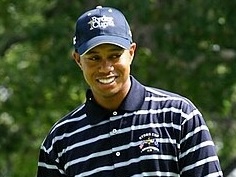
Tiger Woods won 15 major championships. Gardner Dickinson won none. Woods played 37 US Ryder Cup matches and won 13 of them. Dickinson played ten and won nine.
There is, fairly obviously, some context required.
A few weeks ago, I attempted to pick the greatest European Ryder Cup team of all time. The idea was not simply to list the 12 greatest golfers to have played in the competition. If that had been the exercise, Nick Faldo would probably have made the team. Instead, I wanted to pick the strongest Ryder Cup team: 12 players who could actually be sent out across two days of foursomes and fourballs before somehow surviving Sunday afternoon.
America makes that exercise considerably more complicated.
For a large part of the Ryder Cup’s history, the United States did not just beat Great Britain & Ireland. It battered them. From 1959 to 1983 the Americans won 12 consecutive Ryder Cups, several by margins which make modern contests look like an England batting scorecard in the 1990s. Then Europe started winning, and the American Ryder Cup record book became split rather awkwardly between two eras.
A remarkable number of Americans who played before the mid-1980s have career records which look almost ridiculous by modern standards. A remarkable number of the greatest American golfers who came afterwards have losing records.
Woods finished 13-21-3. Phil Mickelson, who played more Ryder Cup matches than any other American, went 18-22-7. Jordan Spieth has a losing record. The United States 2027 captain Jim Furyk played 34 matches and won ten (maybe he can captain by telling his players something, and them doing the opposite?).
Gardner Dickinson went 9-1. Tony Lema went 8-1-2. Sam Snead went 10-2-1.
There is the problem. If I simply rank Americans by the percentage of Ryder Cup points they won, the team will be overwhelmingly populated by players from the period in which America was overwhelmingly better than its opponent. Dickinson comfortably beats Woods. Billy Casper beats Jack Nicklaus. Several players who rarely feature in discussions about the greatest American golfers suddenly become close to automatic selections. The inverse is true for the Europeans, my greatest European Ryder Cup team of all time is littered with players who will probably make the team in 2027. The same cannot be said for the 2027 US team.
Some of that is because those players were brilliant in the Ryder Cup. Some of it is because America was brilliant in the Ryder Cup.
We need to work out the difference.
So this is not simply a list of the 12 greatest American golfers. Using Ryder Cup records, an era-adjusted performance measure and the most successful US partnerships in the competition’s history, I have tried to build the strongest American Ryder Cup team of all time. The result leaves out some very famous names.
The 24 Greatest USA Ryder Cup Candidates
I have started with 24 players.
There are the obvious names. Palmer, Nicklaus, Trevino and Watson combined being great golfers with great Ryder Cup records. Woods and Mickelson have to be considered despite records which look surprisingly unimpressive beside almost everything else they achieved in golf.
There are also several players who would probably not appear on many people’s first attempt at this list (they did not appear instinctively on mine until I dived into the research). Gardner Dickinson played in only two Ryder Cups but won nine of his ten matches. J.C. Snead went 9-2. Tony Lema lost once in 11 matches. Larry Nelson went 5-0 in 1979. Patrick Reed played in only three Ryder Cups but produced one of the best records of the modern American era.
Hal Sutton and Tom Lehman are less obvious names (especially after their respective 2004 and 2006 captaincies), but both deserve to be here. Once the strength of the American teams around them is taken into account, their records become considerably more impressive.
The 24 are:
| Player | Ryder Cup record | Points | Points % |
| Arnold Palmer | 22-8-2 | 23 | 71.9% |
| Billy Casper | 20-10-7 | 23.5 | 63.5% |
| Jack Nicklaus | 17-8-3 | 18.5 | 66.1% |
| Lanny Wadkins | 20-11-3 | 21.5 | 63.2% |
| Larry Nelson | 9-3-1 | 9.5 | 73.1% |
| Tom Watson | 10-4-1 | 10.5 | 70.0% |
| Lee Trevino | 17-7-6 | 20 | 66.7% |
| Hale Irwin | 13-5-2 | 14 | 70.0% |
| Gardner Dickinson | 9-1-0 | 9 | 90.0% |
| J.C. Snead | 9-2-0 | 9 | 81.8% |
| Sam Snead | 10-2-1 | 10.5 | 80.8% |
| Tony Lema | 8-1-2 | 9 | 81.8% |
| Tom Weiskopf | 7-2-1 | 7.5 | 75.0% |
| Dow Finsterwald | 9-3-1 | 9.5 | 73.1% |
| Gene Littler | 14-5-8 | 18 | 66.7% |
| Hal Sutton | 7-5-4 | 9 | 56.3% |
| Tom Lehman | 5-3-2 | 6 | 60.0% |
| Patrick Reed | 7-3-2 | 8 | 66.7% |
| Justin Thomas | 9-6-2 | 10 | 58.8% |
| Dustin Johnson | 12-9-0 | 12 | 57.1% |
| Jordan Spieth | 8-9-5 | 10.5 | 47.7% |
| Phil Mickelson | 18-22-7 | 21.5 | 45.7% |
| Tiger Woods | 13-21-3 | 14.5 | 39.2% |
| Xander Schauffele | 7-5-0 | 7 | 58.3% |
There are some fairly obvious inconsistencies here. Woods has won 15 majors and has comfortably the worst points percentage on the list. Dickinson won none and has the best.
Casper sits at the other end of the problem. He won 23.5 Ryder Cup points, more than any other American, and took 63.5% of everything available to him. If we stopped the analysis there, his selection would be fairly straightforward.
We are not going to stop there.
Why Ryder Cup Records Are Difficult to Compare
The Ryder Cup began in 1927 – it did not become a contest between two roughly comparable collections of golfers in 1927.
For decades the United States had an enormous advantage. That is not a criticism of the Americans who played during that period. Palmer, Casper, Snead and Dickinson could only beat the players put in front of them, and they generally did. It does, however, make comparing their records with modern Americans slightly ridiculous.
Dickinson won 90% of the Ryder Cup points available to him. Woods won 39.2%.
Taken literally, Dickinson was more than twice as effective in the Ryder Cup as Tiger Woods. Sometimes statistics tell you something important. Sometimes they tell you that you need another statistic.
So I have created one.
In order to assess the value of US golfers before and after 1979 (when the continental Europeans got involved) you need to basically work out if scoring 10 goals for Coventry City is more impressive than scoring 20 goals for Manchester City.
Adjusting USA Ryder Cup Records for Era
For every American to have played at least ten Ryder Cup matches, I compared his individual points percentage with the percentage of all available points won by the US teams in the Ryder Cups in which he played.
The formula is deliberately simple:
Player points percentage ÷ USA team points percentage during his Ryder Cups × 100
A score of 100 means the player collected points at exactly the same rate as the American teams around him. A score of 110 means his rate was 10% better. A score of 90 means it was 10% worse.
There are obvious limits. The statistic does not tell us how Gardner Dickinson would have performed against a modern European team, whether Patrick Reed would have gone unbeaten against Great Britain & Ireland in the 1960s, or how changes in format and depth of opposition should be weighted. It also includes a player’s own results within his team’s overall percentage.
It is not supposed to solve all of those problems. The point is simply to answer a more useful question than the raw record does: did a player outperform or underperform the American teams around him?
That seems a reasonable place to start.
USA Ryder Cup Records: The Best American Players, Adjusted for Era
This is what happens when the 24 candidates are ranked using that calculation:
| Rank | Player | Matches | Record | Points % | USA team % | Era-adjusted index |
| 1 | Patrick Reed | 12 | 7-3-2 | 66.7% | 46.4% | 143.6 |
| 2 | Gardner Dickinson | 10 | 9-1-0 | 90.0% | 65.6% | 137.1 |
| 3 | J.C. Snead | 11 | 9-2-0 | 81.8% | 60.9% | 134.3 |
| 4 | Larry Nelson | 13 | 9-3-1 | 73.1% | 57.7% | 126.6 |
| 5 | Tony Lema | 11 | 8-1-2 | 81.8% | 66.4% | 123.2 |
| 6 | Tom Watson | 15 | 10-4-1 | 70.0% | 57.2% | 122.4 |
| 7 | Hal Sutton | 16 | 7-5-4 | 56.3% | 46.0% | 122.3 |
| 8 | Justin Thomas | 17 | 9-6-2 | 58.8% | 48.2% | 122.0 |
| 9 | Lanny Wadkins | 34 | 20-11-3 | 63.2% | 51.9% | 122.0 |
| 10 | Tom Lehman | 10 | 5-3-2 | 60.0% | 49.4% | 121.4 |
| 11 | Tom Weiskopf | 10 | 7-2-1 | 75.0% | 62.5% | 120.0 |
| 12 | Sam Snead | 13 | 10-2-1 | 80.8% | 69.6% | 116.0 |
| 13 | Dow Finsterwald | 13 | 9-3-1 | 73.1% | 63.1% | 115.8 |
| 14 | Hale Irwin | 20 | 13-5-2 | 70.0% | 61.4% | 114.0 |
| 15 | Xander Schauffele | 12 | 7-5-0 | 58.3% | 51.8% | 112.6 |
| 16 | Arnold Palmer | 32 | 22-8-2 | 71.9% | 64.1% | 112.1 |
| 17 | Lee Trevino | 30 | 17-7-6 | 66.7% | 59.8% | 111.5 |
| 18 | Jack Nicklaus | 28 | 17-8-3 | 66.1% | 59.9% | 110.2 |
| 19 | Dustin Johnson | 21 | 12-9-0 | 57.1% | 52.5% | 108.8 |
| 20 | Gene Littler | 27 | 14-5-8 | 66.7% | 63.0% | 105.9 |
| 21 | Billy Casper | 37 | 20-10-7 | 63.5% | 62.5% | 101.6 |
| 22 | Phil Mickelson | 47 | 18-22-7 | 45.7% | 46.3% | 98.8 |
| 23 | Jordan Spieth | 22 | 8-9-5 | 47.7% | 49.6% | 96.1 |
| 24 | Tiger Woods | 37 | 13-21-3 | 39.2% | 43.3% | 90.5 |
All Ryder Cup records are updated through Bethpage 2025; the era-adjusted index is my own calculation
The first thing to notice is that adjusting for era does not make all the old Americans disappear. Quite the opposite. Dickinson’s 90% raw record was clearly helped by playing for extremely strong American teams, yet he still ranks second. J.C. Snead remains third and Tony Lema fifth. They were playing for dominant teams, but they were also doing considerably better than most of the other players in those teams.
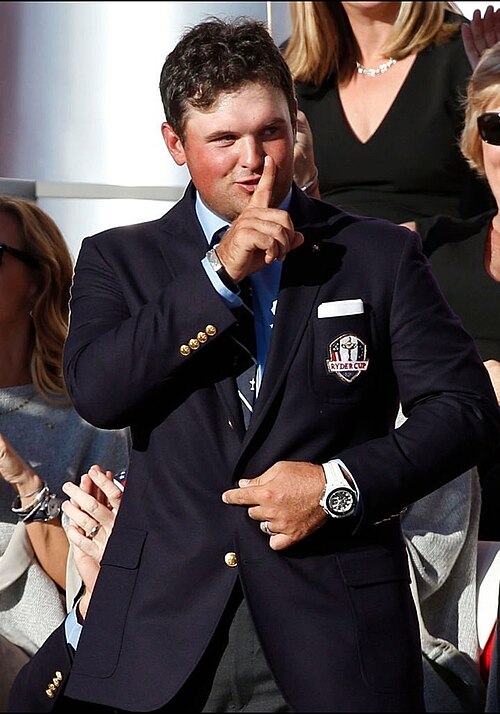
The most interesting name at the top is Patrick Reed. Reed played in 2014, 2016 and 2018, a stretch in which America lost twice and won once. Across those three contests, the US collected only 46.4% of the points available. Reed collected 66.7%.
His era-adjusted index of 143.6 is the highest of any American to have played at least ten Ryder Cup matches.
There are some less obvious beneficiaries too. Hal Sutton’s raw 56.3% looks good rather than exceptional, but it came while his American teams collectively won only 46.0%. He therefore jumps to seventh. Tom Lehman, with a 5-3-2 record, climbs to tenth.
Justin Thomas also improves substantially. His raw 58.8% does not jump off the page in the same way as Dickinson’s 90% or Lema’s 81.8%, but Thomas has played during a much tougher period for the United States. Relative to the teams around him, his Ryder Cup record is one of the strongest in American history.
Billy Casper provides the reverse example. His 20-10-7 record gave him 23.5 points, more than any other American, and a points percentage of 63.5%. The American teams he represented won 62.5%. His era-adjusted index is therefore 101.6.
Casper was extremely good at winning Ryder Cup points during a period when being an American Ryder Cup player was generally an extremely good way of winning Ryder Cup points.
Then there is Tiger.
Woods’ raw percentage of 39.2% improves once the strength of the teams around him is considered. The US sides he represented won only 43.3% of their available points, leaving Woods with an era-adjusted index of 90.5.
That makes his record look better. It still does not make it good. Woods did not merely accumulate a poor Ryder Cup record because he happened to play during an era of European strength; he also performed worse than the American teams around him.
He does, however, remain Tiger Woods.
That argument can wait.
The Best USA Ryder Cup Partnerships
Partnerships matter because four of the five Ryder Cup sessions are played in pairs (and today, 16 of the 28 points come from pairs matches), but America does not have a huge number of long-term combinations which force themselves into the team.
Remarkably in the nearly 100 year history of the Ryder Cup, only six American partnerships have played at least five Ryder Cup matches together and won more than half of the points available. I’ve written about this when I looked at the greatest ever Ryder Cup partnerships – the list is not dominated by Americans.
| Partnership | Matches | Record | Points % |
| Arnold Palmer / Gardner Dickinson | 5 | 5-0-0 | 100.0% |
| Phil Mickelson / Keegan Bradley | 5 | 4-1-0 | 80.0% |
| Jordan Spieth / Patrick Reed | 7 | 4-1-2 | 71.4% |
| Julius Boros / Tony Lema | 5 | 3-1-1 | 70.0% |
| Lanny Wadkins / Larry Nelson | 6 | 4-2-0 | 66.7% |
| Phil Mickelson / David Toms | 6 | 3-2-1 | 58.3% |
There are some other famous American combinations, but the records are less convincing. Jordan Spieth and Justin Thomas have played together nine times, more than any other US partnership, but have taken exactly half of the points available. Patrick Cantlay and Xander Schauffele are also at 50%. Tiger Woods and Steve Stricker played six times together and lost four.
Three partnerships on the table above particularly matter to the final selection.
Palmer and Dickinson played five times and won all five, making them the only American partnership to play five matches together and win every one. Four of those victories came in foursomes. Dickinson’s individual record is already 9-1 and remains exceptional after adjusting for era, so there is no need to manufacture a reason to keep them together.
Wadkins and Nelson also have a strong case. They played six times together and won four, with all four victories coming at the 1979 Ryder Cup. Both also rank among the best Americans on the era-adjusted measure.
Then there are Reed and Spieth. Their 4-1-2 record is particularly relevant because it was compiled in the modern Ryder Cup rather than during the decades of routine American dominance. Reed already has the best era-adjusted record of any American with ten matches. Spieth is much harder to justify individually, but seven matches alongside Reed and nine alongside Thomas mean his value cannot be measured purely by his own losing record.
If we are genuinely selecting a team rather than 12 individuals, that matters.
Picking the Greatest USA Ryder Cup Team
At this point it would be tempting to invent another formula. Perhaps 40% era-adjusted record, 20% raw record, 20% partnerships and 20% individual ability. Put everything into a spreadsheet, add several decimal places and announce that Gardner Dickinson is the 7.43rd greatest American Ryder Cup player of all time.
I am going to resist.
The statistics are there to help make the decisions, not make them for us. Ryder Cup performance comes first. Era matters. Partnerships matter. Individual quality still matters because we are imagining each golfer at his Ryder Cup peak rather than selecting 12 historical spreadsheets.
There will inevitably be inconsistencies. The interesting part is whether they can be justified.
The First Five Are In
Arnold Palmer is in. His raw record is 22-8-2, he won 71.9% of his available points and, even after adjusting for the strength of the American teams around him, his record remains comfortably above average. He also gives us the only perfect American partnership to have played together at least five times.
Jack Nicklaus is in too. Nicklaus went 17-8-3, won 66.1% of his available points and outperformed the American teams in which he played. There are Americans with better percentages. There are not many with that record who also happen to be Jack Nicklaus.
Lanny Wadkins is the third selection. Twenty wins from 34 matches would already put him close, but his era-adjusted index of 122.0 makes the case stronger, while his partnership with Larry Nelson gives us an obvious combination to use in the pairs sessions.
Which rather gives away the fourth selection. Larry Nelson played only three Ryder Cups but went 9-3-1. In 1979 he went 5-0 as a Ryder Cup rookie, winning four matches alongside Wadkins before beating Seve Ballesteros in the singles. His era-adjusted index of 126.6 ranks fourth among Americans with at least ten matches.

Tom Watson completes the first five. He went 10-4-1, collected 70% of his available points and ranks sixth on the adjusted measure. He also played four Ryder Cup team matches alongside Nicklaus and won all four.
Five players selected, seven places left – this is where it gets far less obvious.
The Historical Ryder Cup Greats
There are several players left whose Ryder Cup careers were completed before, or largely before, Europe transformed the competition. We already have Palmer, Nicklaus, Wadkins, Nelson and Watson, so at some point the strength of the American teams of that era has to become more than a methodological footnote.
Gardner Dickinson: 9-1 Is Still 9-1
Dickinson is in.
That sentence would have seemed slightly ridiculous when I started this exercise. It does not anymore.
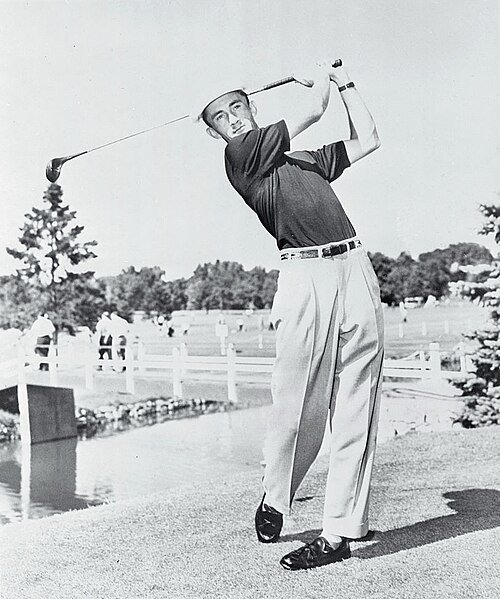
He played in only two Ryder Cups, in 1967 and 1971, and the United States won both. The first was particularly brutal: America won 23½-8½, the largest total margin of victory in Ryder Cup history.
It would therefore be easy to look at Dickinson’s 9-1 record, point towards the strength of the American teams around him and move on. Except we have already adjusted for exactly that, and his era-adjusted index of 137.1 still ranks second.
Then there is Palmer. Dickinson played five times alongside him. They won all five.
At some point the objections become harder to sustain than the case for selection. Dickinson has the best raw points percentage of anyone on the shortlist, the second-best era-adjusted score and forms part of the only American partnership to play at least five times together and win every one.
Gardner Dickinson is in.
Six down, six to go.
Lee Trevino and Hale Irwin
Trevino and Irwin are close enough statistically that both have to remain in the discussion.
Trevino played 30 matches and went 17-7-6, collecting exactly two-thirds of the available points. Irwin went 13-5-2 and collected 70%. Their era-adjusted scores are 111.5 and 114.0 respectively.
Trevino gets the first spot because the sample is larger, the record is still excellent and six major championships provide a fairly useful tie-breaker when the Ryder Cup numbers are this close. He played in six Ryder Cups, accumulated 20 points and lost only seven times in 30 matches.
Irwin stays alive for later.
Lee Trevino is the seventh player selected.
Billy Casper: Most Ryder Cup Points for the USA
Casper is much harder than I expected.
He won 23.5 Ryder Cup points, more than any other American, and finished with a 20-10-7 record. Leaving him out sounds like the sort of decision which requires inventing a complicated statistic to justify it. Slightly awkwardly, we have done exactly that.
His era-adjusted index is 101.6. The American teams he represented won 62.5% of all the points available; Casper won 63.5%. In relative terms, he was almost exactly in line with those teams.
But there is a danger of taking the adjustment too far. Casper still had to play 37 matches. He still won 20. He still accumulated more Ryder Cup points than Palmer, Nicklaus, Trevino, Wadkins and every other American.
Being average in an extraordinarily strong collection of American golfers is not the same thing as being average.
Billy Casper is in.
Eight selected. Four places left.
J.C. Snead, Tony Lema and Sam Snead
This is where the numbers become awkward.
J.C. Snead went 9-2-0 and ranks third on the adjusted measure. Tony Lema went 8-1-2 and ranks fifth. Sam Snead went 10-2-1 and still scores 116.0 after the era adjustment.
If this were simply a statistical ranking of Ryder Cup careers, all three would be pushing very hard for the final 12.
But there are only four places left and we have not yet selected Patrick Reed, Justin Thomas, Dustin Johnson, Jordan Spieth, Phil Mickelson, Tiger Woods or Xander Schauffele. We also have Irwin, Sutton and Lehman still waiting.
This is where the historical imbalance has to matter.
J.C. Snead’s record is extraordinary, but it came across three Ryder Cups, all American victories. Sam Snead’s career was completed before Arnold Palmer had played his first Ryder Cup match. Lema perhaps has the strongest case because he combines an 8-1-2 individual record with a 3-1-1 partnership alongside Julius Boros.
All three remain extremely difficult omissions, but none makes the final 12.
Weiskopf, Finsterwald and Littler
There is very little wrong with these records either.
Tom Weiskopf went 7-2-1. Dow Finsterwald went 9-3-1. Gene Littler played 27 matches and lost only five.
Weiskopf and Finsterwald both remain comfortably above average after the era adjustment, with scores of 120.0 and 115.8. Littler drops further, to 105.9.
The difficulty is no longer identifying players with good records. There are too many of them. The question is whether any offers enough beyond those records to take one of the four remaining places.
For me, they do not.
Hal Sutton and Tom Lehman
These are two of the more interesting results produced by the adjustment.
Sutton’s Ryder Cup record of 7-5-4 means he won 56.3% of the points available to him. That is good, but hardly a number which immediately demands inclusion in an all-time team.
Then you look at his surroundings.
The American teams in the Ryder Cups Sutton played won only 46.0% of the available points. His era-adjusted index is therefore 122.3, seventh among all the candidates and fractionally ahead of Thomas and Wadkins.
Lehman produces a similar, if smaller, effect. He went 5-3-2, won 60% of his available points and records an adjusted index of 121.4, putting him tenth.
Both deserve to be in the 24. Neither quite makes my 12.
Sutton’s case is the stronger of the two, but his 16-match sample is not enormous and there is no historic partnership which makes his inclusion particularly useful when constructing the team. Lehman’s case has the same problem across only ten matches.
They are excellent examples of why the adjustment is useful. It identifies Ryder Cup performances which the raw numbers undersell.
It does not mean I have to select everyone who scores highly.
The Final Four Places
Eight players are in. The last four positions will be decided principally by Hale Irwin and the strongest modern candidates: Patrick Reed, Justin Thomas, Dustin Johnson, Jordan Spieth, Phil Mickelson, Tiger Woods and Xander Schauffele.
The numbers are a useful place to start.
| Player | Record | Points % | Era-adjusted index |
| Patrick Reed | 7-3-2 | 66.7% | 143.6 |
| Justin Thomas | 9-6-2 | 58.8% | 122.0 |
| Hale Irwin | 13-5-2 | 70.0% | 114.0 |
| Xander Schauffele | 7-5-0 | 58.3% | 112.6 |
| Dustin Johnson | 12-9-0 | 57.1% | 108.8 |
| Phil Mickelson | 18-22-7 | 45.7% | 98.8 |
| Jordan Spieth | 8-9-5 | 47.7% | 96.1 |
| Tiger Woods | 13-21-3 | 39.2% | 90.5 |
Patrick Reed is the easiest selection. There is not much point spending this much time developing an era-adjusted statistic and then ignoring the player who finishes first. His raw Ryder Cup record is already excellent: 7-3-2, two-thirds of the available points and three Cups played during a period in which America collectively won less than half of theirs. His adjusted index of 143.6 is comfortably the best in the dataset.
The partnership with Spieth strengthens the case, as does Reed’s singles record. There are reasons why his Ryder Cup career stopped after 2018. None of them make him worse at the matches he actually played.
Patrick Reed is number nine.
Justin Thomas is almost as straightforward. His 9-6-2 record is good rather than spectacular, which is precisely why the era adjustment matters. He has still won 58.8% of his available points during a difficult period for the United States and his adjusted index of 122.0 puts him virtually level with Wadkins.
Then there is his singles record.
Thomas is 4-0 in Ryder Cup singles. Four Sunday matches, four wins.
That gives him considerable value in a hypothetical Ryder Cup before we even start constructing the pairs sessions.
Justin Thomas is number ten.
Dustin Johnson or Xander Schauffele?
Johnson and Schauffele are probably the cleanest modern candidates remaining. Johnson is 12-9-0; Schauffele 7-5-0. Both have winning records and both remain above 100 after the era adjustment.
Schauffele has the slightly better adjusted score, 112.6 against 108.8. Johnson has the larger sample and a perfect Ryder Cup.
At Whistling Straits in 2021, Johnson went 5-0.
Only a very small number of players have ever done that, and in an exercise where we are selecting golfers at their Ryder Cup peak, it matters. Schauffele has been consistently useful. Johnson has produced the higher ceiling.
I would take Dustin Johnson.
Eleven selected, so only one place left.
Hale Irwin, Jordan Spieth and Phil Mickelson
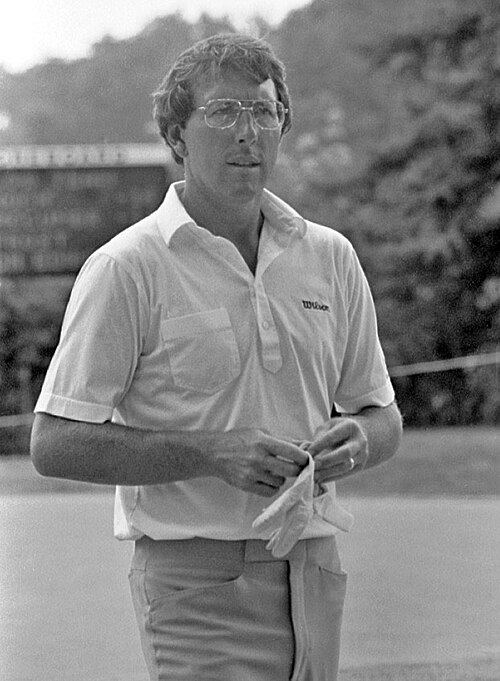
Irwin has the best Ryder Cup record of anyone still available: 13-5-2, 70% of the points available and an era-adjusted index of 114.0. There is no partnership requirement forcing him into the team. There does not need to be.
Spieth’s case is almost the reverse. His individual record is 8-9-5, his points percentage is 47.7% and his adjusted index remains below 100. His value comes from the fact that he gives Reed a 4-1-2 partner and Thomas the most frequent American partnership in Ryder Cup history.
That matters, but a partnership should probably help decide a close call rather than bridge a statistical gap this large.
Mickelson’s case rests on longevity and partnerships. Nobody has played more Ryder Cup matches for America, and he appears in two of the six long-term winning partnerships identified earlier. Unfortunately, neither Keegan Bradley nor David Toms is in this team, which removes much of that value. His 18-22-7 individual record and 98.8 adjusted index are not enough on their own.
Tiger Woods’ Ryder Cup Record: Why He Misses Out
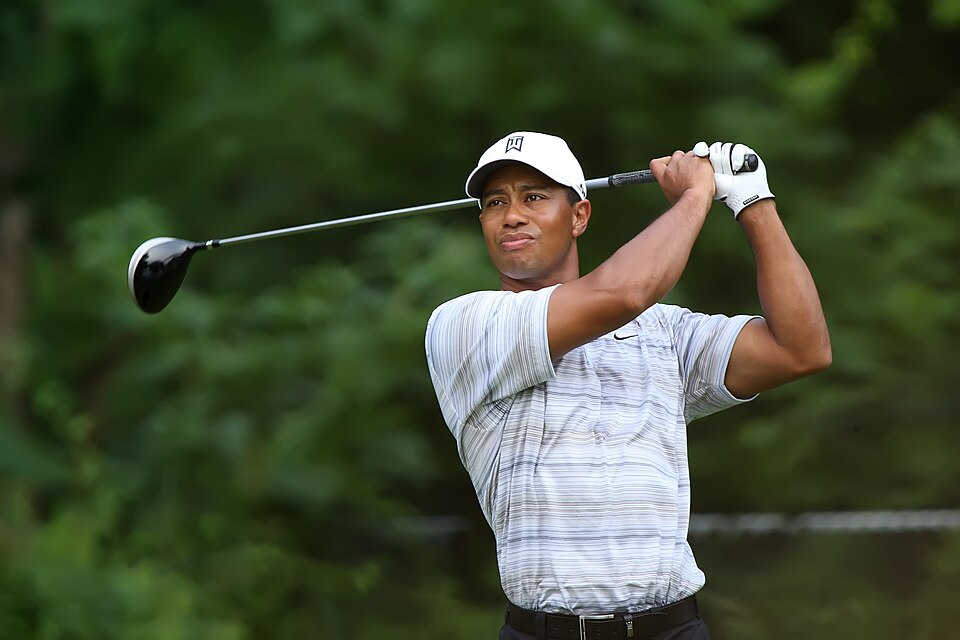
Tiger Woods in 2007. Woods finished his Ryder Cup career with a 13-21-3 record, but went 4-2-2 in singles. Photo: Keith Allison / CC BY-SA 2.0; image retouched by Muhammad Mahdi Karim.Which leaves Woods.
| Format | Record | Points won |
| Foursomes | 4-9-1 | 4.5 / 14 |
| Fourballs | 5-10-0 | 5 / 15 |
| Singles | 4-2-2 | 5 / 8 |
| Overall | 13-21-3 | 14.5 / 37 |
His case remains fascinating precisely because it is so bad statistically. He went 13-21-3, won 39.2% of the points available and still sits below 100 after adjusting for the weakness of the American teams around him. He also lacks the sort of historic partnership which could rescue the selection from a team-construction perspective – he played with 14 partners, half of those only once. His most common partner was Steve Stricker, they lost four of their six matches together.
He went 4-2-2 in singles. If the Ryder Cup were 12 singles matches, Woods would probably be in this team. Unfortunately for him, 16 of the first 16 points are not.
The only reason he deserves discussion is that the strongest version of Tiger Woods is better at golf than almost anyone who has ever lived.
In 1999 Woods played 23 events. He won nine of them and had nine other top 10 finishes. He finished outside of the top 10 five times. His individual dominance was ridiculous – but he left the 1999 Ryder Cup with a negative record, two wins and three losses.
For four of the five Ryder Cup sessions, Woods is playing in a pair, and the point of the exercise is to pick the strongest Ryder Cup team rather than smuggle the greatest individual golfers back in when the numbers become inconvenient. Woods just never found his Gardner Dickinson. If I pick Woods simply because he is Tiger Woods, I am changing the rules at the point they produce an answer I do not like. That seems poor methodology.
Hale Irwin gets the final place, mainly because the three others lost more points than they won (in absolute terms) and earned fewer points in each Ryder Cup than their 11 teammates (on our era-adjusted statistic).
The Greatest USA Ryder Cup Team of All Time
The final 12 are:
1. Arnold Palmer
2. Jack Nicklaus
3. Lanny Wadkins
4. Larry Nelson
5. Tom Watson
6. Gardner Dickinson
7. Lee Trevino
8. Billy Casper
9. Patrick Reed
10. Justin Thomas
11. Dustin Johnson
12. Hale Irwin
Tiger Woods does not make it. Phil Mickelson does not make it. Jordan Spieth does not make it.
If that looks slightly strange, I think that is probably a good sign. Had the exercise produced the 12 most famous American golfers who came immediately to mind, there would not have been much point doing it.
The Unluckiest Omissions
Tiger Woods is the most obvious omission. He is probably not the closest one.
That distinction belongs to J.C. Snead, Tony Lema, Hal Sutton or Xander Schauffele.
Snead has perhaps the strongest statistical grievance. His era-adjusted index of 134.3 is third in the entire sample and he went 9-2-0. Lema is not far behind: an 8-1-2 record, an adjusted index of 123.2 and a successful partnership with Julius Boros.
Their problem is not that the records are misleading. The adjustment suggests they were genuinely outstanding even compared with the dominant American teams around them. Their problem is that there are only 12 places, their Ryder Cup careers were relatively short and this team already contains a substantial number of players from that period.
Sutton is the opposite type of omission. His raw record does not immediately look historic, but his 122.3 adjusted index shows how well he performed during a difficult period for America. Schauffele, meanwhile, has a winning modern record and an adjusted index of 112.6, but 12 matches are not quite enough for me to put him ahead of Johnson or Irwin.
Jordan Spieth misses out because I could not justify selecting a player with a losing Ryder Cup record almost entirely to preserve a partnership. Phil Mickelson’s longevity is unmatched, but his own efficiency is below 50% and the two partners with whom he produced his best results are not in the team.
Woods remains the strangest omission because no plausible all-time American golf team could exclude him.
This one can because it is asking a different question.
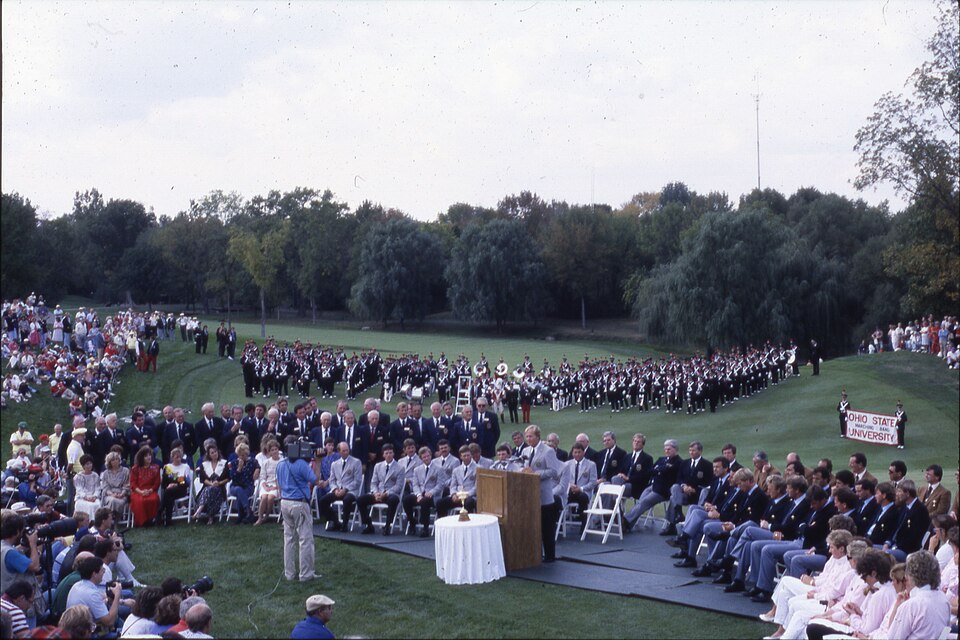
Jack Nicklaus, the United States captain, speaks at the opening ceremony of the 1987 Ryder Cup at Muirfield Village. Photo: David E. Lucas / Columbus Metropolitan Library; public domain in the United States.How Would This USA Ryder Cup Team Actually Play?
Selecting the 12 is only half the exercise, a Ryder Cup captain still has to decide what to do with them.
Three partnerships are obvious.
Arnold Palmer and Gardner Dickinson played five Ryder Cup matches together and won all five.
Lanny Wadkins and Larry Nelson went 4-2 together, with all four victories coming in 1979.
Jack Nicklaus and Tom Watson played four Ryder Cup team matches together and won all four.
That gives us six players paired off with a combined record of 13-2.
The remaining six are Lee Trevino, Billy Casper, Hale Irwin, Patrick Reed, Justin Thomas and Dustin Johnson. There is no historical combination among them which solves the problem for us, so this is where the team has to be constructed rather than reproduced.
My USA Ryder Cup Foursomes Pairings
For foursomes, I want reliability.
The first three pairs pick themselves:
1. Arnold Palmer / Gardner Dickinson
2. Lanny Wadkins / Larry Nelson
3. Jack Nicklaus / Tom Watson
Palmer and Dickinson are particularly difficult to argue with. Four of their five victories together came in foursomes.
For the fourth pairing, I would use Hale Irwin / Justin Thomas.
There is inevitably more guesswork here than with the first three. They never played together and belonged to completely different generations, but Irwin provides stability and Thomas brings one of the best modern American Ryder Cup records.
That leaves Trevino, Casper, Reed and Johnson on the bench for the session. It feels slightly absurd to sit four players of that quality – this is an all-time Ryder Cup team, that is probably unavoidable.
My USA Ryder Cup Fourball Pairings
For fourballs, I would keep Palmer and Dickinson together and also retain Wadkins and Nelson. A 5-0 partnership does not need unnecessary experimentation, and Wadkins/Nelson have already earned the right to stay intact.
The third pair would be Lee Trevino / Patrick Reed.
There is no historical evidence whatsoever for it, but I am comfortable with that.
Trevino lost only seven of his 30 Ryder Cup matches. Reed has arguably the most impressive modern American Ryder Cup record once the strength of the teams around him is taken into account. It also feels like exactly the sort of combination the opposition would become tired of playing fairly quickly.
The final pair would be Dustin Johnson / Justin Thomas. Johnson’s 5-0 performance in 2021 demonstrated the level he could reach in team golf, while Thomas gives us another player whose Ryder Cup results have held up unusually well in the modern era.
The fourballs line-up becomes:
1. Arnold Palmer / Gardner Dickinson
2. Lanny Wadkins / Larry Nelson
3. Lee Trevino / Patrick Reed
4. Dustin Johnson / Justin Thomas
Nicklaus, Watson, Casper and Irwin sit
My USA Ryder Cup Singles Order
Then everyone plays.
This is the point at which leaving Woods out becomes most painful. If the entire Ryder Cup consisted of 12 singles matches, he would almost certainly be in the team. It does not.
For the side we actually selected, I would send them out roughly like this:
1. Patrick Reed
2. Arnold Palmer
3. Justin Thomas
4. Jack Nicklaus
5. Lee Trevino
6. Tom Watson
7. Dustin Johnson
8. Lanny Wadkins
9. Hale Irwin
10. Billy Casper
11. Larry Nelson
12. Gardner Dickinson
There is always something artificial about constructing a singles order for golfers separated by generations, but the principle matters more than the exact positions.
Reed goes first because his Ryder Cup record demands it and his temperament does not exactly suggest a preference for quietly occupying match seven. Palmer follows. Thomas goes early because I trust him – and a 4-0 singles record is fairly persuasive evidence that I should. Nicklaus probably requires little explanation.
The middle order of Trevino, Watson, Johnson and Wadkins gives the team plenty of strength if the match is tight, while Irwin, Casper, Nelson and Dickinson provide a fairly uncomfortable back end.
Dickinson goes last partly because somebody has to and partly because, after spending this entire exercise discovering quite how extraordinary his Ryder Cup record was, I rather like the idea of everything coming down to him.
USA Ryder Cup FAQs
Who is the greatest US Ryder Cup player of all time?
Arnold Palmer has perhaps the strongest conventional claim. He finished with a 22-8-2 record, won 23 points and collected 71.9% of everything available to him. This exercise is slightly different, however, because it is attempting to construct the strongest 12-man team rather than simply rank individual Ryder Cup careers.
Which American has won the most Ryder Cup points?
Billy Casper, with 23.5 points from 37 matches. He finished with a 20-10-7 record.
What was Tiger Woods’ Ryder Cup record?
Tiger Woods finished his Ryder Cup career with a 13-21-3 record, earning 14.5 points from 37 matches. His points percentage was 39.2%.
What is the best USA Ryder Cup partnership of all time?
Arnold Palmer and Gardner Dickinson have a compelling claim. They played five matches together across the 1967 and 1971 Ryder Cups and won all five.
Which American has the best Ryder Cup record?
Among Americans in this analysis, Gardner Dickinson has the highest raw points percentage, winning nine of his ten matches for a 90% return. On my era-adjusted measure, however, Patrick Reed ranks first, having won 66.7% of his available points while the American teams around him won only 46.4%.
Final Thoughts
The interesting thing about this exercise is not really that Tiger Woods misses out or that Gardner Dickinson makes it – it is why.
Dickinson did not suddenly become a better golfer than Woods because he won nine of his ten Ryder Cup matches, but nor can those nine wins simply be dismissed because America was dominant. Even compared with the teams around him, Dickinson was exceptional.
The same is true of J.C. Snead, Tony Lema and several other Americans whose records initially look suspiciously good. The era adjustment reduces the advantage they enjoyed without erasing what they actually achieved. It also works in the opposite direction, identifying players such as Hal Sutton and Tom Lehman whose raw records disguise how difficult the American Ryder Cup environment around them actually was.
At the other end, Woods’ struggles cannot be explained away entirely by the strength of Europe. Once the quality of the American teams around him is taken into account, his record improves. It still does not become good.
That is ultimately why he misses out.
The question was not who were America’s 12 greatest golfers? It was not even who had America’s 12 greatest Ryder Cup careers?
It was which 12 players would give the United States the strongest Ryder Cup team?
Those are three different questions and they produce very different answers.


Leave a comment