World rankings and statistics correct to 1 September 2026
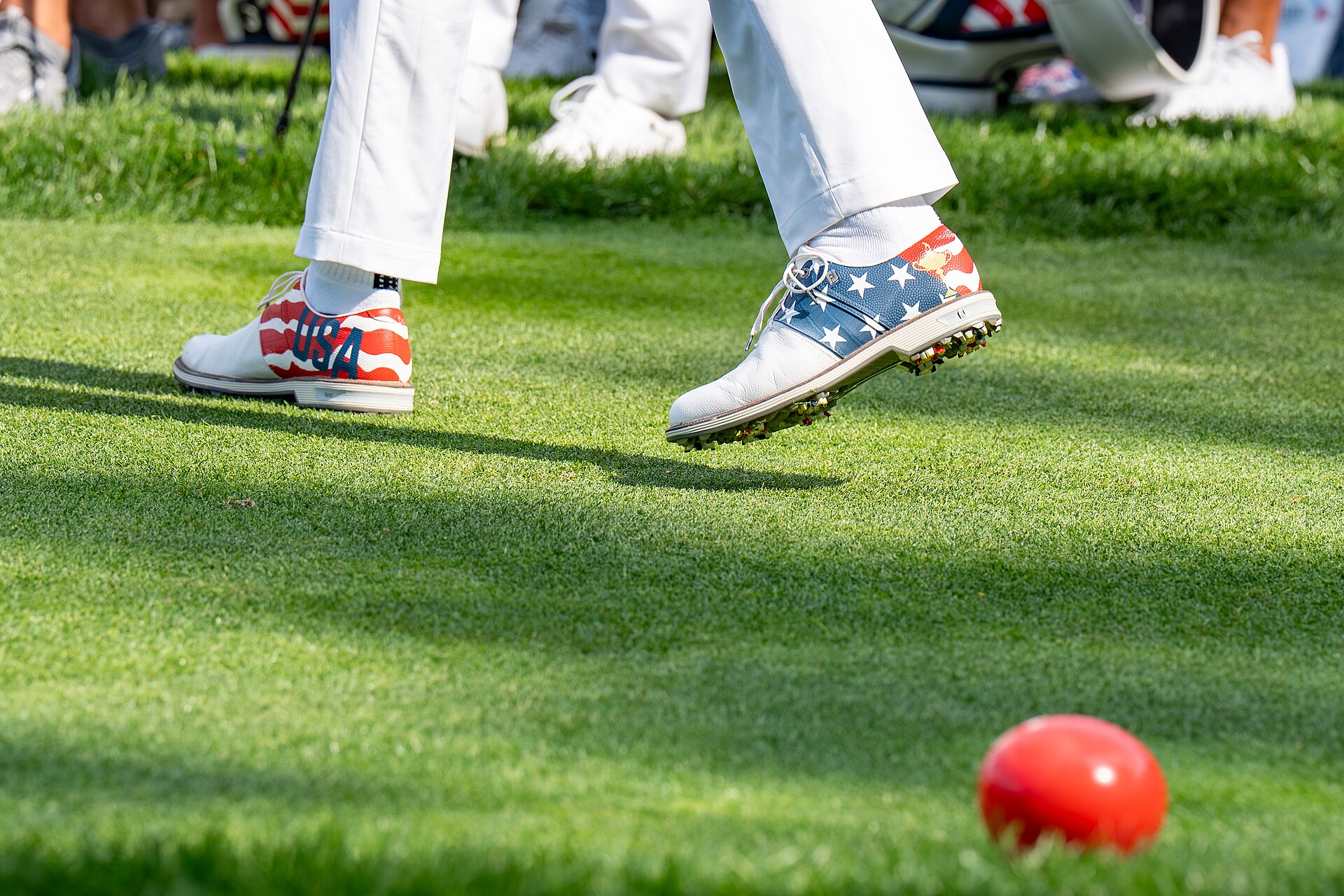
On 28 September 2025, the United States lost the Ryder Cup on home soil. The final score — Europe 15, United States 13 — made it look close. But that does not tell the full story.
After the four pairs sessions at Bethpage Black, Europe led 11.5 – 4.5. The United States then won the Sunday singles 8.5 – 3.5, one of the biggest singles victories in Ryder Cup history, and almost turned an impending humiliation into something extraordinary.
It was, in miniature, the story of the modern American Ryder Cup team. The United States does not lack excellent individual golfers – it has quite a few of them. What it has repeatedly struggled to do is turn those golfers into effective pairs.
By my count, across the twelve Ryder Cups from 2002 to 2025, the United States has been outscored by Europe just 49 – 47 in fourballs and 73.5 – 70.5 in singles.
In foursomes?
Europe 56, United States 40.
Sixteen of America’s overall 21-point deficit across that period — more than three-quarters of it — has come from alternate shot.
Jim Furyk, who captained the United States in its 17.5 – 10.5 defeat in Paris in 2018, has been brought back for Adare Manor and has a rather different job from merely identifying America’s twelve best golfers.
Furyk’s experience in 2018 was a not a positive one – it was a Ryder Cup in which his four captain’s picks went 2-12-0 overall (that is not a typo) and 1-7 in pair matches (again, not a typo). So he should be acutely aware of the need to put optimal pairings together, and picking players who are not necessarily the best in singles.
He will become only the ninth American to captain multiple Ryder Cup teams. The American qualification system for 2027 has not yet been announced.
Whoever qualifies automatically, Furyk needs to think about how the pieces fit together.
The USA has more than enough individual talent to regain the Ryder Cup at Adare Manor in 2027. Scottie Scheffler remains the best player in the world, Wyndham Clark and Chris Gotterup have surged during 2026 and a remarkable generation of young Americans led by Jackson Koivun is beginning to arrive. But after another disastrous foursomes performance at Bethpage, selection cannot simply be a matter of choosing the twelve highest-ranked players. Here are the 30 Americans I think are currently in contention.
I have also ranked Europe’s 30 contenders for the 2027 Ryder Cup in a separate analysis.
The US Presidents Cup Team for 2026 was finalised on Tuesday 1st September 2026. Scottie Scheffler, Cameron Young, Wyndham Clark, Sam Burns, Russell Henley and Collin Morikawa qualified automatically. Captain Brandt Snedeker picked Chris Gotterup, Xander Schauffele, Justin Thomas, Jacob Bridgeman, Patrick Cantlay and Jackson Koivun.
The list of those who did not make the team shows the US’ incredible depth – Ben Griffin, J.J. Spaun (injured), Akshay Bhatia, Maverick McNealy, Ryan Gerard, Michael Brennan, Patrick Reed (who should return to the PGA Tour in 2027), Bryson deChambeau (not a PGA Tour member so not eligible for Presidents Cup selection) and a host of other golfers in the world’s top 50 today are not in the team.
When assessing the runners and riders for the US 2027 Ryder Cup team the preceding Presidents Cup team is not a bad place to start. However, in the past ten years there have been at least four changes from one US team to the next – a lot can change in one year.
This year’s Presidents Cup team has four changes from last year’s Ryder Cup team (deChambeau, English, Griffin and Spaun out – Clark, Gotterup, Bridgeman and Koivun in). This is below average, there were six changes between 2024 and 2025, with the average turnover between teams in the past ten years being 4.8 players.
USA 2027 Ryder Cup contenders: the 30 at a glance
Near-certainties: Scottie Scheffler, Xander Schauffele, Collin Morikawa, Patrick Cantlay, Cameron Young, Bryson DeChambeau, Wyndham Clark, Chris Gotterup.
Strong favourites: Sam Burns, Russell Henley, Jackson Koivun, Akshay Bhatia.
Genuine contenders: J.J. Spaun, Ben Griffin, Justin Thomas, Harris English, Ryan Gerard, Jacob Bridgeman, Maverick McNealy, Alex Smalley, Michael Thorbjornsen, Michael Brennan.
Outsiders: Brooks Koepka, Jordan Spieth, Max Homa, Daniel Berger, Sahith Theegala.
Youngsters worth watching: Blades Brown, Luke Clanton, David Ford.
This list will probably look wrong in twelve months.
A list produced in September 2024 would not have anticipated every member of the Bethpage team, and American golf has too many good players for the pecking order to remain static for a year.
In picking out 30 options I have passed over Patrick Reed (world ranking 35, two DP World Tour wins this year); J.T. Poston (world ranking 37, won the Memorial this year); Kurt Kitayama (world ranking 38, has missed two cuts all year); Gary Woodland (world ranking 43, won the Houston Open this year after recovering from a brain tumour); Bud Cauley (world ranking 44, won the Canadian Open this year); and Keegan Bradley (world ranking 47, dropped off from his excellent form over the past couple of years – why wasn’t he in the 2025 team..?). Any of these six could easily make the team with a good 2027.
The Core
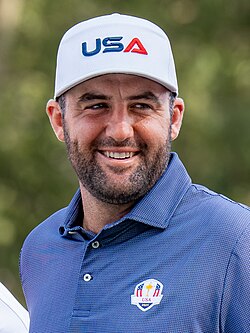
Scottie Scheffler at the 2025 Ryder Cup. Photo: Bryan Berlin / Wikimedia Commons, CC BY-SA 4.0.We can begin with the golfers who would have to experience a fairly substantial change in circumstances not to be at Adare Manor.
Scottie Scheffler is the easiest name of all. His supposedly less dominant 2026 season ended with victory at the Tour Championship, a second FedEx Cup title and a lead in the world rankings that has not been seen since Tiger Woods’ pomp. He is comfortably America’s most important golfer and barring injury will be playing his fourth Ryder Cup in Ireland.
There is, however, a Ryder Cup mystery attached to him. Scheffler went 1-4 at Bethpage and is still winless in Ryder Cup foursomes. That does not mean the best golfer in the world is somehow bad at alternate shot. It means the Americans have conspicuously failed to work out how best to deploy him. At Adare Manor that needs to change.
Xander Schauffele had a less spectacular 2026 than we have become accustomed to, but his Ryder Cup place should not be seriously questioned yet. He responded to an indifferent 2023 Ryder Cup with a 3-1 record at Bethpage, including a Sunday singles victory over Jon Rahm. He also comes with something extremely valuable to Furyk: an established alternate-shot relationship with Patrick Cantlay.
Collin Morikawa had a miserable time in New York — two foursomes defeats and a halved singles match — but leaving him out on the back of one Ryder Cup would be an extraordinary overreaction. Morikawa remains one of America’s outstanding iron players and, from a team-construction perspective, that makes him particularly valuable. If Furyk wants to repair America’s foursomes record, Morikawa should be part of the solution rather than a casualty of the problem.
Patrick Cantlay is in much the same position. His 2025 Ryder Cup was not especially good, but his record before Bethpage was excellent and his partnership with Schauffele gives the United States one of its few established alternate-shot combinations. Given the Americans’ historic difficulties in the format, deliberately breaking up the one pairing they know can work would be an odd place to start.
Cameron Young may have been the biggest American success story at Bethpage. Making his Ryder Cup debut at 28, he went 3-1: he and Justin Thomas demolished Ludvig Åberg and Rasmus Højgaard 6&5 in fourballs, he won a foursomes match with Bryson DeChambeau and then beat Justin Rose in the opening singles.
Young has moved very quickly from the category of “excellent player who has somehow never won” to one of the more obvious building blocks for the next American team.
Bryson DeChambeau is unlikely ever to fit neatly into a conventional Ryder Cup template. That is probably the point. His length gives Furyk options that nobody else can replicate, particularly in fourballs and on a 7,500-yard course. His 2025 performance was mixed, but his one pairs victory came alongside Young in foursomes. There is enough there to revisit that partnership.
Then there are two players who were not on the Bethpage team but whose 2026 seasons have made them increasingly difficult to describe as mere contenders.
Wyndham Clark has had an extraordinary resurgence. He won three times in 2026: the CJ Cup Byron Nelson, his second U.S. Open – this time at Shinnecock Hills, and the BMW Championship. His U.S. Open victory made him a multiple major champion and returned him firmly to the world top ten.
Clark did not make the 2025 Ryder Cup team. If the team were being selected today, that would be irrelevant.
The one question is format. Clark’s aggressive game and streaky putting make him particularly attractive in fourballs. I would be less enthusiastic about making him a foursomes cornerstone. But Furyk needs different players for different jobs; not everybody has to be Tommy Fleetwood.
Chris Gotterup has made an even more dramatic leap. He won three times on the PGA Tour in 2026 — at the Sony Open, WM Phoenix Open and John Deere Classic — and enters September seventh in the world rankings and sixth in the FedEx Cup standings. He has now won five PGA Tour events despite still being only 27.
His length makes him an obvious fourball option, but his game is rounded enough that he should not need to be hidden from foursomes.
Scheffler, Schauffele, Morikawa, Cantlay, Young, DeChambeau, Clark and Gotterup give Furyk an eight-man core.
That is the easy bit.
The Other 2025 Incumbents
Six other members of the Bethpage team remain very much in the discussion.
Some are considerably safer than others.
Sam Burns is probably closest to joining the core. He did not win in 2026 but his results have been excellent: six top tens, runner-up to Clark at the U.S. Open, third at The Open Championship and tied third at the FedEx St. Jude Championship.
Burns is also exactly the sort of player whose Ryder Cup value can be missed if we only look at rankings. His putting and ability to make birdies give him considerable fourball value. His case is less obvious in foursomes, but if he arrives in 2027 playing at his current standard it is difficult to imagine Furyk leaving him at home.
Russell Henley had a difficult Ryder Cup debut at Bethpage, going 0-2-1, but he remains one of the most reliable American golfers. The argument for Henley is not glamour. It is predictability.
Alternate shot punishes a wild drive or a poor approach in a way that fourballs does not. A player who repeatedly leaves his partner in sensible positions may be more valuable to the United States than someone ranked a few places higher who makes more birdies and more mistakes.
J.J. Spaun did enough at Bethpage to justify another serious look. The 2025 U.S. Open champion went 2-1 on debut, including a fourball victory alongside Schauffele and a singles win over Sepp Straka. The question is whether his 2027 form places him clearly ahead of the wave of players now coming behind him.
Ben Griffin made his own Ryder Cup debut in 2025 after one of golf’s more unusual rises — from stepping away from professional golf and taking an office job to becoming a multiple PGA Tour winner. He lost his only fourball match at Bethpage but beat Rasmus Højgaard in singles.
Griffin is exactly the sort of player who could quietly qualify again without ever dominating the Ryder Cup discussion.
Justin Thomas poses a much more interesting selection question.
His current golf is not strong enough to give him a lifetime exemption from Ryder Cup selection. His Ryder Cup history almost is.
Thomas won his singles match at Bethpage to move to 4-0-0 in Ryder Cup singles. He has repeatedly been one of America’s best match-play performers and, at 34 during the 2027 Ryder Cup, should hardly be regarded as an ageing relic.
But Furyk cannot pick Thomas solely because Thomas has always been picked before. If younger players are winning tournaments and Thomas is not, past Ryder Cups should operate as a tiebreaker rather than a trump card.
Harris English is under the most pressure of the six. He went 0-2-1 at Bethpage and will be 38 during the 2027 Ryder Cup. He is a proven, successful professional with more than enough time to play himself back into the team, but America has too much depth to carry incumbents on reputation.
The Contenders
Behind the incumbents is a large group of players who would surprise nobody if they were on the plane to Ireland.
Akshay Bhatia may be the most obvious. Still only 24, Bhatia won the Arnold Palmer Invitational in 2026 for his third PGA Tour title, defeating Daniel Berger in a playoff after making up five shots over the closing nine holes. His short game and putting were extraordinary that week; rather unusually for a winner, his driving was not.
That is relevant to Ryder Cup selection. Bhatia already looks like a potentially excellent fourball player. Whether Furyk trusts his tee-to-green game in foursomes could determine how valuable he becomes.
Ryan Gerard has spent 2026 repeatedly arriving at the door without quite walking through it. He finished second at the Sony Open, tied second at the American Express and lost a playoff at the Memorial, while also finishing in the top ten at The Open. His season contains three runner-up finishes and six top tens.
That is more than enough evidence to take him seriously. The obvious next step is winning.
Jacob Bridgeman has already done that. The 26-year-old won the Genesis Invitational in February, holding off Kurt Kitayama and Rory McIlroy for his first PGA Tour title. He has combined that breakthrough with enough consistent high finishes to move comfortably into the world’s top 30.
Bridgeman may not have the profile of Thomas, Spieth or Koepka, but Ryder Cup captains do not receive additional points for celebrity.
Maverick McNealy continues to make a compelling case through consistency. In 2026 he made 19 cuts in 21 PGA Tour starts, recorded twelve top-25 finishes and ended the regular season with another strong run through the playoffs.
The problem is that “consistently very good” is a crowded category in American golf. One major win or signature-event victory in 2027 would transform his position.
Alex Smalley occupies similar territory. He has become a reliable PGA Tour performer without yet accumulating the wins or major performances that force a captain’s hand. For players in this tier, the equation is fairly simple: arrive next summer ranked inside the world’s top 25 and play well in the majors and Furyk will be interested.
Michael Thorbjornsen is a more intriguing long-term possibility. The former Stanford player became a PGA Tour winner at 24 when he won the Rocket Classic in August, shooting a bogey-free final-round 63 and overcoming a four-shot deficit to beat Schauffele by two.
He has the power required for modern championship golf and, crucially, will still only be 25 at Adare Manor.
Michael Brennan, also 24, has followed a similar path. He won the Wyndham Championship in 2026 for his second PGA Tour victory and has already moved into the world’s top 40.
Brennan and Thorbjornsen are not speculative names plucked from college golf. They are already PGA Tour winners.
The Big Names Trying To Get Back In
American depth means there is another rather unusual category: golfers with enough achievements to make a Ryder Cup without anybody blinking, but who would not be in the team if it were picked purely on current form.
Brooks Koepka is the obvious example.
Koepka returned to the PGA Tour in 2026 through its new Returning Member Program after ending his LIV affiliation.
His season has not re-established him as one of America’s twelve best players, but we are talking about a five-time major champion with extensive Ryder Cup experience. If he contends in two majors next year, the discussion changes immediately.
There is probably no American golfer whose Ryder Cup candidacy can move as quickly as Koepka’s. Nobody cares where he finished at the John Deere Classic if he is leading the PGA Championship on Sunday afternoon.
Jordan Spieth is another player it feels dangerous to write off.
He will be 34 at Adare Manor, not 44, and his history with Justin Thomas means a return to form potentially solves a pairing question as well as an individual selection question. But Ryder Cup nostalgia cannot be enough. The fact that Spieth was central to American teams for a decade does not guarantee he will be central to the next one.
Max Homa was one of the best players in the American team at Marco Simone in 2023 but his standing has fallen significantly since his peak. His 2027 path probably requires something more dramatic than consistent top-25 finishes: a big victory would be the quickest way back into the conversation.
Daniel Berger has already demonstrated that he can recover from a lengthy spell away from the top level. He also came within a playoff of winning the Arnold Palmer Invitational this season. At 34 during the Ryder Cup, age is no obstacle.
Berger remains an outsider, but he is the sort of outsider who could become a genuine contender within a month.
Sahith Theegala has had a peculiar 2026. He made 24 cuts from 25 starts and recorded four top tens, as well as T11 at the U.S. Open, but has rarely threatened to win and has slipped well down the world rankings.
His ceiling remains high enough to keep him in the 30. His present form does not put him particularly close to the 12.
Jackson Koivun
There is one youngster who already deserves his own category.
Jackson Koivun was an amateur until June.
Thirty-five days after his final round as an amateur at the U.S. Open, he was a PGA Tour winner.
Koivun won the 3M Open in only his third start as a professional, finishing 25-under, breaking the tournament scoring record and beating world number one Scheffler by three shots. He was 21 years, two months and three days old.
This is no longer simply a question of whether Koivun might become a Ryder Cup player one day.
He could become one next year and has a chance to enhance his reputation at this year’s Presidents Cup.
The temptation will be to see a 21-year-old and assume Furyk would need to hide him in fourballs. I am not convinced. His early professional statistics show a combination of driving accuracy and approach play that could ultimately make him more valuable in foursomes than some of America’s established stars.
That is what makes Koivun so intriguing.
By September 2027, he could still be an exciting youngster hovering around the edge of the top 50.
Or he could be one of the best ten American golfers in the world.
Neither outcome would be surprising.
The Young Punts
Behind Koivun are three players whom I would include because this is a watchlist for the next thirteen months, not simply a list of America’s best 30 golfers today.
Blades Brown is the youngest. At 19 he has already shown enough at professional level to suggest that his ceiling is considerably higher than his present ranking. Making a Ryder Cup team at 20 would be extraordinary — he would be younger than any American to have played in the event — but the purpose of including Brown is to identify who might make the largest leap.
A year is a very long time at 19.
Luke Clanton has had a much more difficult first full professional season than many expected. That should not erase what came before it. He was one of the outstanding amateurs in the world and had already contended on the PGA Tour before turning professional.
If the 2027 season looks like 2026, he will not be near the team. If the 2027 season looks like the trajectory he appeared to be on as an amateur, he could be.
David Ford is the longest shot among my 30 but belongs for similar reasons. His amateur career and early professional performances suggest the potential for a very high ceiling. He does not need to be one of America’s best 12 golfers today to be a realistic long-term Ryder Cup prospect.
Someone will emerge from this generation.
The difficulty is working out which one before it becomes obvious.
America’s Foursome Problem
The American Ryder Cup problem is sufficiently stark to deserve quantifying.
Across the Ryder Cups from 2002 to 2025, I make the American record:
| Format | USA W-L-H | USA points | Europe points |
| Foursomes | 34-50-12 | 40 | 56 |
| Fourballs | 38-40-18 | 47 | 49 |
| Singles | 58-61-25 | 70.5 | 73.5 |
America’s overall deficit in that period is 21 points. Its foursomes deficit is 16.
In other words, about 76% of America’s entire Ryder Cup deficit since 2002 has come from foursomes. In 96 fourball matches and 144 singles matches the score is basically a draw. Foursomes is where the gap exists.
Since 2014 the pattern has been absolute, where USA win the foursomes sessions, they win the Ryder Cup:
2014: USA 0–6–2 in foursomes → lost Ryder Cup
2018: USA 2–6 → lost Ryder Cup
2023: USA 1–7 → lost Ryder Cup
2025: USA 2–6 → lost Ryder Cup
Contrast:
2016: USA 5–2–1 → won Ryder Cup
2021: USA 6–2 → won Ryder Cup
Bethpage merely provided the latest example. The United States lost the two foursomes sessions 6 – 2, before winning Sunday singles 8.5 – 3.5.
On paper over the past 25 years the US has had the better golfers than Europe (an arbitrary statistic but, since 2000, Americans have won 64 majors and Europeans 23 majors). But these apparently superior golfers have only won three out of twelve 21st century Ryder Cups.
Simply put, they must concentrate on measuring ‘Ryder Cup usefulness to the USA’ rather than ‘who is the best golfer’. The US does not need 12 excellent singles players – it already produces these almost automatically. They need 6-8 excellent foursomes players, 4-6 explosive fourball players and 12 players capable of winning singles.
There are 28 points available at each Ryder Cup and 16 of those come in pairs matches. Half of those 16 points come in a foursomes format that the USA perform consistently badly in.
Take Luke Donald. He reached world number 1 using metronomic consistency. His foursomes record? 6-2-0. His fourball record? 1-1-1. The fact he played eight foursomes matches and only three fourball matches shows that the European team leadership understood what they needed and what Donald brought.
What was Furyk’s Ryder Cup record?
Singles 4-4-1
Foursomes 4-8-2
Fourball 2-8-1
For a man who ended the year in the top 50 of the world rankings 21 years straight (15 of these years in the top 20) his pairs performance was especially poor relative to his ability. Tiger Woods and Phil Mickelson have similarly underwhelming personal Ryder Cup statistics considering their personal achievements and golfing ability compared to the golfers they played against (anyone remember Mickelson losing 3&2 to Phillip Price in 2002?)
Tiger Woods
Singles 4-2-2
Foursomes 4-9-1
Fourball 5-10-0
Phil Mickelson
Singles 5-6-1
Foursomes 5-8-4
Fourball 8-8-2
This is why I do not think Furyk should simply rank the Americans from one to twelve and send them to Ireland. He needs to select a team.
How I Would Measure Ryder Cup Suitability
To try to avoid simply declaring that somebody “looks like a good foursomes player”, I built separate ratings for each format.
For foursomes, the model gives the greatest weight to approach play, driving control and bogey avoidance, with smaller weights for short game, putting, current form and previous alternate-shot evidence.
The principle is simple: foursomes rewards precision, predictability and mistake avoidance.
For fourballs, birdie production and putting matter more, together with approach play, driving power and par-five scoring.
Fourball golf rewards a high ceiling; foursomes golf rewards a high floor.
For singles, the calculation is much closer to ordinary individual golfing quality: underlying performance, current form, winning and contending in elite events and a modest allowance for previous Ryder Cup singles performance.
Small Ryder Cup samples are regressed towards 50%. Going 2-0 does not make someone unbeatable and going 0-2 does not make him useless. You could easily shoot 64 and lose a singles match, or shoot 74 and win.
I then weight the overall Ryder Cup rating:
40% foursomes
30% fourballs
30% singles.
That deliberately gives foursomes more importance than its raw share of Ryder Cup matches because it is the specific weakness the United States needs to solve.
What does the model do to the team?
If I select the team today using that methodology, the model produces:
Scottie Scheffler
Collin Morikawa
Patrick Cantlay
Sam Burns
Cameron Young
Chris Gotterup
Wyndham Clark
Russell Henley
Bryson DeChambeau
Xander Schauffele
Ryan Gerard
Jackson Koivun
That is not necessarily my prediction of the twelve players Furyk will ultimately select. It is the twelve-man group that currently gives the model the best combination of foursomes, fourball and singles options.
There are some revealing omissions.
Thomas misses despite his extraordinary Ryder Cup singles record. Spaun and Griffin are very close. Bhatia’s fourball ability is excellent, but his current driving profile makes the alternate-shot calculation more difficult. Koivun gets in precisely because his young game appears unusually well suited to foursomes.
If every one of the Ryder Cup’s 28 matches is weighted equally, rather than deliberately giving extra weight to America’s foursomes weakness, Griffin narrowly replaces Koivun – the margins are incredibly close.
The Pairings Matter
The great advantage Europe currently holds is not simply that it has excellent golfers – it already knows what several of its pairs look like.
McIlroy and Fleetwood.
Rahm and Hatton.
Åberg and Hovland.
The United States has far fewer obvious building blocks.
If the team were selected today, my preferred foursomes structure would be:
Scheffler / Morikawa
Cantlay / Schauffele
DeChambeau / Young
Gotterup / Koivun
There is method behind those combinations rather than merely putting friends together.
Scheffler’s all-round game can be combined with Morikawa’s elite iron play.
Cantlay and Schauffele retain their established partnership.
DeChambeau and Young have already won a Ryder Cup foursomes match together.
Gotterup supplies power while Koivun’s early profile offers greater driving accuracy and iron control.
That final pairing may look faintly ridiculous in September 2026 – it might look rather less ridiculous in September 2027.
Which Players Suit Adare Manor?
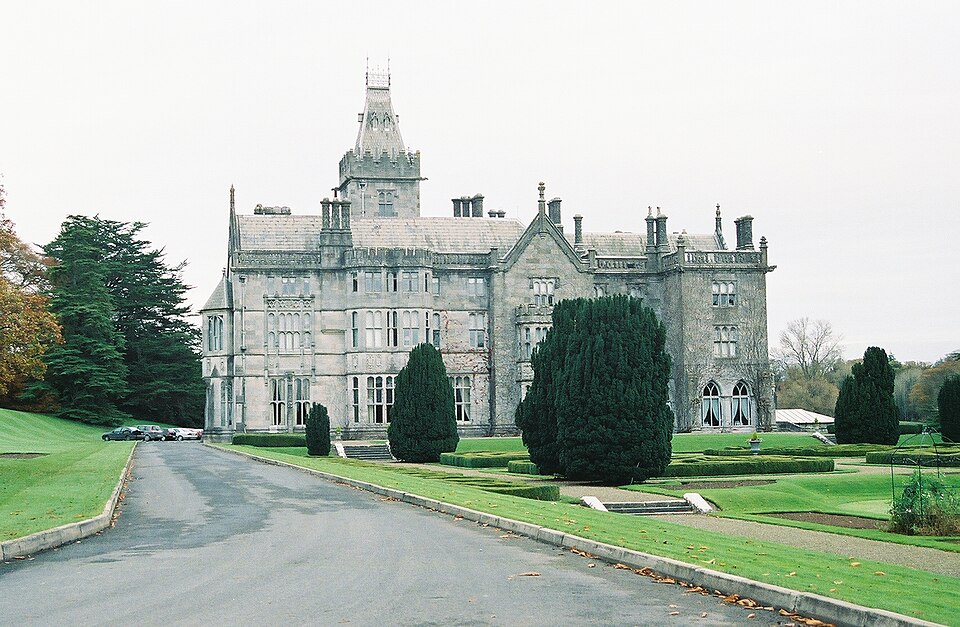
Adare Manor is currently a par-72 measuring 7,509 yards from the championship tees. It contains four par threes and four par fives, including the 633-yard ninth and 621-yard 12th.
Length will matter, particularly if Ireland in September behaves like Ireland in September.
That helps DeChambeau, Young, Gotterup and Clark.
But the course also presents an interesting foursomes wrinkle.
On the current routing, the player allocated the odd-numbered tee shots receives six par fours and two par fives but only one par three. The even-numbered player receives three of the four par-three tee shots.
That allows a captain to do more than simply identify two compatible players. He can allocate the tee shots intelligently.
A Scheffler-Morikawa partnership, for example, could put Scheffler on the odd-numbered holes and Morikawa on the even numbers, giving Scheffler more of the conventional driving holes and Morikawa three par-three iron shots.
DeChambeau could take the odd tees alongside Young for the same reason.
Those details may appear absurdly granular a year out. They are exactly the sort of details Europe has tended to be better at exploiting.
Beyond 2027
For all the understandable attention on America’s difficulties in the Ryder Cup, its long-term talent pool is formidable.
Scheffler, Morikawa, Young and Gotterup should still be comfortably inside their competitive primes after 2027.
Bhatia, Koivun, Thorbjornsen and Brennan are all 24 or younger today. Brown, Clanton and Ford sit behind them.
The United States therefore does not need a generational rebuild; it needs to make better use of the generation it already has.
The biggest long-term question may actually concern the old core.
Thomas, Spieth, Koepka and Homa were central figures in American teams of the first half of the 2020s. None is guaranteed to be part of the next successful one.
The danger for Furyk is picking reputation because reputation feels safe.
The opposite danger is throwing away all of the institutional knowledge those players possess in pursuit of whatever happened most recently.
Europe has generally been better at finding the middle ground.
The 2027 Dilemma
The American captain has more good golfers available to him than any Ryder Cup captain reasonably needs.
That has never been the problem.
The United States won 8.5 points in the twelve singles matches at Bethpage. It lost the Ryder Cup anyway.
If Furyk chooses the twelve golfers who happen to occupy the highest twelve positions in an American ranking next August and starts thinking about combinations afterwards, he risks repeating precisely the process which has repeatedly failed.
The team needs fourballs players.
It needs singles players.
Above all, it needs foursomes pairs.
Scheffler is going. So are Schauffele, Morikawa and, barring a significant decline, Cantlay.
Clark and Gotterup have forced themselves into the picture. Young looked born for the Ryder Cup at Bethpage. Burns continues to play outstanding golf.
Then come the choices.
Does Furyk trust Henley’s consistency over somebody with greater firepower?
How much value does Thomas’s Ryder Cup record retain if his individual golf is no longer among America’s best twelve?
Does Koepka’s major championship pedigree justify a pick if his ranking does not?
And if Jackson Koivun continues his current trajectory, how long before calling him a “pick for the future” becomes an excuse not to pick one of the best players in the present?
Those are questions for next summer.
For now, one conclusion seems fairly safe.
America does not need to find twelve better golfers.
It needs to build a better Ryder Cup team.
Frequently Asked Questions
Who is the USA captain for the 2027 Ryder Cup?
Jim Furyk will captain the United States at Adare Manor. It will be his second Ryder Cup as captain after previously leading the team at Le Golf National in 2018.
How will the United States qualify for the 2027 Ryder Cup?
The PGA of America has not yet announced the final United States qualification criteria for 2027. The official Ryder Cup rankings page states that the criteria will be published once confirmed.
Where is the 2027 Ryder Cup being played?
The Ryder Cup will be played at Adare Manor in County Limerick, Ireland, from 17-19 September 2027, during the competition’s centenary year.
Which young American golfers could make the 2027 Ryder Cup team?
Jackson Koivun is already a genuine contender after winning the 2026 3M Open at 21. Akshay Bhatia, Michael Thorbjornsen and Michael Brennan are also young PGA Tour winners, while Blades Brown, Luke Clanton and David Ford are longer-term possibilities.
Who would make the USA Ryder Cup team if it were selected today?
My format-based model currently selects Scottie Scheffler, Collin Morikawa, Patrick Cantlay, Sam Burns, Cameron Young, Chris Gotterup, Wyndham Clark, Russell Henley, Bryson DeChambeau, Xander Schauffele, Ryan Gerard and Jackson Koivun.
 The Penwarden Review
Leave a comment