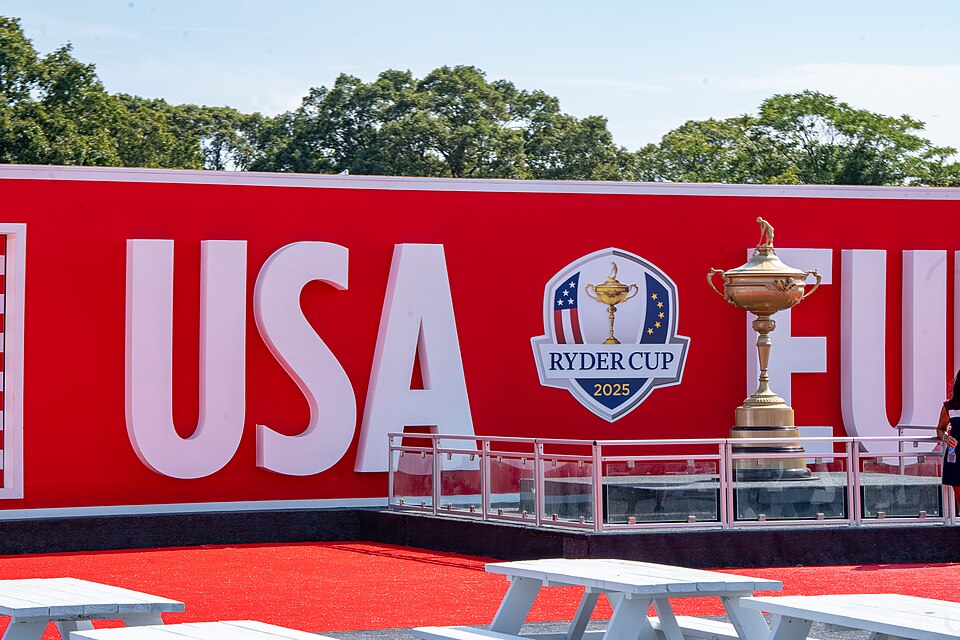
The United States does not have quite the same continuity problem as Europe.
Europe took 11 of the same 12 players from Rome in 2023 to Bethpage Black two years later. That continuity is one reason the race for places in Europe’s 2027 Ryder Cup team already looks so competitive. America, by contrast, arrived in New York with four Ryder Cup rookies – Russell Henley, J.J. Spaun, Ben Griffin and Cameron Young – and has generally been far more willing, or perhaps far more obliged, to turn over significant chunks of its team from one Ryder Cup to the next. Since 2000, the US has averaged roughly four rookies per Ryder Cup.
That means the question of who comes next is particularly interesting.
Scottie Scheffler, Xander Schauffele, Patrick Cantlay, Collin Morikawa, Justin Thomas and the rest of America’s established core are not disappearing tomorrow, but there is an enormous group immediately behind them. Some are already among the best golfers in the world. Others are 19 or 20 and only just beginning professional careers that could stretch into the 2040s.
The temptation, just as it was when I looked at Europe’s 20 future Ryder Cup players, is to focus almost exclusively on the latter group. Find America’s best teenagers and early-20s prospects, rank their amateur résumés and assume the Ryder Cup will eventually take care of itself.
The historical evidence suggests something slightly different.
American Ryder Cup rookies since 2002 have been a little over 30 years old on average. The list includes players who did not debut until surprisingly late – Steve Stricker was 41, Kenny Perry 44 and Fred Funk 48 – but it also contains some extraordinarily successful young players.
And unlike Europe, America’s youngest Ryder Cup rookies have tended to perform extremely well immediately.
So this is not simply a ranking of the best American golfers under 23.
It is an attempt to identify the 20 players who have never played in a Ryder Cup but have the best chance of doing so in 2027, 2029, 2031 or beyond.
What does a US Ryder Cup rookie actually look like?
I went through every American golfer to make his Ryder Cup debut from 2002 onwards and, as with the European analysis, split them into four age groups.
I then looked at whether they subsequently made another Ryder Cup team and how well they performed on debut.
The four Americans who debuted at Bethpage Black in 2025 have not yet had the opportunity to return, so Russell Henley, J.J. Spaun, Ben Griffin and Cameron Young are excluded from the repeat-appearance calculation.
| Age at first Ryder Cup | Debutants with chance to return | Played another Ryder Cup | Return rate |
| Under 25 | 5 | 4 | 80% |
| 25-27 | 12 | 11 | 91.7% |
| 28-31 | 13 | 7 | 53.8% |
| 32 and over | 15 | 8 | 53.3% |
Once again, the 25–27 group stands out.
Eleven of the 12 Americans who debuted in that age bracket came back for another Ryder Cup.
That is an extraordinary hit rate, albeit not quite Europe’s perfect seven from seven.
But America also gives us something Europe did not.
America’s youngest rookies have been exceptionally good
There have only been five under-25 American rookies in this period, but it is quite a collection: Anthony Kim, Rickie Fowler, Jordan Spieth, Patrick Reed and Collin Morikawa.
Four returned for another Ryder Cup. The exception was Kim, whose career was interrupted in circumstances sufficiently unusual that he is hardly a normal example of somebody failing to establish himself.
Spieth and Fowler both debuted at 21, Reed at 24 and Morikawa at 24. Ryder Cup records identify Spieth and Fowler among the youngest Americans ever to represent the side.
And they did not merely make teams early.
Collectively, America’s under-25 rookies since 2002 won 68.4% of the points available to them on debut.
That is a remarkable number.
For comparison, the under-25 European rookies in my equivalent analysis won only 41.9%.
Young Americans who have reached a Ryder Cup this century have generally not arrived as passengers.
Which American age group has performed best on debut?
As in the European article, I calculated the percentage of available points won by every rookie, then compared it with the collective performance of his teammates at the same Ryder Cup.
An era-adjusted score of 100 means the rookies performed exactly as well as the experienced players around them. A score of 120 means they performed 20% better; 80 means 20% worse.
| Age at first Ryder Cup | Debut points % | Teammates’ points % | Era-adjusted score |
| Under 25 | 68.4% | 48.5% | 141 |
| 25-27 | 59.8% | 51.2% | 117 |
| 28-31 | 50% | 44% | 114 |
| 32 and over | 50% | 44.7% | 112 |
The first thing that jumps out is that every age group outperformed its teammates.
That perhaps says something about how American Ryder Cup teams have been constructed this century — and perhaps about how poorly some established players have performed. Phil Mickelson finished 18–22–7 overall, while Jim Furyk, the 2027 captain, went 10–20–4. Longevity does not necessarily mean dominance, something that also became clear when I tried to build an all-time US Ryder Cup team. A player making his debut has often arrived because he is in excellent form, while the more established names sometimes qualified on a much longer body of work.
But the under-25 group is still extraordinary.
Those players won more than two-thirds of their available points and performed 41% better than their teammates.
Morikawa went 3–0–1 at Whistling Straits in 2021 and holed the half-point that officially secured the Ryder Cup. Reed went 3–0–1 on debut at Gleneagles. Anthony Kim took 2½ points from four in 2008. America’s young rookies have not generally needed time to settle in.
That matters enormously when considering somebody like Jackson Koivun.
World ranking may tell us even more
Ryder Cup performance is still only three days of golf.
A better indicator of whether someone had truly reached elite level when he debuted is his world ranking.
Among the American rookies who subsequently returned, the median rankings at their first Ryder Cup were striking:
| Age at first Ryder Cup | Returned? | Median OWGR at debut |
| Under 25 | Yes | 20 |
| 25-27 | Yes | 14 |
| 25-27 | No | 48 |
| 28-31 | Yes | 17 |
| 28-31 | No | 35 |
| 32 and over | Yes | 13.5 |
| 32 and over | No | 31 |
The pattern is unusually consistent.
American golfers who go on to become repeat Ryder Cup players are normally already very good indeed when they make their debut.
The players aged 25–27 who came back had a median world ranking of 14th. Among the repeat players debuting from 28 to 31 it was 17th.
Even the older rookies tell the same story. Those aged 32 or over who returned had a median debut ranking of 13.5, compared with 31 for the one-and-done players.
There is an important implication here for this ranking.
Being 21 is useful.
Being 21 and already winning on the PGA Tour is much more useful.
What does the Presidents Cup tell us?
America also has a development pathway Europe does not.
Every two years, in the gap between Ryder Cups, the best Americans play — or, more often than not, hammer the Rest of the World — in the Presidents Cup. That gives potential Ryder Cup rookies experience of team rooms, foursomes, four-balls and match play before they ever face Europe.
I therefore checked how American Ryder Cup rookies who had already played a Presidents Cup compared with those who had not.
Among the resolved rookies in my sample, 78.6% of those who had Presidents Cup experience before their first Ryder Cup subsequently returned for another Ryder Cup, compared with 61.3% of those without it.
Interestingly, the difference in Ryder Cup debut performance itself was small. The Presidents Cup group won 55.8% of its available debut points, against 54.2% among those without prior Presidents Cup experience.
I would be reluctant to claim cause and effect. More likely, a player who has already made a Presidents Cup side and then makes a Ryder Cup team has given selectors two separate pieces of evidence that he belongs at the top of American golf.
But it gives us another useful filter.
And several players in this ranking are about to acquire exactly that experience.
Chris Gotterup, Jacob Bridgeman and Jackson Koivun have all been selected for the 2026 Presidents Cup at Medinah, with Koivun making the team only months after turning professional.
So what are we looking for?
The evidence points towards four things.
First, do not automatically exclude somebody because he is already 30. America has repeatedly produced successful Ryder Cup rookies in their early and even mid-30s.
Second, 25–27 looks extremely attractive. Almost 92% of American rookies in that age bracket returned.
Third, the genuinely young prospects deserve particular attention only when their results already suggest they are becoming elite professional golfers.
And fourth, by the time somebody reaches his 30s, projection becomes much less useful. If J.T. Poston or Kurt Kitayama is going to debut at Adare Manor, he probably needs to be one of the best golfers in America in 2027, not merely somebody who might become one.
That is the framework for this list.
How I ranked the 20
I have tried to balance four things: current ability, long-term ceiling, age and Ryder Cup runway, and how realistic it is that the player actually reaches the required level during one of the next three cycles.
It is not a ranking of current ability. If it were, Preston Stout would be nowhere near J.T. Poston.
It is also not simply a ranking of potential. If it were, the teenagers would dominate.
The question is narrower: which 20 Americans who have never played in the Ryder Cup have the best chance of eventually doing so?
There is also an unusually clean starting point for 2027. The PGA of America has announced that US qualification will begin at The American Express in January 2027. Six players will qualify automatically through the BMW Championship and Jim Furyk will then make six captain’s picks. Nobody carries qualification points into the new year.
So, from established PGA Tour stars who could easily be at Adare Manor next year to college players who might not realistically appear until 2031, these are my 20.
The 20 future US Ryder Cup players
| Rank | Player | Age | Best Ryder Cup window |
| 20 | Nick Dunlap | 22 | 2029–31 |
| 19 | Preston Stout | 22 | 2029–31 |
| 18 | Ricky Castillo | 25 | 2027–29 |
| 17 | Steven Fisk | 29 | 2027–29 |
| 16 | Matt McCarty | 28 | 2027–29 |
| 15 | Sam Stevens | 30 | 2027–29 |
| 14 | Pierceson Coody | 26 | 2027–29 |
| 13 | Johnny Keefer | 25 | 2027–29 |
| 12 | Jake Knapp | 32 | 2027–29 |
| 11 | Kurt Kitayama | 33 | 2027–29 |
| 10 | J.T. Poston | 33 | 2027–29 |
| 9 | Sahith Theegala | 28 | 2027–29 |
| 8 | Blades Brown | 19 | 2029–31 |
| 7 | Maverick McNealy | 30 | 2027–29 |
| 6 | Michael Thorbjornsen | 25 | 2027–29 |
| 5 | Jacob Bridgeman | 26 | 2027–29 |
| 4 | Akshay Bhatia | 24 | 2027–29 |
| 3 | Ryan Gerard | 27 | 2027–29 |
| 2 | Jackson Koivun | 21 | 2027–31 |
| 1 | Chris Gotterup | 27 | 2027–29 |
20. Nick Dunlap
Age in 2027: 23 | Age in 2029: 25
There is no pretending that Dunlap belongs here because of his current form.
His 2026 season has been dreadful by the standards he set for himself so quickly: only seven made cuts from 18 starts, no top tens and a fall to around 400th in the world. If we were drawing up a list of the most likely Americans to make the 2027 Ryder Cup specifically, he would be nowhere near it.
But Dunlap is still only 22, and the résumé he had built before this downturn is too unusual to ignore.
He became the first amateur since Phil Mickelson in 1991 to win on the PGA Tour when he took the 2024 American Express, then added the Barracuda Championship later that year after turning professional. Two PGA Tour victories before the age most players finish university buys you a fair amount of patience.
The question is whether 2026 represents a temporary collapse in form or a more fundamental problem. If Dunlap rediscovers the player who won twice at 20, 2029 is still a very long way away.
19. Preston Stout
Age in 2027: 23 | Age in 2029: 25
Stout is the only amateur in the top 20, which is deliberate.
There are several excellent American college players who could ultimately become better professionals, but Stout begins the 2026–27 season as the No.1 player in PGA Tour University. He has already represented the United States repeatedly in elite amateur team golf, reached match play in three consecutive U.S. Amateurs and was stroke-play medallist in 2025.
The PGA Tour University route also gives us a much clearer professional pathway than elite amateurs had a decade ago. Finish first and the leap into top-level professional golf can happen almost immediately.
That does not make Stout a likely 2027 Ryder Cup player. It makes him somebody worth remembering for Hazeltine in 2029 and particularly 2031, when he would still only be in his mid-20s.
For now, No.19 feels about right: enormous opportunity, but almost everything that matters still has to happen.
18. Ricky Castillo
Age in 2027: 26 | Age in 2029: 28
Castillo has already crossed the line that separates an interesting young professional from a PGA Tour winner.
He won the Puerto Rico Open in March, closing with a bogey-free 67 to finish one ahead of Chandler Blanchet, and ended the regular season inside the FedExCup top 70. He is still only 25.
The caveat is the field strength. Winning an opposite-field PGA Tour event is not evidence that Castillo is already close to Ryder Cup level, and his world ranking remains outside the top 90.
But America’s historical profile tells us why he belongs here.
A 25-year-old with a PGA Tour victory does not need to be ready today. The 25–27 rookie bracket has been the most reliable age group America has produced this century.
Castillo has time for the Puerto Rico win to become the first chapter rather than the high point.
17. Steven Fisk
Age in 2027: 30 | Age in 2029: 32
Fisk is an unusual prospect because he is simultaneously a late developer and already a multiple PGA Tour winner.
At 29, he does not have the enormous runway of Koivun or Brown. He does, however, have two Tour victories on his résumé, including one in 2026, and has already demonstrated something several younger players on this list have not: an ability to close professional tournaments at the highest domestic level.
His current world ranking, in the 80s, tells you why he is only 17th.
The next step has to be substantial.
But we have already seen enough American rookies debut around 30 to know that the clock is not against him in quite the way it initially appears. If Fisk turns two wins into regular contention in stronger events, 2027 or 2029 remains entirely realistic.
He is never going to be Phil Mickelson or Jim Furyk, but he could conceivably become a David Toms-type player, making several appearances in his mid-to-late 30s. The difficulty is that the expansion of captain’s picks makes that route harder: in Toms’ era, finishing tenth on the points list could earn an automatic place; in 2027, tenth would leave Fisk relying on one of Furyk’s six picks.
16. Matt McCarty
Age in 2027: 29 | Age in 2029: 31
McCarty’s route to this point has been unusual enough that it would be foolish to assume we know where his ceiling sits.
He did not reach the PGA Tour until his late 20s but won almost immediately, and his 2026 season has consolidated that breakthrough rather than allowing it to look like a one-off. He has four top tens this year, including a runner-up finish at The American Express, and reached the FedExCup Playoffs.
At 28 he is entering exactly the sort of age at which Ryder Cup selection can happen quickly.
There is not much value in talking about what McCarty might look like in 2033. His case is much simpler than that.
If he pushes from being a good PGA Tour player into the top 30 or 40 in the world during 2027, he becomes relevant immediately.
15. Sam Stevens
Age in 2027: 31 | Age in 2029: 33
Stevens is 30 and still searching for his first PGA Tour victory, which means this has to be a near-term prediction.
The argument for him is consistency. He has made 19 cuts in 25 starts this season, posted three top tens and sits comfortably inside the top 70 of both the FedExCup standings and the world-ranking conversation around Ryder Cup outsiders.
There is, admittedly, a fairly obvious objection: America has dozens of players who can finish 20th on the PGA Tour. A Ryder Cup player needs to become something more than that.
But Stevens is close enough that one excellent six-month stretch could change the conversation completely.
If he wins early in 2027 and backs it up in a Signature Event or Major, the lack of a Ryder Cup pedigree will matter far less than it does today.
14. Pierceson Coody
Age in 2027: 27 | Age in 2029: 29
Coody has spent so long being described as a prospect that it is easy to forget he is still only 26.
The former PGA Tour University No.1 remains without a PGA Tour victory, but his 2026 season has contained more substance than the headline numbers suggest. He finished runner-up at the Farmers Insurance Open, added another top ten in Phoenix, has made 11 top-25 finishes and reached the FedExCup Playoffs. He is currently around 70th in the world.
The case for Coody is therefore becoming more urgent.
At 22, repeated top-20 finishes can be sold as development. At 26, the next stage needs to be winning.
The good news is that if it comes soon, his timing could hardly be better. A breakthrough in early 2027 would put him straight into the age bracket in which American Ryder Cup careers have most reliably begun.
13. Johnny Keefer
Age in 2027: 26 | Age in 2029: 28
Keefer’s professional career has moved quickly.
He turned professional in 2024, reached the PGA Tour for 2026 and has already produced three top tens during his rookie season, including two third-place finishes. He is around 68th in the world at 25.
There is nothing spectacular enough there yet to make him a serious Ryder Cup candidate.
But there is also very little wasted time.
Keefer has gone from college golf to PGA Tour relevance in roughly two years, and the historical numbers suggest that 25 is almost an ideal age to start becoming genuinely good.
If he develops at anything like the rate he has over the past two seasons, he could look dramatically under-ranked by next summer.
12. Jake Knapp
Age in 2027: 33 | Age in 2029: 35
Knapp will be firmly in his 30s by Adare Manor, so there is not much room for projection here.
Fortunately, his current golf gives us more to work with.
The former Mexico Open champion has recorded six top tens in 2026, sits inside the top 40 of the FedExCup standings and is roughly 50th in the world. More interestingly, his underlying game looks strong: he ranks 18th in Strokes Gained: Total, 20th in approach play and remains one of the longer hitters on Tour.
Knapp is therefore one of those players who could go from Ryder Cup afterthought to obvious candidate very quickly.
At 32, though, he cannot live on potential. He probably needs to win or establish himself inside the world’s top 25 during 2027.
11. Kurt Kitayama
Age in 2027: 34 | Age in 2029: 36
Kitayama has already shown that his best golf belongs in elite fields.
He has won at the highest level before, and although there has been no victory in 2026, he has four top tens and sits comfortably inside the FedExCup’s upper reaches.
The age works against him only in the sense that there is less time.
American Ryder Cup history tells us that golfers can absolutely debut in their early 30s and become repeat players, but it also tells us those older repeat rookies have generally been extremely highly ranked by the time they make the team.
That is the challenge for Kitayama.
Being a dangerous PGA Tour player is not quite enough. If he is going to make his first Ryder Cup at 34, he probably has to spend 2027 looking like one of America’s 12 best golfers.
10. J.T. Poston
Age in 2027: 34 | Age in 2029: 36
Poston is the oldest player in my top ten, but his 2026 season has provided a very simple reason to include him.
He won the Memorial Tournament, beating Ryan Gerard in a playoff, and followed it with a tie for fourth at the U.S. Open. That victory was his fourth on the PGA Tour and dragged him from 94th in the world before the Memorial to inside the top 40 by the end of the summer.
At 33, Poston has no need for a five-year development plan.
He needs another 12 months like the middle of 2026.
If he wins another Signature Event, contends in a Major or simply spends next summer inside the world’s top 25, Jim Furyk will not care that he is not part of the sport’s next generation.
The wider point of this article is that “future Ryder Cup player” and “very young golfer” are not synonyms.
Poston is probably the clearest American example.
9. Sahith Theegala
Age in 2027: 29 | Age in 2029: 31
It feels strange that Theegala has never played in a Ryder Cup.
He has already represented the United States in the Presidents Cup, won on the PGA Tour and spent long periods close to the top of the world rankings, but injuries and uneven form have prevented the Ryder Cup breakthrough.
His 2026 season has at least been much steadier: four top tens, 24 made cuts from 25 starts and a return to regular contention, even if his world ranking remains well below its peak.
The Presidents Cup experience matters here.
We do not need to speculate about whether Theegala can handle team golf or whether captains will be comfortable with him in the room.
The question is purely whether his individual golf returns to a high enough level at the right time.
At 28, there is still plenty of room for that to happen.
8. Blades Brown
Age in 2027: 20 | Age in 2029: 22
Here is the long-term swing.
Brown is 19.
He turned professional at 17 and has already made himself competitive against PGA Tour fields. In 2026 he finished third at the Puerto Rico Open, recorded another top ten at Myrtle Beach and earned PGA Tour Special Temporary Membership. On the Korn Ferry Tour, he sits close to the promotion positions after making 14 of 16 cuts with 11 top-25 finishes.
There is a danger in overreacting to teenage achievement.
We have seen countless brilliant juniors and amateurs fail to make the enormous jump to elite professional golf.
Brown is different only because he has already started to make it.
He does not need to be anywhere near a Ryder Cup team in 2027. He will still be barely into his 20s in 2029.
If this list is supposed to stretch genuinely into 2031 and beyond, leaving out the best teenage professional in American golf would make no sense.
7. Maverick McNealy
Age in 2027: 31 | Age in 2029: 33
McNealy has been on Ryder Cup fringes for long enough that his absence from the team may eventually become more surprising than his inclusion.
At 30, he is no longer a prospect in any conventional sense, but he remains firmly established on the PGA Tour. He has one career victory, three top tens this season, has made 19 of 21 cuts and sits around 47th in the world.
He was also very close to the 2025 team conversation.
The problem is that the next step has never quite arrived.
For McNealy to debut in 2027, being 40th or 50th in the world is unlikely to be enough given America’s depth. He needs the kind of six-month run that moves him into the top 20.
Unlike most of the list, there is very little mystery about what the finished product looks like.
We are simply waiting to see whether it gets slightly better.
6. Michael Thorbjornsen
Age in 2027: 26 | Age in 2029: 28
Thorbjornsen had been labelled one of America’s obvious future stars since his Stanford days, and in 2026 the results finally caught up with the reputation.
He won the Rocket Classic in August with a closing 63, overcoming a four-shot deficit and beating Xander Schauffele by two for his first PGA Tour title. He also posted three top tens during the season and moved to around 40th in the world.
The progression matters.
Thorbjornsen was the No.1 player in PGA Tour University in 2024. Two years later, he is a PGA Tour winner at 25.
That is almost precisely the trajectory this article is looking for.
He may still need another victory or a run of contention in bigger events before 2027, but if he reaches Adare Manor at 26 or 27, he would fit almost perfectly into the historical profile of a long-term American Ryder Cup player.
5. Jacob Bridgeman
Age in 2027: 27 | Age in 2029: 29
Bridgeman has gone from interesting young player to obvious team-golf candidate in less than a year.
He won the Genesis Invitational in 2026, has six top tens, sits fourth in the FedExCup standings and has risen to around 29th in the world. At 26, he is also almost perfectly positioned historically.
Then came the extra piece of evidence.
Brandt Snedeker selected him for the 2026 Presidents Cup.
That means Bridgeman will arrive at the start of Ryder Cup qualification having already experienced elite international team golf.
Nothing guarantees that he will make the leap. Plenty of Presidents Cup players have missed subsequent Ryder Cups.
But few players on this list combine current results, age and a ready-made team pathway as neatly as Bridgeman.
4. Akshay Bhatia
Age in 2027: 25 | Age in 2029: 27
Bhatia is somehow still only 24.
He turned professional instead of going to college, won his first PGA Tour title at 21 and has now accumulated three Tour victories, including another one in 2026. He is currently around 34th in the world.
The raw numbers are impressive enough, but the age is what makes the case so compelling.
If Bhatia makes his debut at Adare Manor, he will still sit broadly in the same young-rookie category that has produced Spieth, Reed and Morikawa.
And America’s history suggests those players have not needed to be protected.
The under-25 rookies since 2002 collectively won 68.4% of their debut points.
Bhatia still needs to make the team, obviously, but three PGA Tour wins by 24 is an extremely persuasive place from which to begin.
3. Ryan Gerard
Age in 2027: 28 | Age in 2029: 30
Gerard might be the easiest player on the list to overlook because he has not won in 2026.
Almost everything else says he belongs here.
He has seven top tens, including three runner-up finishes, earned more than $10 million this season, reached the Tour Championship and sits 21st in the world. He finished second at both the Sony Open and American Express to begin the year, then lost the Memorial in a playoff to Poston.
At 27, I care very little that somebody else has accumulated more wins.
The relevant question is whether Gerard is currently playing at Ryder Cup level.
He is.
If he carries anything resembling this form into 2027, a first victory of the season would feel more like confirmation than transformation.
2. Jackson Koivun
Age in 2027: 22 | Age in 2029: 24
There is always a danger in declaring a 21-year-old the future of American golf.
Koivun is making it difficult not to.
He turned professional in the summer and 24 days later won the 3M Open, shooting 25 under and beating World No.1 Scottie Scheffler by three shots in only his third professional PGA Tour start.
He has already risen to around 65th in the world despite barely having a professional career to measure, and Snedeker has selected him for the Presidents Cup at Medinah.
If Koivun were merely a spectacular amateur, I would be much more cautious.
But we have already seen him beat one of the strongest PGA Tour fields he has faced.
And the American historical comparison is difficult to ignore. Spieth, Reed and Morikawa all reached Ryder Cups unusually young and all immediately became significant team players.
Koivun still has an enormous amount to prove.
He is also the player on this list I would be least surprised to see playing five or six Ryder Cups.
1. Chris Gotterup
Age in 2027: 28 | Age in 2029: 30
This is the easiest No.1 in either of these future Ryder Cup articles.
Gotterup is 27 and is no longer merely a player of potential or promise: he is seventh in the world a five-time PGA Tour winner and a three-time champion in 2026 alone. He has seven top tens this season, sits near the top of the FedExCup standings and will make his Presidents Cup debut at Medinah.
He also narrowly missed the 2025 Ryder Cup side, meaning this is hardly a projection from nowhere.
Then consider the historical profile.
American players making their Ryder Cup debut from 25 to 27 have returned for another one 91.7% of the time.
Those who returned had a median world ranking of 14 at their first Ryder Cup.
Gotterup is already seventh before qualification for the 2027 team has even begun.
There is no guarantee, of course. Golf is too volatile and American depth too ridiculous for that.
But if I had to pick one American today who has never played in the Ryder Cup and say he will eventually make a team, the choice is straightforward.
Chris Gotterup.
Who could actually make the 2027 Ryder Cup?
This is where the US article differs slightly from the European version.
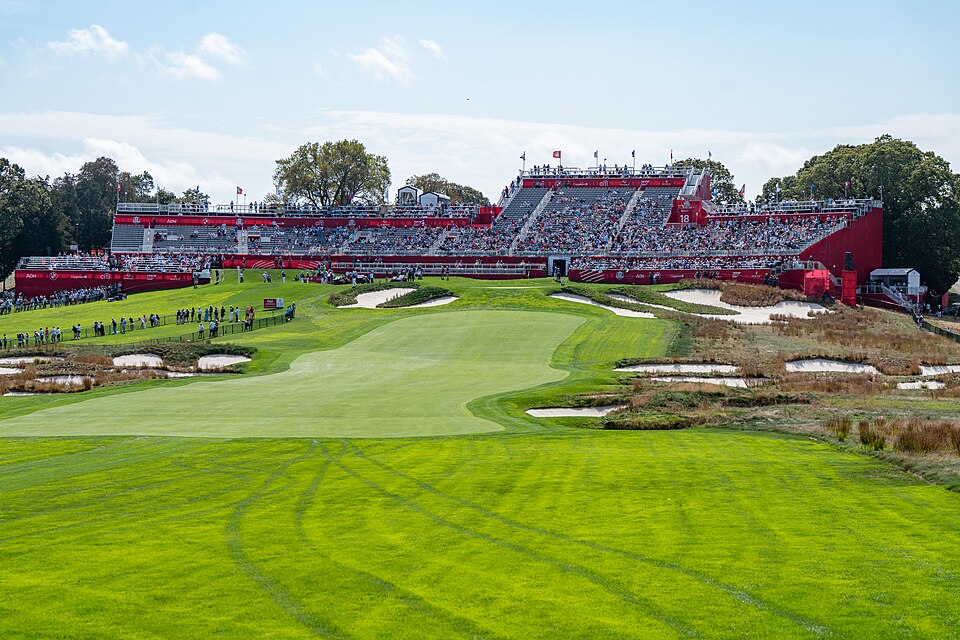
I have already looked in more detail at the 30 contenders for the US 2027 Ryder Cup team, but this list takes a longer-term view.
America has a significant group who could make the next team without needing a developmental leap at all.
Gotterup is already World No.7. Gerard is 21st. Bridgeman is inside the top 30. Bhatia has three PGA Tour wins. Thorbjornsen has just broken through. Poston has won a Signature Event and finished fourth in a Major.
Then there are McNealy, Theegala, Knapp and Kitayama, for whom 2027 may represent the clearest remaining opportunity.
The fascinating part is that they all start the formal race from zero.
US Ryder Cup points will not begin accumulating until The American Express in January 2027, meaning a player who begins next year hot can move very quickly from outside the conversation to an automatic place.
If I had to isolate the strongest potential rookies today, I would put Gotterup, Gerard, Bridgeman, Bhatia and Thorbjornsen in the first group, with Koivun as the wildcard who might simply develop too quickly to leave out.
2029 could look much younger
If 2027 belongs primarily to the players already established, 2029 is where the long-term section of this ranking starts to make sense.
Koivun would still be only 24.
Bhatia would be 27.
Thorbjornsen 28.
Brown would be barely into his 20s, while Stout and Dunlap would still be only in their mid-20s.
That is without considering the enormous wave of American amateurs currently beneath them, some of whom have not even reached college yet.
It is entirely plausible that several golfers who look speculative in this ranking will be obvious by Hazeltine.
It is equally plausible that one or two names we have barely considered will have overtaken all of them.
That is what makes these predictions interesting.
Five who just missed out
Andrew Novak was probably the hardest established-player omission. He has already spent time close to Ryder Cup contention and could easily make this list look foolish with one strong start to 2027.
Davis Thompson still has age and top-level ability on his side, while Max Greyserman has repeatedly shown that his best golf belongs near the top of PGA Tour leaderboards.
At the younger end, Luke Clanton and Gordon Sargent remain two of the most interesting Americans whose professional careers could accelerate very quickly, with David Ford another name I would be extremely reluctant to forget.
This is also where the strength of American golf makes the exercise fundamentally different from Europe.
Leaving somebody out does not mean I think he will never play in a Ryder Cup.
There are simply far more credible candidates than there are places.
How many of these 20 will actually play in a Ryder Cup?
Almost certainly not all of them.
Some will fall away. Some will become excellent PGA Tour players without ever quite becoming top-12 Americans. Others will peak during the wrong 18 months, suffer injuries or find themselves blocked by an unusually strong generation.
That is particularly relevant in the United States.
The difference between being the 15th-best and 30th-best American golfer can be tiny in world-ranking terms, but enormous when only 12 players make the team.
The historical evidence does, however, give us a useful profile.
The Americans most likely to build Ryder Cup careers are not simply the youngest.
They are the players who become very good, very early.
That is why Gotterup is No.1 rather than Brown, why Koivun is already No.2 rather than being treated as a distant 2031 prospect, and why Poston still belongs in the top ten despite being more than a decade older than some players below him.
Youth gives you time.
Being elite gives you Ryder Cups.
The most interesting players are the ones who have both.
FAQs
Who are the best young American golfers who have not played in the Ryder Cup?
Chris Gotterup, Jackson Koivun, Ryan Gerard, Akshay Bhatia, Jacob Bridgeman and Michael Thorbjornsen are among the strongest American golfers yet to make a Ryder Cup team. Younger long-term prospects include Blades Brown, Preston Stout and Nick Dunlap.
Who could make the US Ryder Cup team in 2027?
Gotterup, Gerard, Bridgeman, Bhatia and Thorbjornsen currently look among the strongest potential first-time players, while Jackson Koivun could force himself rapidly into the conversation if his early professional success continues.
How old is the average US Ryder Cup rookie?
American Ryder Cup debutants since 2002 have been a little over 30 years old on average, with a median age of about 30.
What is the best age for an American Ryder Cup debut?
Players debuting between 25 and 27 have had the strongest return rate in this century’s sample: 11 of 12 subsequently made another Ryder Cup team. Under-25 rookies have also been extremely successful, with four of five returning.
How well do young Americans perform on Ryder Cup debut?
American rookies aged under 25 since 2002 have won approximately 68.4% of the points available to them on debut, substantially outperforming the experienced teammates around them.
Does Presidents Cup experience help future Ryder Cup players?
American players who had Presidents Cup experience before their Ryder Cup debut have been more likely to return for another Ryder Cup in this sample, although their debut Ryder Cup performance was only slightly better than players without previous Presidents Cup experience. That suggests prior selection may be more of an indicator of underlying quality than a direct cause of Ryder Cup success.
How does the United States qualify for the 2027 Ryder Cup?
US qualification begins at The American Express in January 2027. The top six players on the points list after the BMW Championship will qualify automatically, with captain Jim Furyk then selecting six additional players.


Leave a Reply