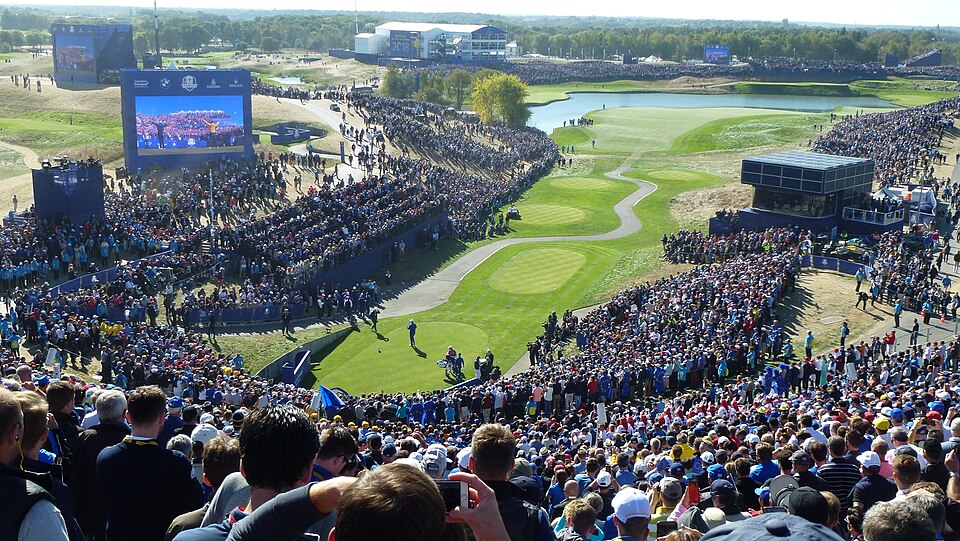
Ryder Cups are won in the pairs… aren’t they?
Ryder Cups are won in the pairs, or at least that is the line that gets repeated every two years as captains obsess over combinations and commentators talk endlessly about chemistry. There is some obvious logic to it, because 16 of the 28 points available in a Ryder Cup are played for in foursomes and fourballs before we ever get to the singles, and if one team can build a proper lead over those first two days then Sunday becomes less about winning the Ryder Cup and more about making sure you do not somehow find a way to lose it.
Europe have spent most of the 21st century making that theory look fairly convincing. Since 2002, they have won nine of the 12 Ryder Cups, with the United States winning only three, and across those 12 contests Europe have accumulated 178½ points to America’s 157½. That is a 21-point aggregate advantage over a period in which individual Ryder Cups have often been decided by one or two points, and it is large enough to suggest that there has been something more substantial going on than simply Europe being slightly better at getting over the line in close contests. That dominance is also what makes the make-up of the next European side so interesting, and I have looked separately at the 30 contenders for Europe’s 2027 Ryder Cup team.
The obvious question, then, is where those 21 points have actually come from, and the answer is not Sunday. Across those same 12 Ryder Cups, Europe have outscored the United States by only three points in singles, 73½ to 70½, which is surprisingly little given how much of Ryder Cup history tends to be remembered through final-day comebacks, famous putts, Ian Poulter fist pumps and the inevitable references to Medinah. Once everybody is sent out on their own, the two teams have actually been remarkably close.
The real difference has come before Sunday. Europe have collected 105 points across foursomes and fourballs since 2002, compared with 87 for the United States, meaning their 18-point advantage in the pairs accounts for almost all of their overall superiority during the period. Strip out the singles entirely and the broad story of the modern Ryder Cup barely changes: Europe have been better before Sunday, and they have been better by a lot.
That seems to confirm the old cliché, but even that does not quite tell the full story, because if Europe have dominated simply because they are better at pairs golf then you might expect that advantage to be spread reasonably evenly between foursomes and fourballs. It is not. Across the 12 Ryder Cups from 2002 to 2025, Europe have won 49 fourball points and the United States 47, which means more than two decades of discussion about partnerships, chemistry and captaincy has produced a European advantage of just two points in the format where both players play their own ball. That is not exactly the statistical footprint of a team repeatedly dismantling its opponent through some mysterious understanding of partnership golf.
Foursomes are completely different. Europe have won 56 foursomes points to America’s 40, a 16-point gap which accounts for more than three quarters of Europe’s entire aggregate Ryder Cup advantage since 2002. Put another way, if you want to explain why Europe have won three times as many Ryder Cups as the United States over this period, fourballs do not really help you very much and singles help you even less. Foursomes do.
At first glance, then, the explanation for Europe’s Ryder Cup dominance looks almost suspiciously simple: they have been much better at alternate-shot golf, which is perhaps less romantic than all the talk about bonding, team rooms and inspirational captain’s speeches, but rather easier to measure.
But once those foursomes results are split between Ryder Cups played in Europe and Ryder Cups played in the United States, the story changes again.
Europe’s Ryder Cup dominance is really a foursomes story
The scale of Europe’s foursomes advantage becomes clearer when you look at the percentages rather than simply the raw points. Since 2002, Europe have taken 58.3% of all points available in foursomes, compared with only 51% in fourballs and 51% in singles. Those latter two figures are about as close to parity as you could reasonably expect over 12 Ryder Cups; foursomes are not.
Europe vs USA Ryder Cup Record by Format Since 2002
| Format | Europe | USA | Europe share | Europe advantage |
| Foursomes | 56 | 40 | 58.3% | 16 |
| Fourballs | 49 | 47 | 51% | 2 |
| Singles | 73.5 | 70.5 | 51% | 3 |
Methodology: All figures are calculated from Ryder Cup results between 2002 and 2025. The rain-disrupted 2010 Ryder Cup is included in the overall foursomes, fourball and singles totals, but excluded from comparisons based on the normal Friday/Saturday session schedule.
There are 240 points in our sample if you combine fourballs and singles and, across all of them, Europe have outscored the United States by just five. There have been only 96 foursomes points available over the same period, yet Europe have created a 16-point advantage from them. That is a fairly extraordinary concentration of success in one part of the competition.
The gap has not been created through a long succession of narrow 4½–3½ foursomes victories either. Europe have repeatedly produced the sort of alternate-shot sessions that can change the shape of an entire Ryder Cup in a few hours. They won the aggregate foursomes 7–1 at Gleneagles in 2014, 6–2 at Le Golf National in 2018, 7–1 at Marco Simone in 2023 and 6–2 at Bethpage in 2025. At Marco Simone, Europe swept the opening session 4–0 and then won Saturday foursomes 3–1; their 7–1 record for the week took their foursomes record across the previous three Ryder Cups staged in Europe to 20–4.
Paris in 2018 is perhaps the best example of what foursomes can do to a Ryder Cup. The United States won the opening fourballs 3–1 and, for a few hours at least, everything appeared to be going according to plan. Europe then won all four afternoon foursomes matches, the first European 4–0 foursomes sweep in Ryder Cup history, and a 3–1 deficit became a 5–3 lead before dinner. The following afternoon the foursomes finished 2–2, giving Europe a 6–2 advantage in the format across the week, and they eventually won the Ryder Cup 17½–10½.
There is a temptation with the Ryder Cup to explain everything through some fairly vague language about togetherness. Europe have supposedly understood the competition better, cared about it more, found better partnerships and created a stronger team culture, while the Americans have occasionally looked like 12 very good golfers who happened to be wearing the same shirt. There may well be something in all of that, but the numbers suggest that Europe’s supposedly mystical Ryder Cup advantage can be located rather more precisely: they have been unusually good at the format in which two players are forced to operate as one.
That makes intuitive sense. Foursomes remove much of the safety net that exists in fourballs, where a poor drive or missed putt can simply be ignored if your partner makes birdie. In alternate shot, every mistake belongs to the partnership, players have to deal with somebody else putting them in difficult positions and captains have to think much more carefully about which games complement each other. If there really is something distinctive about Europe’s ability to construct pairs rather than simply assemble talented individuals, foursomes are exactly where you would expect it to show up.
The numbers certainly make the case look convincing. Europe’s overall Ryder Cup advantage since 2002 is 21 points, and 16 of those points – 76.2% – have come from foursomes alone. Fourballs have barely separated the teams, singles have barely separated them, but alternate shot has.
You could reasonably stop the analysis there and conclude that Europe are simply much better at foursomes.
There is only one problem with that theory.
When the same 56–40 record is divided between Ryder Cups played in Europe and Ryder Cups played in the United States, Europe’s supposed superiority in foursomes almost completely disappears on one side of the Atlantic.
The home advantage changes everything
If Europe’s 56–40 foursomes record since 2002 is taken at face value, the obvious conclusion is that they are simply better at alternate-shot golf. They have won 58.3% of the points available in the format, repeatedly produced the most one-sided sessions of the modern Ryder Cup and created more than three quarters of their entire aggregate advantage over the United States through foursomes alone. It looks like the clearest statistical explanation for why Europe have won nine of the last 12 Ryder Cups.
There is, however, one fairly substantial complication: almost all of that advantage has been created in Europe.
Across the six Ryder Cups played in Europe since 2002, Europe have won 33 of the 48 available foursomes points and the United States only 15. That is 68.8% of every foursomes point available on European soil, and an aggregate advantage of 18 points in just six Ryder Cups. For a format which is supposed to be the more volatile of the two pairs disciplines, that is an extraordinary level of dominance.
| Venue | Europe | USA | Europe share |
| Ryder Cups in Europe | 33 | 15 | 68.8% |
| Ryder Cups in USA | 23 | 25 | 47.9% |
| Overall | 56 | 40 | 58.3% |
Move the Ryder Cup across the Atlantic and the picture changes completely. In the six Ryder Cups played in the United States over the same period, Europe have actually lost the aggregate foursomes 25–23. Their share of the available points falls from 68.8% at home to 47.9% away, turning what looks like one of the great structural advantages in modern team golf into a losing record.
The really striking part is that Europe’s 18-point home advantage in foursomes is larger than their 16-point advantage in the format overall. In other words, their performances away from home have not added to the great European foursomes gap; they have reduced it. Every bit of Europe’s overall foursomes advantage, and then another two points on top, has been generated at home.
That makes the usual explanation that Europe are simply “better at foursomes” much harder to sustain. They have certainly been better at foursomes in aggregate, but a team that wins nearly 69% of the points in one environment and fewer than half in another is probably telling us something more interesting than that its players possess an innate European gift for taking alternate shots.
The contrast is particularly stark when you look at some of the recent home Ryder Cups. Europe won the foursomes 7–1 at Gleneagles in 2014, 6–2 at Le Golf National in 2018 and 7–1 at Marco Simone in 2023, three competitions in which the United States managed just four foursomes points from a possible 24. Europe did not merely edge the format in those Ryder Cups; they repeatedly used it to build the sort of lead that left the Americans spending the rest of the weekend trying to repair the damage.
There are plenty of possible explanations. The home captain has historically had significant input into course preparation and can help shape a setup suited to the players he expects to select; European players may arrive with greater familiarity with the style of golf required at particular venues; captains can build pairings months in advance around the demands of a known course; and the home crowd may matter more in a format where momentum can turn four matches at once. It is also possible that six home Ryder Cups remain too small a sample to justify a grand theory, particularly when a couple of 7–1 results can move the numbers dramatically. The depth of the European player pool is another part of the wider Ryder Cup picture, something I looked at separately in which European country could produce the next Ryder Cup player.
What the data can tell us with much more confidence is what has actually happened, and that is striking enough on its own. Europe’s great modern advantage has not simply been in pairs golf, nor even simply in foursomes. It has been concentrated overwhelmingly in foursomes played on European soil.
That also raises a slightly uncomfortable question about the way Europe’s Ryder Cup success is usually discussed. The familiar explanations tend to focus on culture, chemistry and an almost mystical understanding of team golf, as though a passport issued on the eastern side of the Atlantic somehow comes with an instinctive knowledge of whose tee shot should be used on the odd-numbered holes. If that really were the decisive factor, you might expect it to travel rather better.
Instead, Europe have been historically dominant at home and slightly worse than the United States away.
So perhaps the more accurate conclusion is not that Europe are better at foursomes, but that they have become exceptionally good at using home foursomes to create an advantage that the United States has repeatedly struggled to recover from.
And that leads to the next question. If foursomes have been responsible for so much of Europe’s advantage, at what point during a Ryder Cup does that advantage usually become decisive?
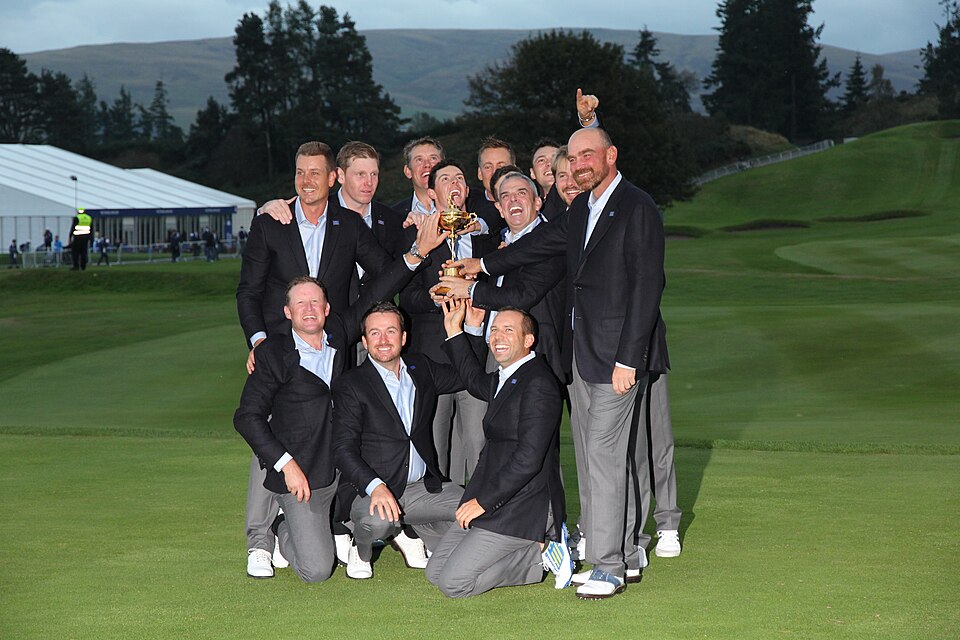
But when is the Ryder Cup actually won?
So far, the numbers tell us where Europe’s modern Ryder Cup advantage has come from. It has come overwhelmingly before Sunday, disproportionately from foursomes, and almost entirely from the extraordinary record Europe have built in that format at home.
There is another way of looking at the same question, though, which is to stop asking where the points are coming from and ask when the competition is actually being decided.
For that, it makes sense to look at the Ryder Cups since 2002 with the standard schedule of four pairs matches on Friday morning, four on Friday afternoon, another eight across Saturday and then 12 singles on Sunday. That gives us 11 Ryder Cups, with 2010 excluded because rain at Celtic Manor (who could have predicted that an outdoor event in Wales in October would be affected by rain…) tore up the normal timetable and produced a mixture of six-match sessions that cannot really be compared like-for-like with the others.
What happens when you look at those 11 Ryder Cups is fairly striking.
The team leading at the end of Friday has gone on to win the Ryder Cup in 10 of them – the only exception is Medinah in 2012.
That means that, despite everything that happens on Saturday and despite Sunday containing more individual matches than any other session, the basic direction of the Ryder Cup has usually already been established by the time the first day is finished. In most years, Saturday has either reinforced the advantage or failed to overturn it, while Sunday has decided how comfortably the leading team wins rather than which team wins at all.
That does not mean Friday is literally the moment the Ryder Cup is won, and 2012 is the obvious warning against getting carried away with the statistic. The United States led 5–3 after Friday at Medinah, stretched that advantage to 10–6 by Saturday night and still lost. Ryder Cup history would be much less interesting if four-point leads were impossible to overturn.
But the broader pattern is difficult to ignore. If one team has ended Friday in front since 2002, there has been a 10-in-11 chance that the same team would eventually be holding the trophy on Sunday evening.
The next question is what has driven those Friday leads.
And once again, foursomes keep appearing.
Friday foursomes: the most important session in the Ryder Cup?
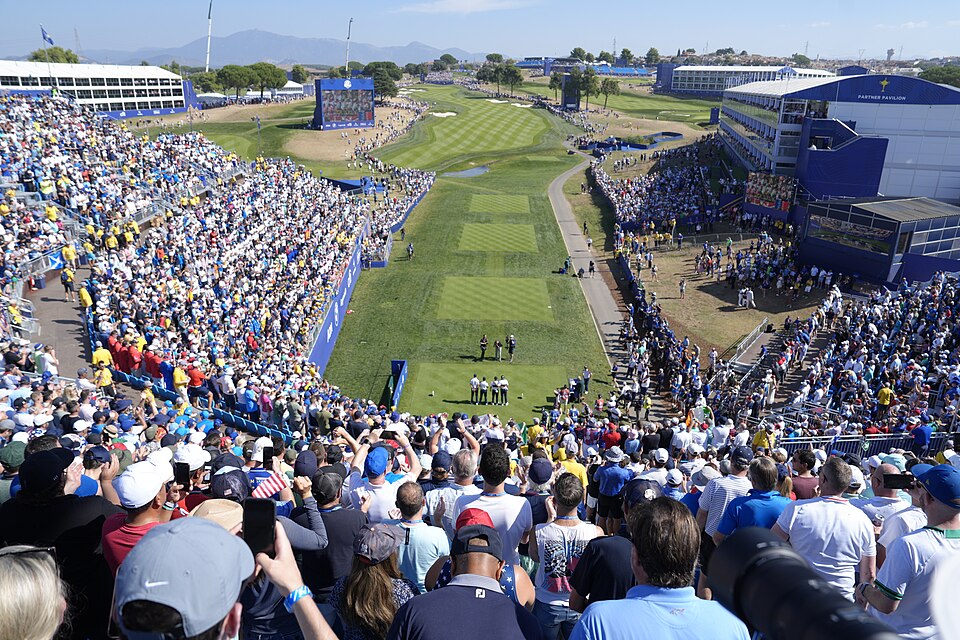
If the team leading on Friday evening has won 10 of the 11 normally scheduled Ryder Cups since 2002, the next question is whether one of Friday’s two formats has been particularly closely associated with the eventual result. Here, foursomes stand out again.
Excluding the rain-disrupted 2010 Ryder Cup, there have been 11 contests since 2002 played to the normal schedule. In ten of them, Friday foursomes produced an outright winner; the only tie was at Medinah in 2012. Of those ten Ryder Cups with an outright Friday-foursomes winner, that team went on to win the Cup nine times.
The only exception was 2002, when the United States edged Friday foursomes 2½–1½ but Europe eventually won 15½–12½.
More recently, the relationship has been perfect. Europe won Friday foursomes 3½–½ in 2014, the United States swept them 4–0 in 2016, Europe won 4–0 in 2018, the United States 3–1 in 2021, Europe 4–0 in 2023 and Europe 3–1 again in 2025. In all six cases, the winner of Friday foursomes went on to win the Ryder Cup.
| Ryder Cup | Friday foursomes | Ryder Cup winner |
| 2014 | Europe 3½-½ | Europe |
| 2016 | USA 4-0 | USA |
| 2018 | Europe 4-0 | Europe |
| 2021 | USA 3-1 | USA |
| 2023 | Europe 4-0 | Europe |
| 2025 | Europe 3-1 | Europe |
That makes the make-up of the next two teams particularly interesting ahead of Adare Manor in 2027. I have looked separately at Europe’s leading contenders for the 2027 Ryder Cup team and the players who could make the United States team in 2027.
That does not make Friday foursomes a magic formula for winning the Ryder Cup, nor does a sample of ten decisive sessions justify pretending that one four-match block determines everything that follows. The stronger and more defensible point is that Friday foursomes have been an unusually reliable indicator of which team is going to win: nine out of ten since 2002 when the session has had an outright winner, and six out of six since 2014.
The 2018 Ryder Cup shows how that relationship can work in practice. The United States won the opening fourballs 3–1 at Le Golf National and appeared to have made the ideal start, only for Europe to sweep the afternoon foursomes 4–0. In the space of four matches, a 3–1 American lead became a 5–3 European lead, and Europe never trailed again. The importance of the session was not some abstract statistical correlation; foursomes had materially reversed the position of the match.
The same pattern can appear without such a dramatic turnaround. At Hazeltine in 2016, the United States opened with a 4–0 foursomes sweep and never surrendered the overall lead, despite Europe recovering over the subsequent sessions. At Whistling Straits in 2021, a 3–1 American foursomes win was the first step towards a 19–9 victory. At Marco Simone in 2023, Europe began with a 4–0 sweep and were four points ahead before the United States had put anything on the scoreboard.
There is an important distinction here between prediction and causation. The fact that the winner of Friday foursomes has so often gone on to win does not prove that the session itself causes the final result. A better team may simply be more likely to win both Friday foursomes and the Ryder Cup, while a 4–0 or 3½–½ session may be evidence of a broader advantage rather than its sole source.
Even with that caveat, the consistency is difficult to ignore. Friday contains only eight of the 28 points available during a Ryder Cup, and Friday foursomes only four, yet the result of that one session has aligned with the eventual winner in nine of the ten normally scheduled Ryder Cups since 2002 in which there was an outright winner.
And the one great modern Ryder Cup that appears to challenge almost every Friday trend actually adds another intriguing detail. The United States led 5–3 after the opening day at Medinah in 2012 and would stretch that advantage to 10–6 before Europe’s historic Sunday comeback, but they had not won Friday foursomes.
That session finished 2–2.
Medinah: the great exception
If there is one Ryder Cup that should make us wary of declaring anything over on Friday evening, it is Medinah in 2012. The United States led 5–3 after the opening day, extended that advantage to 10–6 by the end of Saturday and needed only 4½ points from the 12 singles matches to win the Cup. Europe, by contrast, needed eight points merely to retain it and 8½ to win outright. Almost every pattern we have looked at so far pointed in the same direction.
Europe won anyway.
They took the singles 8½–3½ and completed a 14½–13½ victory that remains the defining comeback of the modern Ryder Cup. It is also the only normally scheduled Ryder Cup since 2002 in which the team leading at the end of Friday has failed to win, which is why Medinah matters so much in this analysis: it proves the trend is not deterministic, while also showing how unusual it is for a Friday lead to disappear.
There is another detail which becomes more interesting in the context of this article. The United States did not win Friday foursomes. That session finished 2–2, before the Americans won the afternoon fourballs 3–1 to establish their 5–3 overnight lead. They then did more damage in Saturday foursomes, winning 3–1 and moving 8–4 ahead, before the teams split the final fourballs 2–2.
So Medinah breaks the Friday-leader pattern, but it does not break the Friday-foursomes pattern. There was no outright winner of that session, which means 2012 sits outside the nine-from-ten relationship rather than contradicting it.
That does not make the comeback any less remarkable. If anything, it reinforces how difficult Europe’s task was: they had allowed the United States to build precisely the sort of advantage that almost always holds, then overturned it in one extraordinary Sunday.
The lesson is not that Friday foursomes decide the Ryder Cup with mathematical certainty. It is that, across the modern sample, they have been one of the strongest indicators of who eventually wins – and Medinah is the rare case where the broader Friday pattern failed without producing a contrary Friday-foursomes result.
The 2025 Ryder Cup then provides an almost perfect counterpoint: Europe built an even larger advantage before Sunday, suffered one of their worst singles sessions of the modern era and still discovered that the damage done over the first two days was too great to undo.
Bethpage 2025: the reverse Medinah
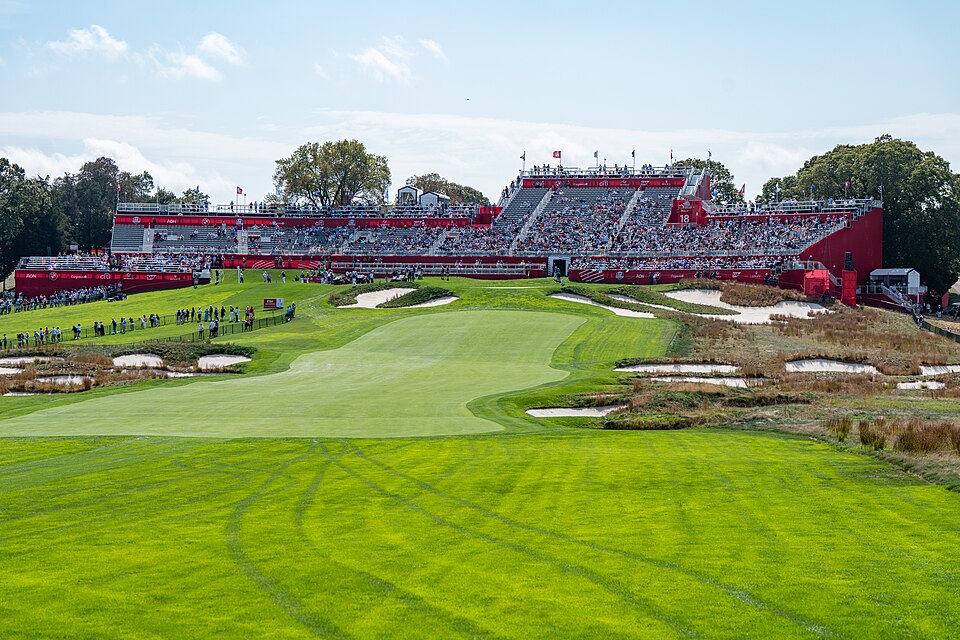
If Medinah is the Ryder Cup that proves a large lead can still disappear on Sunday, Bethpage in 2025 is almost its mirror image. Europe arrived at the singles with an 11½–4½ advantage, the largest lead they had ever taken into the final day of a Ryder Cup, having become the first team to win each of the opening four sessions away from home. They had won Friday foursomes 3–1, Friday fourballs 2½–1½, Saturday foursomes 3–1 and Saturday fourballs 3–1, meaning that before a single singles match had been played Europe had already accumulated seven more points than the United States.
What happened next should, in isolation, have been catastrophic. The United States won 8½ of the 12 Sunday points, matching the highest singles total by either side since the Ryder Cup moved to 12 singles matches in 1979, while Europe won only one match (out of the 11, Hovland was injured) outright. A seven-point overnight lead that had made the result look almost inevitable suddenly became close enough for Shane Lowry’s late half-point to be greeted with something approaching relief rather than formality, before Europe eventually escaped with a 15–13 victory.
It was one of the most one-sided Sunday singles sessions of the modern Ryder Cup, and yet it was not enough. That is perhaps the clearest illustration anywhere in this analysis of the value of building an enormous advantage in the pairs: Europe were able to be comprehensively outplayed on the final day and still win away from home because they had spent Friday and Saturday putting themselves in a position from which even an American comeback of historic proportions could fall short.
The contrast with Medinah is particularly neat. In 2012, the United States led 10–6 before Sunday and Europe won the singles 8½–3½ to overturn the deficit. At Bethpage, Europe led 11½–4½ and the United States produced exactly the same 8½–3½ singles score in reverse, but this time there was simply too much ground to recover. That extra three-point cushion before Sunday had changed the mathematics completely..
There is a danger of taking that comparison too far, because no captain is going to regard an 8½–3½ singles defeat as part of an ideal Ryder Cup strategy. Europe would obviously rather have finished the job comfortably than spent Sunday afternoon watching what had looked like an unassailable lead become increasingly uncomfortable. But the result underlines the broader point of this article: Sunday attracts a disproportionate amount of the drama because it is when the Cup is physically won or lost, while much of the work that determines what is possible on Sunday has already been done.
Bethpage is particularly useful because it combines almost every trend we have identified. Europe won Friday foursomes and went on to win the Ryder Cup. They led at the end of Friday and went on to win the Ryder Cup. They built the decisive advantage through the pairs, taking 11½ of the first 16 points, and even though the United States then dominated the format in which Europe have historically held almost no aggregate advantage — singles — the deficit was too large.
Medinah showed that a four-point lead going into Sunday can disappear.
Bethpage showed that a seven-point lead is a very different proposition.
And taken together, the two Ryder Cups make the same broader point from opposite directions: Sunday can still change almost everything, but what happens before Sunday determines just how much there is left to change.
So where is the Ryder Cup really won?
If there is one thing the numbers make clear, it is that the answer is not simply Sunday.
Since 2002, Europe’s aggregate advantage over the United States has been built overwhelmingly before the singles, and within the pairs it has been built overwhelmingly in foursomes. Fourballs have been almost completely even, singles have been almost completely even, but Europe have outscored the United States 56–40 in alternate shot, meaning that more than three quarters of their entire 21-point advantage over the period has come from one format.
That alone would make foursomes look like the obvious answer to the question in the title, but the home and away split makes the picture more interesting. Europe have taken 68.8% of all foursomes points available in Ryder Cups played on European soil since 2002, building a 33–15 advantage, yet they have actually lost the aggregate foursomes 25–23 in the United States. Europe’s supposed superiority in alternate shot is therefore not something they have carried around the world with them; almost all of it has been created at home.
The timing matters too. Excluding the rain-disrupted 2010 Ryder Cup, the team leading at the end of Friday has gone on to win 10 of the 11 contests since 2002, while the team winning Friday foursomes has gone on to win nine of the ten Ryder Cups in which that session produced an outright winner. Since 2014, the relationship has been perfect: six Ryder Cups, six Friday-foursomes winners, six eventual Ryder Cup winners.
None of that means that Friday afternoon – or Friday morning, depending on the schedule – is secretly the moment at which captains should start polishing the trophy. Medinah remains the obvious warning against treating historical patterns as inevitabilities, while match play is far too volatile for any four-match session to determine a 28-point competition on its own.
But the broader picture is hard to escape. The Ryder Cup may be decided on Sunday, but it is usually shaped much earlier. Europe’s modern dominance has come from building advantages in the pairs, those advantages have been concentrated in foursomes, and the most damaging versions of them have tended to arrive in home Ryder Cups and, increasingly, on Friday.
Perhaps that is the real answer. The Ryder Cup is not literally won in foursomes, nor is it literally won on Friday. It is won by creating a position from which Sunday becomes manageable, and over the past two decades no part of the competition has been more closely associated with creating that position than foursomes.
Which means that when Europe and the United States meet again at Adare Manor in 2027, the most dramatic moment may still come late on Sunday afternoon, with one player standing over a putt that decides the Cup. Ahead of that contest, I have looked separately at Europe’s leading contenders for the 2027 Ryder Cup team and the players who could make the United States team in 2027.
But if recent history tells us anything, the more revealing moment may have arrived two days earlier.
FAQs
Which Ryder Cup format has Europe been strongest in since 2002?
Foursomes. From 2002 to 2025, Europe outscored the United States 56–40 in foursomes, compared with 49–47 in fourballs and 73½–70½ in singles. More than 75% of Europe’s overall aggregate points advantage during that period came from foursomes.
What is Europe’s Ryder Cup foursomes record at home?
Across the six Ryder Cups played in Europe from 2002 to 2023, Europe won 33 of the 48 available foursomes points, or 68.8%. By contrast, Europe have a losing 23–25 foursomes record in Ryder Cups played in the United States over the same wider period.
Are Europe better than the USA in Ryder Cup fourballs?
Only marginally. Europe lead 49–47 in aggregate fourball points across the 12 Ryder Cups from 2002 to 2025, making fourballs almost completely even over the period.
How important are Friday foursomes in the Ryder Cup?
Very important, at least historically. Excluding the weather-disrupted 2010 Ryder Cup, Friday foursomes have produced an outright winner ten times since 2002, and that team has gone on to win the Ryder Cup nine times. Since 2014, the winner of Friday foursomes has won every Ryder Cup.
How often does the team leading after Friday win the Ryder Cup?
Excluding 2010 because of its unusual schedule, the team leading at the end of Friday has won 10 of the 11 Ryder Cups since 2002. The only exception was Europe’s comeback at Medinah in 2012.
Was the 2012 Ryder Cup an exception to the Friday foursomes trend?
Not quite. The United States led 5–3 after Friday at Medinah, but the Friday foursomes had finished 2–2. America’s advantage came from winning the Friday fourballs 3–1.
Where is the Ryder Cup really won?
There is no single session that determines the result, but the modern data points strongly towards the pairs, and particularly foursomes. Europe’s biggest long-term advantage has come in alternate shot, while Friday foursomes have also been one of the strongest indicators of the eventual Ryder Cup winner.
What is the difference between foursomes and fourballs in the Ryder Cup?
In foursomes, two players share one ball and alternate shots. In fourballs, both players play their own ball and the lowest score from either player counts for the team on each hole.


Leave a comment