Fourteen European countries have produced a Ryder Cup player. Nine are from continental Europe. Who becomes number 15 – and continental Europe’s number 10?
Since the continental Europeans joined British and Irish golfers in 1979 in an attempt to stop the almost constant flow of US victories, the Ryder Cup tide has turned. From 1927 to 1977 the score read a depressing (for the British and Irish) 18-3 (with one tie) in favour of the Americans. But in the ‘Europe’ era Europe has the upper hand, leading 13-9 (with one tie).
These two scorelines suggest an immediate wave of continental Europeans swinging the balance of power – but in fact it was more of a trickle.
The Spaniards were the initial relief force in 1979, and the first German joined in 1981. But there was a wait until 1993 for the next new country, with Sweden providing Joakim Haeggman and Italy providing Costantino Rocca.
Since the Ryder Cup has become European geographically it has not become nearly as European as you might assume. So far since 1979 nine continental European countries have supplied a Ryder Cup player – but some quite significant golfing countries (most obviously the Netherlands, Portugal, Finland and Poland) have not had a representative join the Ryder Cup fun.
Which country is most likely to become the tenth?
The Story So Far
| Country | First Year | Players and Their Debut Year |
| Spain | 1979 | Seve Ballesteros (1979); Antonio Garrido (1979); José María Cañizares (1981); Manuel Piñero (1981); José Rivero (1985); José María Olazábal (1987); Ignacio Garrido (1997); Sergio García (1999); Miguel Ángel Jiménez (1999); Rafa Cabrera Bello (2016); Jon Rahm (2018) |
| Germany | 1981 | Bernhard Langer (1981); Martin Kaymer (2010) |
| Sweden | 1993 | Joakim Haeggman (1993); Per-Ulrik Johansson (1995); Jesper Parnevik (1997); Jarmo Sandelin (1999); Niclas Fasth (2002); Pierre Fulke (2002); Robert Karlsson (2006); Henrik Stenson (2006); Peter Hanson (2010); Alex Noren (2018); Ludvig Åberg (2023) |
| Italy | 1993 | Costantino Rocca (1993); Edoardo Molinari (2010); Francesco Molinari (2010) |
| Denmark | 1997 | Thomas Bjørn (1997); Søren Hansen (2008); Thorbjørn Olesen (2018); Nicolai Højgaard (2023); Rasmus Højgaard (2025) |
| France | 1999 | Jean van de Velde (1999); Thomas Levet (2004); Victor Dubuisson (2014) |
| Belgium | 2012 | Nicolas Colsaerts (2012); Thomas Pieters (2016) |
| Norway | 2021 | Viktor Hovland (2021) |
| Austria | 2021 | Bernd Wiesberger (2021); Sepp Straka (2023) |
Recent years have seen smaller European countries provide players (I don’t think many people go on golf holidays to Norway or Austria). But even as the roster of countries has increased, remarkably, in the 23 Ryder Cups since continental Europeans were first admitted, they have outnumbered British and Irish players on the European team just once – in 1997 (Bernhard Langer; Per-Ulrik Johansson; Ignacio Garrido; Thomas Bjørn; Costantino Rocca; José María Olazábal; and Jesper Parnevik were captained by the first continental European captain, Seve Ballesteros).
There were six continental Europeans on the 1999, 2002 and 2018 teams. The representation has settled at around a third of the team (four in 2021 and five in each of 2023 and 2025). The British and Irish influence is also obvious when trying to pick an all-time European Ryder Cup team.
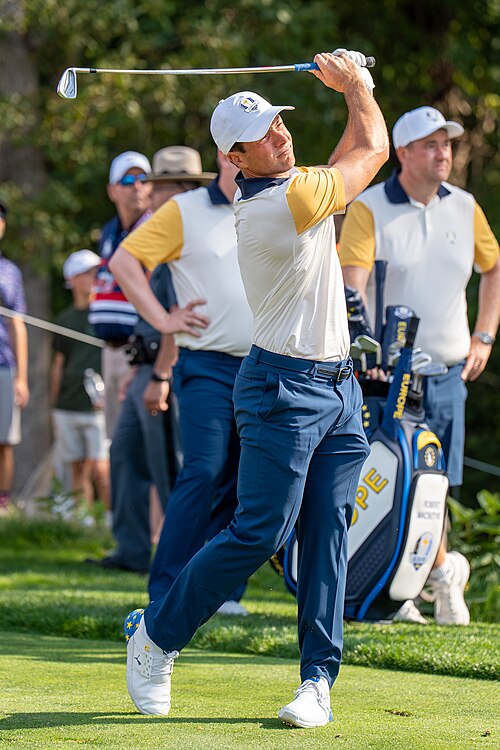
Which Country is Next?
Which new country provides the next Ryder Cup player depends on a few variables. There is no elaborate model that can compute the necessary calculations but for each country we can look at: the quality of their best golfers; the age of those golfers; the depth behind the leading player; their access to the DP World Tour and the PGA Tour; and whether there is an obvious prospect coming through who could earn a place on the team in the next 10 years.
| Country | Leading Candidates | Best Chance | |
| 1 | Finland | Oliver Lindell, Sami Välimäki | 2027-2031 |
| 2 | Poland | Adrian Meronk | 2027-2029 |
| 3 | Portugal | Ricardo Gouveia, Daniel Rodrigues | 2029-2033 |
| 4 | Czechia | Filip Mrůzek, Filip Jakubčík, Petr Hrubý | 2029-2035 |
| 5 | Netherlands | Darius van Driel, Joost Luiten | 2027-2031 |
| 6 | Slovakia | Tadeáš Teťák | 2029-2033 |
| 7 | Estonia | Richard Teder | 2031-2035 |
| 8 | Switzerland | Joel Girrbach | 2027-2031 |
| 9 | Slovenia | Žan Luka Štirn | 2033 onwards |
| 10 | Iceland | Haraldur Franklín Magnús | 2033 onwards |
No. 10 to No. 6 – The Longer Term Bets
10. Iceland
Iceland has produced rather more elite sportsmen than you would expect from a country of fewer than 400,000 people. When Iceland qualified for the 2018 FIFA World Cup, they were the smallest nation to have done so (Curaçao took that record in 2026, but Iceland is still technically the smallest independent nation to have qualified).
Icelandic golf, however, has yet to provide its Ryder Cup breakthrough.
The best current candidate is Haraldur Franklín Magnús (the only Icelandic in the top 1,000 of the world rankings), who has spent time on the HotelPlanner Tour and has at least established himself in the professional game (let’s pass over the fact he has missed more 2026 cuts than he has made). That puts Iceland ahead of plenty of other unrepresented European countries, where finding a player anywhere near the main European tours is difficult.
The problem is the size of the remaining jump. Competing on Europe’s second tier and making a Ryder Cup team are very different things. Magnús would need not merely to reach the DP World Tour, but to become one of its better players.
Iceland therefore makes the top ten because there is a recognisable pathway. It ranks tenth because that pathway remains a very long one.
9. Slovenia
Slovenia is another country for which the interesting point is less that a Ryder Cup player is imminent and more that there is now at least someone to follow.
Jaka Babnik is their highest player in the world rankings (just outside the top 1,800) and Žan Luka Štirn (just inside the top 2,500) has played professionally at Challenge Tour level. As with Iceland, though, there are several rungs of the ladder still to climb.
There is also an obvious reason not to dismiss Slovenia altogether. This is a country of barely two million people which has repeatedly produced elite athletes in sports where population size ought to count against it. Golf has not yet joined cycling, basketball or skiing on that list.
For now, though, predicting a Slovenian Ryder Cup player requires rather more imagination than evidence.
8. Switzerland
Switzerland might be the most surprising country this far down the ranking.
It is wealthy, centrally located in European golf and has no shortage of courses. The European Masters at Crans-sur-Sierre has been part of the continent’s professional calendar for generations. And yet Switzerland has never produced a Ryder Cup player.
One advantage that Switzerland has over both Iceland and Slovenia is multiple players in the top 1,000 of the world rankings.
Joel Girrbach offers the most immediate chance of Ryder Cup representation. He is an established DP World Tour professional and has shown that he belongs at that level.
The difficulty is that Girrbach is now in his thirties and has never seriously approached Ryder Cup contention. To become Switzerland’s first representative, he would need the best spell of golf of his career fairly soon.
That makes Switzerland an unusual entry on this list. Its Ryder Cup breakthrough is perfectly conceivable in the next few years, but there is not yet an obvious younger player waiting behind Girrbach if it does not happen.
7. Estonia
Estonia is almost the opposite.
There is no established Estonian professional knocking on the Ryder Cup door. Instead, its case rests largely on the potential of Richard Teder.
Teder has already done things Estonian golfers simply have not done before. He became the first player from the country to qualify for the Open Championship in 2025 and reached the semi-finals of the Amateur Championship the following year. He has also earned experience around DP World Tour events while still at the beginning of his career.
None of that makes him a future Ryder Cup player. Plenty of excellent amateurs disappear into the professional ranks without ever troubling the top 100 in the world.
But if this article is about identifying where the next new Ryder Cup country might come from, upside matters. Estonia has a 21-year-old who has already broken national golfing barriers and still has most of his development ahead of him.
That is enough to make it one of the more interesting long-term bets.
6. Slovakia
At number six, the possibilities begin to feel rather less theoretical.
Tadeáš Teťák has already held a DP World Tour card and has spent 2026 producing some of the best golf of his professional career on the HotelPlanner Tour. A runner-up finish at the Swiss Challenge and another top-five result in Finland have put him into genuine contention to climb back onto Europe’s main circuit.
That is still a long way from making a Ryder Cup team, but it is a much clearer route than most of the countries below Slovakia on this list.
The basic equation is straightforward. First Teťák needs to establish himself permanently on the DP World Tour. Then he needs to move from surviving there to contending regularly. Only then does Ryder Cup qualification become a realistic conversation.
But Slovakia no longer needs to imagine what its first top-level touring professional might look like. It already has one who is close enough to make the next few seasons worth watching.
That puts it sixth — and just outside the group of countries where a first Ryder Cup player would no longer feel particularly surprising.
No. 5 to No. 3 – Countries That Could Genuinely Do It
5. Netherlands
If this article had been written ten years ago, the Netherlands may have been number one.
The reason is Joost Luiten. The Dutchman has won six times on the DP World Tour, twice won his national open and finished as high as 11th in the season-long Race to Dubai. At his best, he was comfortably good enough to look like a Ryder Cup player.
He just never quite became one.
That makes the Netherlands one of the stranger omissions from the Ryder Cup’s list of nations. Belgium has produced Nicolas Colsaerts and Thomas Pieters. Austria has Bernd Wiesberger and Sepp Straka. Norway has Viktor Hovland. The Netherlands, despite having a player with six European Tour victories, still has nobody.
Luiten is now 40, so time is rapidly running out. There is at least another possibility in Darius van Driel, who won his first DP World Tour title at the 2024 Magical Kenya Open and reached the season-ending DP World Tour Championship later that year.
Van Driel is also in his thirties, however, and neither man is currently close to automatic Ryder Cup qualification.
The Netherlands therefore ranks fifth largely because the quality is already there. It does not need to produce a golfer capable of winning on the DP World Tour; it has two of them. What it needs is for one Dutch player to put together the exceptional 12 or 18 months required to move from good European Tour professional to Ryder Cup contender.
It may yet happen. But there is also a decent chance that Dutch golf’s best opportunity arrived with Luiten and quietly passed by.
4. Czechia
Czechia has never come particularly close to producing a Ryder Cup player – that may be about to change.
Not because there is one Czech golfer already threatening to make Luke Donald’s team, but because there are suddenly several young professionals moving through the levels immediately below it.
Filip Mrůzek made the biggest breakthrough in June 2026 when he won the Interwetten Open on the HotelPlanner Tour. By July he had climbed to 14th on the Road to Mallorca, putting himself firmly in the race for one of the DP World Tour cards awarded at the end of the season.
Behind him are Filip Jakubčík and Petr Hrubý, both playing on the Korn Ferry Tour in the United States. Jakubčík is particularly intriguing. He finished fourth in the NCAA rankings before turning professional at 22, earning full Korn Ferry Tour status in the process, and made the cut on his professional debut. For the first time, Czechia has had two players competing in the same Korn Ferry Tour event.
None of the three is remotely a Ryder Cup player yet, but that is not really the point.
Compare Czechia with many of the countries lower down this list and the difference is obvious. Instead of pinning its hopes on one golfer having an extraordinary rise through the rankings, it now has players on both of the main feeder routes into top-level professional golf: the HotelPlanner Tour in Europe and the Korn Ferry Tour in America.
Mrůzek could be on the DP World Tour soon. Jakubčík is only 22. Hrubý is only a little older.
One of them still has to make a very substantial leap. For the first time, though, Czech golf has enough candidates that it no longer feels ridiculous to wonder whether one eventually might.
3. Portugal
If this were a list of British golfers’ golf holiday destinations, Portugal would be first but at number three we reach the first country where I think a Ryder Cup breakthrough in the next few editions would be genuinely unsurprising.
Portugal has spent years waiting for one player to turn solid professional golf into something more.
For much of that period, Ricardo Gouveia has carried the flag, once reaching 77th in the world rankings. A seven-time winner on the HotelPlanner Tour, Gouveia has repeatedly earned his way onto the DP World Tour without ever quite making the jump into Europe’s elite. Even in 2026, though, he is still showing signs that the gap may not be impossible. He finished joint second at the Austrian Alpine Open and joint seventh at the Turkish Airlines Open.
More interesting for Portugal’s long-term chances is Daniel Rodrigues.
Rodrigues came through all three stages of DP World Tour Qualifying School to earn his card for 2026, giving Portugal two players with full playing privileges on the circuit.
Rodrigues has then done rather more than simply make up the numbers. His joint-second finish at the 2026 Turkish Airlines Open provided the clearest indication yet that he might be capable of establishing himself at this level.
A runner-up finish in Turkey does not make someone a future Ryder Cup player, of course. Rodrigues would need to turn occasional contention into regular contention, climb significantly in the world rankings and ultimately start performing in the bigger events.
But Portugal now has something most of the countries below it do not: two golfers already competing on the DP World Tour, including one still early enough in his career to have considerable room for improvement.
There is also a broader sense that Portugal ought eventually to get there. It is one of Europe’s major golf destinations, regularly hosts professional tournaments and has been producing touring professionals for decades. Yet no Portuguese golfer has ever represented Europe in a Ryder Cup.
Finland and Poland remain better bets to change their own history first, but Portugal no longer feels like a question of whether it will ever produce a Ryder Cup player.
No. 2 – Poland
If this list were simply asking which unrepresented country has produced the best male golfer, Poland would probably be top – that is because Adrian Meronk has already done most of the hard part.
Meronk is not some speculative prospect who might one day become good enough for Ryder Cup discussion. He is a multiple DP World Tour winner who climbed into the world’s top 50 and, in 2023, looked to many observers like a perfectly plausible Ryder Cup pick. When Luke Donald left him out of the team for Marco Simone, the omission caused enough debate precisely because it did not feel ridiculous to imagine a Polish Ryder Cup player already existing. In golfing terms, Poland has come closer than any country on this list to breaking through. It just has not actually crossed the line.
That is why Poland sits second rather than lower.
Most of the countries in this ranking are still trying to answer the first question: can they produce a golfer of Ryder Cup calibre at all? Poland has effectively answered that already. Meronk has shown that a Polish golfer can win at a high level in Europe and spend sustained time in the sort of territory where Ryder Cup selection becomes part of the conversation.
The problem is that the window now looks a little less straightforward than it did a couple of years ago.
Meronk’s move to LIV complicated matters, not just in the abstract sense of ‘eligibility’, but in the practical sense that it made his route back into the weekly rhythm of European Ryder Cup discussion much harder. A player based almost entirely within the DP World Tour and major-championship ecosystem can build momentum visibly. A LIV player has a more awkward road. That does not make selection impossible, but it does make the task less simple than merely playing well.
There is also the obvious depth issue – Poland’s hopes are still overwhelmingly tied to one man.
That matters. Finland, the only country ranked above Poland, can point to more than one credible candidate. Portugal has two current DP World Tour players. Czechia has several golfers moving through strong development pathways. Poland, by contrast, still looks heavily dependent on Meronk either forcing his way back into the reckoning or being followed by another exceptional talent.
Even so, it would be wrong to overcomplicate the verdict.
Poland does not need a miracle. It needs Adrian Meronk to line up the timing, form and eligibility well enough to make a European team. That is a much better position than most unrepresented countries can claim to be in.
If Meronk rediscovers the kind of level he showed in 2022 and 2023, Poland could quite easily become country number ten. It would not be a fairy tale, it would simply be a near-miss finally corrected.
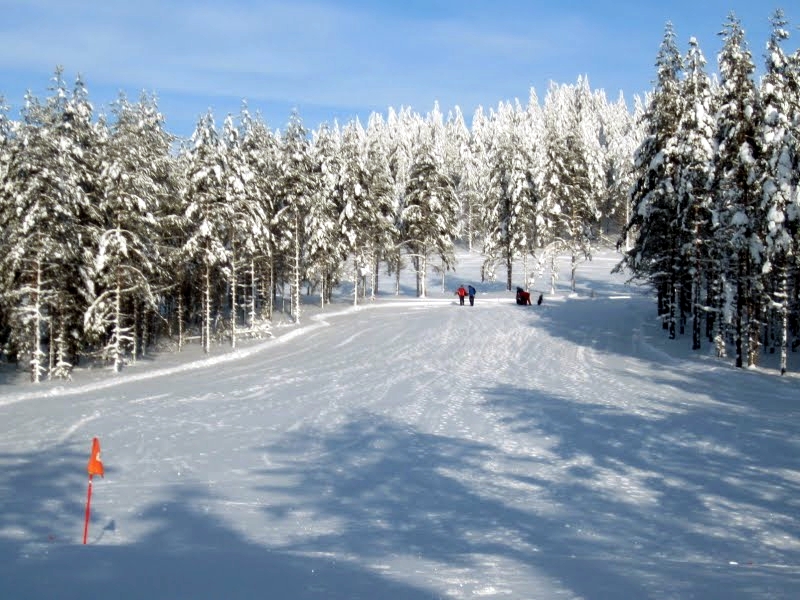
Snow golf at Jämi in Jämijärvi, Finland. Photo: TimoHonkelaEnglish / Wikimedia Commons, CC BY-SA 3.0.No. 1 – Finland
Finland gets the top spot because it has the strongest overall case rather than the single most dramatic one. That distinction matters.
Poland’s argument is essentially Adrian Meronk. The Netherlands has long revolved around Joost Luiten. Estonia’s appeal is the upside of one exciting young player. Finland, by contrast, has something far more useful: more than one realistic route.
The first is Sami Välimäki, who has already shown he can win at a serious level. He owns victories on both the DP World Tour and the PGA Tour, which immediately separates him from many of the players discussed elsewhere in this ranking. A golfer who can win on the PGA Tour is no longer being judged on whether he belongs in good company.
The second is Oliver Lindell, whose 2026 season has made this conversation much more than a theoretical exercise. Lindell has pushed himself into the upper reaches of the Race to Dubai and, at least for the first time, looks like the sort of player whose name could eventually drift from ‘interesting national breakthrough story’ to ‘possible Ryder Cup outsider’.
As Välimäki is 28 and Lindell is 27 their selection window is not ‘now or never’ – they could be prospects for the next 10 years.
That is what puts Finland ahead.
A country trying to produce its first Ryder Cup player usually needs everything to go right around one outlier talent. Finland may not need that. If Välimäki produces the right season, there is the breakthrough. If Lindell continues his rise, there is another chance. If one stalls, the other still gives the country a route in.
That depth does not need to be exaggerated. Finland is not suddenly Spain or Sweden. It is not rolling out a production line of obvious Ryder Cup players.
But when compared with every other unrepresented continental European country, its position is unusually strong. It has one golfer with proven top-level winning pedigree and another who is beginning to build a profile that looks increasingly relevant. No other country on this list combines those two things quite so neatly.
There is also a timing point here.
Ryder Cup breakthroughs tend not to come from nowhere. Before a country gets its first player, there is usually a stage where you can see the possibility forming in the distance. Belgium had that with Nicolas Colsaerts. Norway had it with Viktor Hovland. Austria had it with Bernd Wiesberger and then Sepp Straka. Finland feels like it is entering that stage now.
That does not mean it will definitely happen in 2027. Ryder Cup places are brutally difficult to win, and a player needs more than just a good season to force his way into the team. He needs sustained excellence in the right events against the right field.
But if you were asked today which country is most likely to become the tenth continental European nation to supply a Ryder Cup player, Finland has the most convincing answer – because it has the healthiest combination of current level, upward momentum and multiple credible candidates (and it must be desperate to join all of its Scandinavian neighbours in providing a Ryder Cup player).
The Continental Top 10 versus Wales, Scotland and Ireland
A good way of illustrating the shifting sands of Ryder Cup participation is to compare the chances of a Finnish or Polish debutant versus the next selection of a new Welsh, Scottish or Irish golfer.
Ireland
If we towed Ireland southwards and eastwards and docked it in the Bay of Biscay (and took away all its many Ryder Cup representatives) would it be more or less likely than Finland to have a Ryder Cup debutant first?
The last new Irish player was Shane Lowry in 2021. Seamus Power’s Ryder Cup ambitions have probably been and gone (he wasn’t a million miles away in 2023) so Irish hopes probably rest with Tom McKibbin. The 23 year old is already a DP World Tour winner and, importantly, Luke Donald has just named him among the potential Ryder Cup rookies he is watching for Adare Manor in 2027 (and played the first two rounds of the Irish Open with McKibbin).
On balance, McKibbin is probably more likely than both Välimäki and Lindell.
Scotland
Since continental Europe joined the party in 1979 fewer Scots than I would have guessed have played in the Ryder Cup, and in the past 25 years only Colin Montgomerie, Paul Lawrie, Stephen Gallacher and Robert MacIntyre (the most recent debutant in 2023) have played.
With MacIntyre being the only Scot in the world’s top 150 today, there is no obvious next in line.
Calum Hill, Ewen Ferguson, Sandy Scott and Grant Forrest are the next four in the world rankings. Any of them could have the sort of breakout season that suddenly makes 2027 possible. None would be anywhere near my 2027 team today but Sandy Scott appears to have the most potential for development, the 28 year old has recently had a 2nd place finish followed by a win on the Korn Ferry Tour and will play on the PGA Tour next year.
Outside of the top four in the world rankings, the most interesting player is Cameron Adam. He’s only 23 and went straight from an excellent amateur career into a full 2026 DP World Tour card through the Global Amateur Pathway. His rookie season has been respectable rather than spectacular: 13 cuts from his first 22 events, one top ten, but he is right on the edge of retaining full playing rights next year.
Looking even further down the golfing hierarchy, two Scots played in the 2026 Walker Cup: Connor Graham (currently 24th in the amateur world rankings) and Niall Shiels Donegan (currently 14th in the amateur world rankings). Only one British and Irish Walker Cup player in the past 10 years has gone on to play in the Ryder Cup so far – a statistic that shows how far away Graham and Shiels Donegan are – but they can take heart from that one success being Robert MacIntyre.
If you were trying to put Scotland somewhere into our 10 countries most likely to have a Ryder Cup debut next, they would probably slip in behind Finland and probably about equal to Poland. It is quite mad to think that the country that invented the game (and has more than 500 golf courses) is probably now behind a country with little historic golfing pedigree and fewer than 200 golf courses.
Wales
Wales is in a very different golfing position to Ireland and Scotland, both in terms of current talent and Ryder Cup pedigree.
Today there are no Welsh golfers in the world’s top 1,000; no Welshman has played in the Open Championship since 2023; and no Welshman has won on the DP World Tour since Jamie Donaldson in 2014. Only three Welshmen have played in the Ryder Cup since 1979 (Ian Woosnam, Phillip Price and Jamie Donaldson).
There has not been a huge amount of Wales golf good news since Bradley Dredge and Stephen Dodd won the World Cup in 2005.
Is the near future any likely to be better than the recent past? Probably not.
James Ashfield is probably the best name to watch. He had an excellent amateur career, reached fourth on the Global Amateur Pathway and finished T25 at the Alfred Dunhill Links immediately after turning professional in 2024. He is currently playing on the Clutch Pro Tour (no, I’d not heard of it either).
Behind him there are encouraging amateurs – Sean David beat fellow Welshman Tomi Bowen in the 2026 South of Ireland final – but they are several (million miles) developmental stages away from Ryder Cup contention.
All of this means that we are more likely to see an Icelandic, Slovenian or Estonian Ryder Cup golfer before we see the next Welsh one. Dai Rees must be turning in his grave.
When Will Continental Europe Country No. 10 arrive?
The obvious temptation is to say soon.
Europe has already added three new Ryder Cup countries this century. Belgium joined through Nicolas Colsaerts in 2012, while Viktor Hovland and Bernd Wiesberger brought Norway and Austria into the club at the delayed 2020 Ryder Cup. Finland now has two credible candidates, Poland has already produced a player who came extremely close and Portugal suddenly has more than one golfer competing at DP World Tour level.
But Ryder Cup places are difficult to win.
Only 12 Europeans make the team every two years and, even as the geography of European golf has expanded, the same countries continue to provide most of them.
There are plenty of very good golfers who never make one. Joost Luiten won six times on the DP World Tour without becoming the first Dutch Ryder Cup player. Adrian Meronk won twice during the 2023 qualifying period and still did not receive a captain’s pick. Being good enough to enter the conversation is considerably easier than being one of the 12 names on the sheet.
That is why 2027 may still be slightly early. I have looked separately at the leading contenders for Europe’s 2027 Ryder Cup team, and none of the unrepresented countries currently has an obvious place in the twelve.
Oliver Lindell is probably the most intriguing immediate candidate. If his rise continues through the remainder of 2026 and into next season, Finland could be in the Ryder Cup conversation rather sooner than expected. Sami Välimäki provides another route and has already demonstrated that he can win on both sides of the Atlantic.
Poland cannot be discounted either. If Adrian Meronk returns to anything approaching his best form while remaining eligible for selection, there would be nothing remotely surprising about seeing a Polish flag at Adare Manor.
My guess, though, is that 2029 is the likeliest breakthrough point.
By then Lindell and Välimäki should both still be in their peak years. Portugal’s Daniel Rodrigues will have had several seasons to establish himself. The young Czech generation will be further into professional golf. Even players currently much further away, such as Estonia’s Richard Teder, will have had time to show whether their promise translates.
So the prediction is Finland, in 2029.
Poland may yet spoil it. Adrian Meronk has already come closer than anyone else on this list, and a return to his best could make the whole prediction redundant as early as Adare Manor in 2027.
But Finland has the combination I would want if I were making the bet: two credible candidates, neither dependent on one last career peak, and several Ryder Cup cycles still ahead of them.
In 1979, Spain became the first continental European country to supply a Ryder Cup player. Nearly half a century later, only nine continental countries have managed it.
My money is on Finland becoming number ten – and the 15th European country overall – before that half-century is out.


Leave a comment