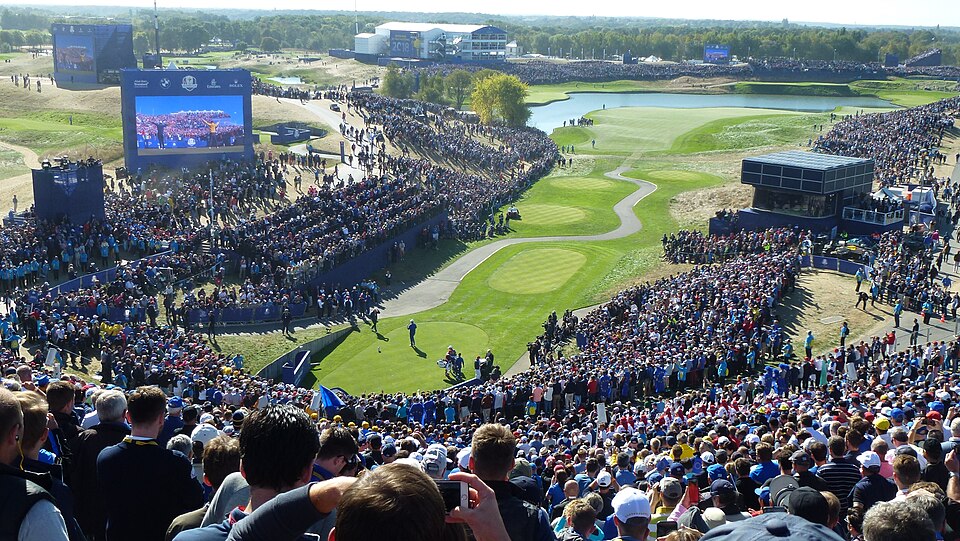
Picking the greatest European Ryder Cup team of all-time should be a relatively straightforward exercise – names like Ballesteros, Montgomerie and García immediately jump forward.
But it’s not quite as simple as picking the 12 ‘greatest’ European golfers. Sandy Lyle won two majors and Ian Poulter won two fewer majors (none).
There is not much of an argument as to which of them had the higher individual ceiling (Lyle). But there is even less of an argument as to which you would rather have playing for you in a Ryder Cup (Poulter).
That is the problem with trying to pick the greatest European Ryder Cup team of all-time. We are not talking about an individual golf tournament. For four of the five sessions, a third of your team is sat on the sidelines. For two of the sessions players must share a golf ball.
Partnerships that look formidable on paper (Tiger Woods and Phil Mickelson) can fail spectacularly (no wins, two losses). Others can turn two very good golfers (Lee Westwood and Darren Clarke) into something considerably greater than the sum of their parts (six wins, two losses).
Some players, like Ian Poulter – the postman, because he always delivers – simply become different golfers when the band starts up Ode to Joy.
So this is not an attempt to identify the 12 greatest European golfers.
It is an attempt to answer a different question – if all European golfers in Ryder Cup history were available at their peak, who would Europe choose?
We will start with a 24 man squad and narrow it down to a final 12. We will consider Ryder Cup records, individual ability, peaks, partnerships and suitability to foursomes, fourballs and singles.
The eventual 12 contain six natural partnerships that have played 42 Ryder Cup matches together – and won 83.3% of the points available.
The Rules
First, players are judged at their Ryder Cup playing peak, rather than at a particular arbitrary age. We are not getting a 48 year old Lee Westwood just because that was his final appearance.
Second, individual greatness matters, but Ryder Cup performance matters more. That is an important distinction. Sandy Lyle is one of only 11 Europeans to have won more than one major in the Ryder Cup era (suggestion of individual greatness) but he only won 44.4% of the Ryder Cup points available to him (suggestion of Ryder Cup mediocrity).
Third, partnerships matter. A player who unlocks an historically great pairing may be more valuable than a marginally better individual.
Finally, the European side can go right back to 1927 – so including the Great Britain and Ireland teams that preceded continental Europe’s introduction in 1979. There are golfers from 14 nations to choose from, I have separately taken a look at which nation could be the 15th.
The European 24
In chronological order from their Ryder Cup debut
| Player | Ryder Cups | Ryder Cup case |
| Tony Jacklin | 1967 – 1979 | Won 13 matches and 17 points as a player before captaining Europe to its first Ryder Cup victory for 28 years in 1985 and its first ever win on American soil in 1987. |
| Brian Barnes | 1969 – 1979 | Played six consecutive Ryder Cups and famously beat Jack Nicklaus twice in singles on the same day at Laurel Valley in 1975. |
| Bernard Gallacher | 1969 – 1983 | Played in eight consecutive Ryder Cups from 1969 to 1983, spanning the transition from Great Britain & Ireland to Europe. |
| Peter Oosterhuis | 1971 – 1981 | Won 15½ points from 28 matches despite never playing on a winning Ryder Cup team, including an exceptional singles record against the Americans. |
| Nick Faldo | 1977 – 1997 | Played a then-record 11 Ryder Cups and 46 matches, winning 25 points — still one of the largest totals in European history. |
| Seve Ballesteros | 1979, 1983 – 1995 | Played 15 matches alongside José María Olazábal — three more than any other European pairing — winning 12 points and 80% of those available. |
| Bernhard Langer | 1981 – 1997, 2002 | Won 24 points from 42 matches across ten Ryder Cups, before captaining Europe to its record 18½–9½ victory at Oakland Hills in 2004. |
| Ian Woosnam | 1983 – 1997 | Played in eight consecutive Ryder Cups and formed a 10-match partnership with Nick Faldo, winning 60% of the points available to them. |
| José María Olazábal | 1987 – 1999, 2006 | Won 20½ points from 31 matches, including 12 from his extraordinary 15-match partnership with Seve Ballesteros, before captaining the Miracle at Medinah in 2012. |
| Colin Montgomerie | 1991 – 2006 | Won 23½ points from 36 matches and was never beaten in eight Ryder Cup singles matches, before captaining Europe to victory in 2010. |
| Darren Clarke | 1997 – 2006 | Won 11½ points from 20 matches, including six points from eight matches alongside Lee Westwood, one of Europe’s most successful long-term pairings. |
| Jesper Parnevik | 1997 – 2002 | Went unbeaten in four matches alongside Sergio García at Brookline in 1999, winning three and halving one. |
| Lee Westwood | 1997 – 2016, 2021 | Played a European-record-equalling 11 Ryder Cups and 47 matches, winning 24 points and forming successful long-term partnerships with both Darren Clarke and Sergio García. |
| Sergio García | 1999 – 2008, 2012 – 2021 | Europe’s all-time leading Ryder Cup points scorer, winning 28½ points from 45 matches and repeatedly forming successful partnerships across more than two decades. |
| Luke Donald | 2004 – 2006, 2010 – 2012 | Formed a formidable partnership with Sergio García, winning five of their six matches together and 83.3% of the points available. |
| Ian Poulter | 2004, 2008 – 2014, 2018 – 2021 | Won 64% of all Ryder Cup points available to him — a better percentage than multiple-major winners including Seve Ballesteros, Rory McIlroy, Nick Faldo and Bernhard Langer. |
| Henrik Stenson | 2006 – 2008, 2014 – 2018 | Won six points from eight matches alongside Justin Rose, making them one of Europe’s most successful established Ryder Cup partnerships. |
| Graeme McDowell | 2008 – 2014 | Holed the winning putt in the final singles match at Celtic Manor in 2010, securing the point that returned the Ryder Cup to Europe. |
| Justin Rose | 2008, 2012 – 2018, 2023 – 2025 | Won 17.5 points across seven Ryder Cups and formed two outstanding partnerships: 4–1 with Ian Poulter and 6–2 with Henrik Stenson. |
| Rory McIlroy | 2010 – 2025 | Won 21.5 points from 38 matches across eight consecutive Ryder Cups and has won each of his first four foursomes matches alongside Tommy Fleetwood. |
| Francesco Molinari | 2010 – 2012, 2018 | Became the first European to win five points from five matches at a single Ryder Cup in 2018, winning four alongside Tommy Fleetwood before beating Phil Mickelson in singles. |
| Tommy Fleetwood | 2018 – 2025 | Has won 12 points from 17 matches — 70.6% of those available, the highest percentage of any European or GB&I player to have played at least ten Ryder Cup matches. |
| Tyrrell Hatton | 2018 – 2025 | Went unbeaten at Bethpage in 2025, winning 3½ points from four matches as Europe secured its first away victory since 2012. |
| Jon Rahm | 2018 – 2025 | Has won all six of his foursomes matches and has played five matches alongside Tyrrell Hatton, winning 4½ points — 90% of those available, the best record of any European pairing to play at least five matches together. |
Those that can consider themselves harshly done by in missing out on the top 24 include Pádraig Harrington, Sam Torrance, Neil Coles, Christy O’Connor Sr. and Peter Alliss.
Harrington won three majors, but, again, this is not a list of the 24 best individual European golfers.
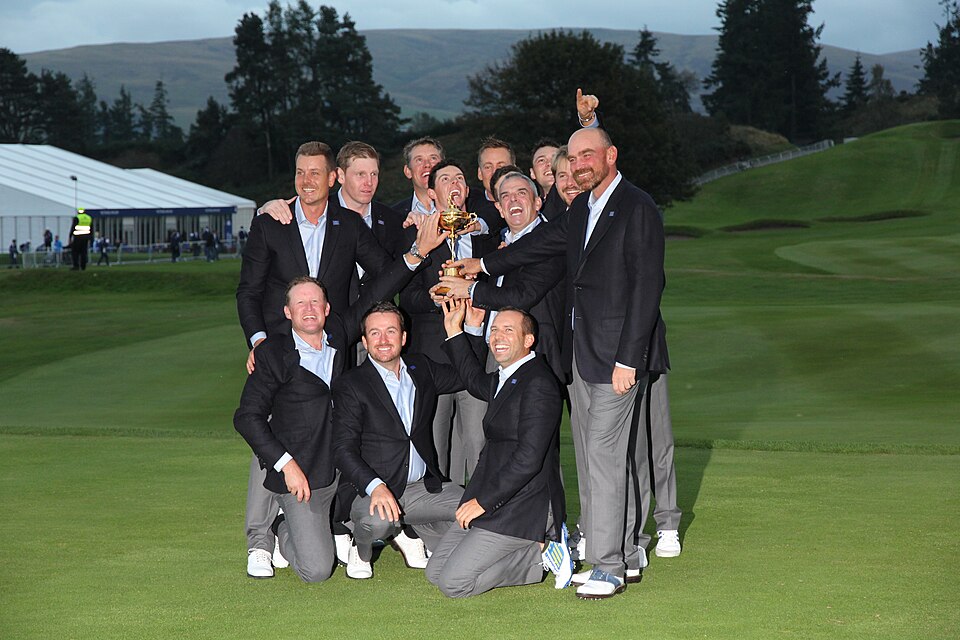
Narrowing down 24 to 12
Ditching 12 of these players is going to mean some awkward conversations with some bona fide Ryder Cup legends.
As today 16 of the 28 Ryder Cup points available come in pairs matches, let’s identify some dead cert teams that will play foursomes, fourballs, or both.
Best European Partnerships of All-Time
Europe’s Most Successful Ryder Cup Partnerships (Minimum Five Matches)
| Pairing | Matches | Overall record | Points | Points % | Foursomes | Fourballs |
| Jon Rahm / Tyrrell Hatton | 5 | 4–0–1 | 4.5 | 90.0% | 4–0–0 | 0–0–1 |
| Sergio García / Luke Donald | 6 | 5–1–0 | 5 | 83.3% | 4–1–0 | 1–0–0 |
| Seve Ballesteros / José María Olazábal | 15 | 11–2–2 | 12 | 80.0% | 6–1–1 | 5–1–1 |
| Justin Rose / Ian Poulter | 5 | 4–1–0 | 4 | 80.0% | 3–1–0 | 1–0–0 |
| Bernhard Langer / Colin Montgomerie | 7 | 5–1–1 | 5.5 | 78.6% | 3–0–1 | 2–1–0 |
| Darren Clarke / Lee Westwood | 8 | 6–2–0 | 6 | 75.0% | 3–1–0 | 3–1–0 |
| Justin Rose / Henrik Stenson | 8 | 6–2–0 | 6 | 75.0% | 3–1–0 | 3–1–0 |
| Sergio García / Lee Westwood | 7 | 4–1–2 | 5 | 71.4% | 2–0–1 | 2–1–1 |
| Nick Faldo / Ian Woosnam | 10 | 5–3–2 | 6 | 60.0% | 2–1–2 | 3–2–0 |
| Colin Montgomerie / Pádraig Harrington | 5 | 3–2–0 | 3 | 60.0% | 2–0–0 | 2–2–0 |
| Tony Jacklin / Peter Oosterhuis | 7 | 3–2–2 | 4 | 57.1% | 1–1–1 | 2–1–1 |
| Brian Barnes / Bernard Gallacher | 10 | 5–4–1 | 5.5 | 55.0% | 2–3–0 | 3–1–1 |
| Neil Coles / Christy O’Connor Sr | 7 | 3–3–1 | 3.5 | 50.0% | 2–1–0 | 1–2–1 |
| Nick Faldo / Colin Montgomerie | 7 | 3–3–1 | 3.5 | 50.0% | 3–1–0 | 0–2–1 |
| Peter Alliss / Christy O’Connor Sr | 12 | 5–6–1 | 5.5 | 45.8% | 4–4–1 | 1–2–0 |
| Rory McIlroy / Graeme McDowell | 6 | 2–3–1 | 2.5 | 41.7% | 2–2–0 | 0–1–1 |
| Rory McIlroy / Ian Poulter | 6 | 2–3–1 | 2.5 | 41.7% | 1–2–0 | 1–1–1 |
| Neil Coles / Bernard Hunt | 8 | 2–5–1 | 2.5 | 31.3% | 1-2-1 | 1-3-0 |
| Howard Clark / Sam Torrance | 5 | 1–3–1 | 1.5 | 30.0% | 0-2-0 | 1-1-1 |
Points percentage represents the proportion of available points won when playing together. A win is worth one point and a halved match half a point. Partnerships are ranked by points percentage. Figures through the 2025 Ryder Cup.
Jon Rahm and Tyrrell Hatton
Of all the pairs to have played at least five matches together, Rahm and Hatton have won the highest percentage of points available to them – 90%. If this does not get you into the all-time 12, then what will?
They started off with a fourball half versus Bryson DeChambeau and Scottie Scheffler in 2021 and have not looked back since.
In 2023 they started their foursomes bromance; they beat Scottie Scheffler and Sam Burns 4&3, then Xander Schauffele and Patrick Cantlay 2&1.
In 2025, they beat Bryson DeChambeau and Justin Thomas 4&3 and Xander Schauffele and Patrick Cantlay (again) 3&2.
Maybe more important than golfing ability, if this team were to play away from home and it all kicked off I would back Rahm and Hatton to take on a golf course full of Americans.
Sergio García and Luke Donald
Europe’s record points scorer and the man aiming to be the first to captain three winning sides were kryptonite to any US foursomes pair that they came up against.
In 2004, a 2&1 win versus Kenny Perry and Stewart Cink and a 1up win versus Jim Furyk and Fred Funk.
In 2006, a 2up win versus Tiger Woods and Jim Furyk and 2&1 win versus Phil Mickelson and David Toms.
In 2012, they lost their first pairs match 4&3 versus Phil Mickelson and Keegan Bradley (statistically, one of the US’ best ever pairings), but then beat Tiger Woods and Steve Stricker 1up.
García wasn’t just formidable with Donald – his partnership with Lee Westwood is Europe’s eighth most successful. Plus, in his final Ryder Cup in 2021 he combined with Jon Rahm three times for three victories in what was otherwise a very disappointing wider European team performance. Basically, if García plays in a pair, the pair does well.
All this adds up to García being Europe’s record point scorer.
Luke Donald’s Ryder Cup playing career was not as long as García’s (very few are) but he won every Ryder Cup he played and won more points than he lost in each of those Cups.
Seve Ballesteros and José María Olazábal
Ballesteros and Olazábal first paired up in 1987, and from then on had eyes for no one else. They played together four times in 1987, four times in 1989, four times in 1991 and three times in 1993 (Olazábal had a brief affair with Joakim Haeggman in a Saturday afternoon fourball).
Their 15 matches together are comfortably the most by a European pair (only three other pairs have played together at least 10 times). They were rolled out 15 times as they kept winning – 11 wins, 2 draws and 2 losses gave them 80% of the points they had available to them, putting them third on Europe’s all-time list of teams to have played together at least five times.
Individually, they are sixth (Ballesteros) and eighth (Olazábal) on the all-time points list – and playing together again would give Olazábal the chance to break out his 1987 18th green dance moves.
Justin Rose and Ian Poulter
Europe’s fourth most successful pair to have played at least five matches together is the first evergreen rose and the man whose Ryder Cup golf most exceeded his golf week to week on tour.
Similar to Rahm and Hatton, Rose and Poulter lost their first match together but then won all of the rest.
Although this partnership was highly successful, they were not each other’s most common partner. Rose played eight times with Henrik Stenson (six wins, two losses) and Poulter played with Rory McIlroy six times (two wins, three losses and one half). Their Ryder Cup success and longevity puts them both in the top 10 of European points scorers.
Along with highly successful pairs golf, Poulter holds the record for the best singles points percentage for any European who played at least three Ryder Cups – he remarkably won six of his seven singles tied, and halved the other.
Bernhard Langer and Colin Montgomerie
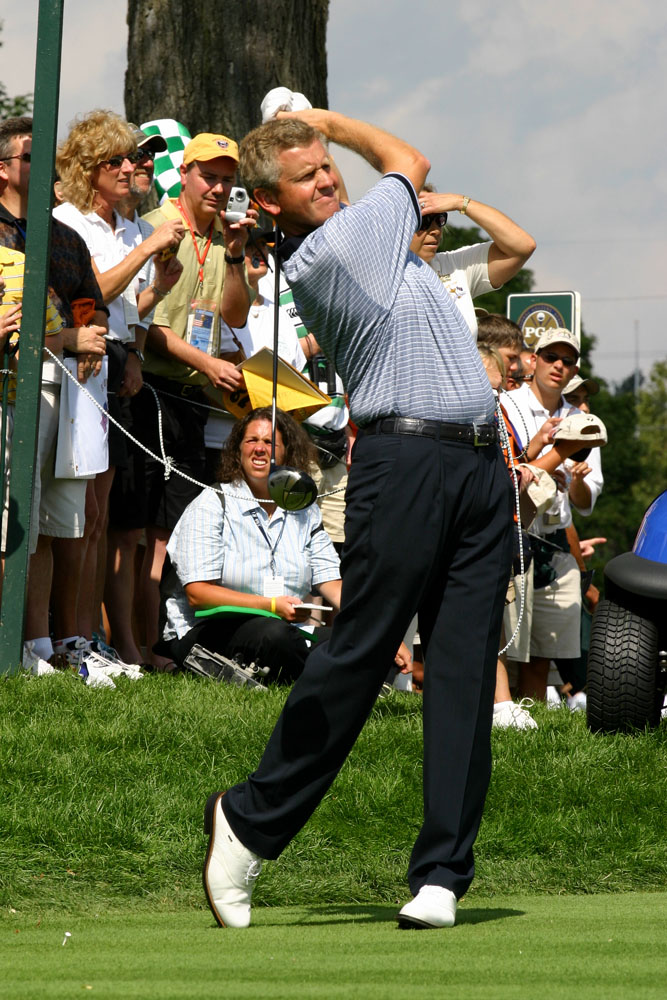
The man who won the second most foursomes points and the man who never lost a singles match at the Ryder Cup provide Europe’s fifth most successful pair. Spread over 11 years they played seven matches together.
One win in 1991.
Two wins and a loss in 1997.
Two wins and a half in 2002.
Langer played with 12 different European partners (a record held with Lee Westwood) and Montgomerie eight – suggesting that they were both a very safe pair of hands that their captain could put with anyone. The fact they are the third (Langer) and fifth (Montgomerie) highest European points scorers suggests I could have been paired with either of them and they would still have done okay (maybe that’s a slight exaggeration).
Montgomerie’s singles points percentage is only second to Poulter – he won six and halved two of the eight singles he played.
Lee Westwood and Darren Clarke
The sixth and final partnership to mention combines Westwood, who played the most (47) matches for Europe, and Clarke, who won all three of his matches at the 2006 Ryder Cup just weeks after his wife had died.
Their 75% win rate (six wins and two losses) came against some formidable US duos – including Tiger Woods and Phil Mickelson in 2004 and Tiger Woods and Jim Furyk in 2006.
They did not specialise in one of the two formats, their 3-1 record mirrored across foursomes and fourballs.
Lee Westwood’s individual longevity was astonishing. He played 11 Ryder Cups (European record tied with Nick Faldo), won seven of those Cups, and won 24 points (equal with Langer).
Best European Ryder Cup Players by Points Percentage
When looking at Europeans who have played at least 10 Ryder Cup matches – which really narrows things down to players who have realistically played in at least three Ryder Cups and avoids players with one special performance (someone like Thomas Pieters who played in only one Ryder Cup but earned four out of five points) – only 23 individuals have won more than 50% of the points that were available to them.
Europe’s Most Successful Ryder Cup Players (Minimum Ten Matches and More Than 50% of Points Won)
| Player | Matches | Points Won | Points Percentage |
| Tommy Fleetwood | 17 | 12 | 70.6% |
| Luke Donald | 15 | 10.5 | 70.0% |
| José María Olazábal | 31 | 20.5 | 66.1% |
| Colin Montgomerie | 36 | 23.5 | 65.3% |
| Ian Poulter | 25 | 16 | 64.0% |
| Sergio García | 45 | 28.5 | 63.3% |
| Tyrrell Hatton | 15 | 9.5 | 63.3% |
| Jon Rahm | 17 | 10.5 | 61.8% |
| Seve Ballesteros | 37 | 22.5 | 60.8% |
| Justin Rose | 29 | 17.5 | 60.3% |
| Graeme McDowell | 15 | 9 | 60.0% |
| Henrik Stenson | 19 | 11 | 57.9% |
| Darren Clarke | 20 | 11.5 | 57.5% |
| Bernhard Langer | 42 | 24 | 57.1% |
| Rory McIlroy | 38 | 21.5 | 56.6% |
| Peter Oosterhuis | 28 | 15.5 | 55.4% |
| José María Cañizares | 11 | 6 | 54.5% |
| Francesco Molinari | 11 | 6 | 54.5% |
| Jesper Parnevik | 11 | 6 | 54.5% |
| Costantino Rocca | 11 | 6 | 54.5% |
| Nick Faldo | 46 | 25 | 54.3% |
| Ian Woosnam | 31 | 16.5 | 53.2% |
| Lee Westwood | 47 | 24 | 51.1% |
Points percentage represents the proportion of available Ryder Cup points won, with a win worth one point and a halved match worth half a point. Figures through the 2025 Ryder Cup.
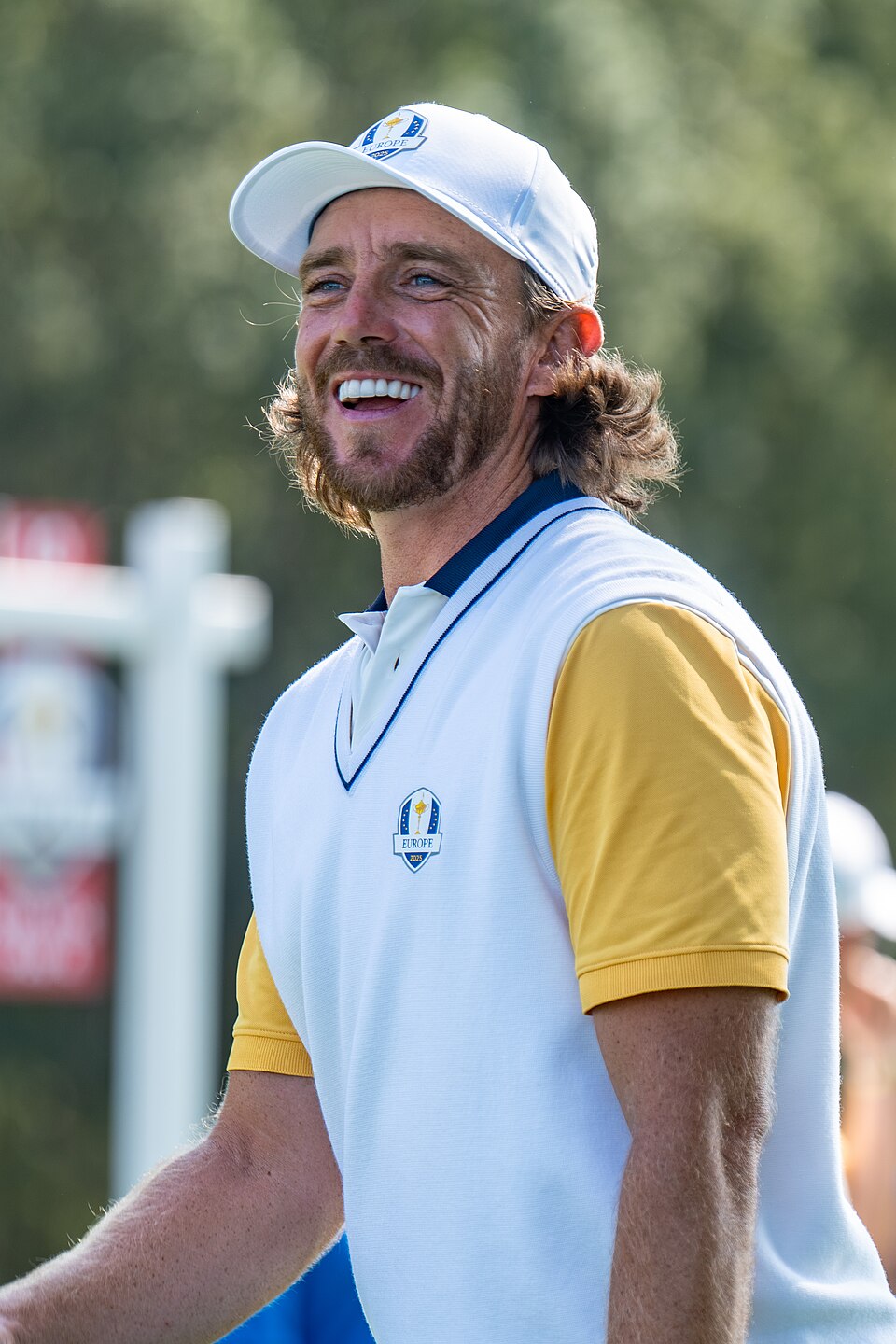
On this metric Tommy Fleetwood is the most successful European ever to have played at least 10 matches, at 70.6%. He did not appear in our best partnerships table as he has not played five matches with one single teammate. But he has played four times with each of Francesco Molinari and Rory McIlroy – winning all eight of those matches. He also played with Justin Rose twice – and guess what? He has won both of those too. His singles record isn’t as good (one win, two losses and one half) but his record suggests that you could put him with any player in a dream European 12 and he would be successful.
The next most successful individual Ryder Cup player that did not come up as a member of one of the top six most successful partnerships is Graeme McDowell. The 2010 US Open winner played in four successive Ryder Cups from 2008, playing most of his pairs matches with partners from the island of Ireland (one match with Pádraig Harrington, and, more famously, six matches with Rory McIlroy). Although he did not have the most illustrious record with McIlroy (two wins, three losses and one half) he did perform very effectively with Victor Dubuisson in 2014, comfortably winning two foursomes matches 3&2 and 5&4.
Rory McIlroy has a good but not great Ryder Cup record. He has won 56.6% of the points available to him, which puts him 15th among those to have played at least 10 matches.
The six matches he played with each of McDowell and Poulter each produced a 41.7% points percentage. But it’s possible in the past two Ryder Cups he has found the perfect partner – he and Fleetwood won all of their four foursomes matches.
His singles points percentage almost exactly matches his overall points percentage. But while his points per match is not especially high, his amazing and ongoing longevity (ever present since his debut in 2010) has allowed him to win 21.5 points – putting him seventh on the list today. García’s record of 28.5 points must be within his sights. I have previously looked more closely at McIlroy’s Ryder Cup career and his longevity.
Most of the golfers who appear in the partnerships and individual list have understandably played in Europe’s most successful period from 1985 onwards (as a Ryder Cup player you were far more likely to have a better partner in 1995 than you were in 1975).
One player whose statistics who do not immediately jump off the page are Peter Oosterhuis’. Oosterhuis played in six consecutive Ryder Cups from 1971 to 1981 (the first player we have specifically mentioned who played in a GB&I, rather than a European, team).
He lost all six of these Cups. Badly. The closest points loss was 12.5 – 7.5 in 1977 (the year before everyone realised that something needed to change and the continental Europeans were drafted in).
But, in the context of these GB&I thrashings, Oosterhuis’ individual Ryder Cup achievements are quite remarkable.
He scored 15.5 points in his appearances, enough to put him joint 13th on the overall points list.
This gives him an overall points percentage of 55.4% (just below McIlroy’s current figure) while his teammates across those six Ryder Cups collectively won only 35.5% of the points available to them.
Oosterhuis did not score any points in 1981, so all of his points came in the 1970s – making his 1970s points percentage 62%. Only two of his teammates that played at least 10 matches in the 1970s did so with a greater than 50% record.
He also formed one of only two successful partnerships for his team in the 1970s. He and Tony Jacklin combined for a 57.1% record (three wins, two losses, two halves). Brian Barnes and Bernard Gallacher were the only other pair to play together at least five times and come out with a positive record.
In his first Ryder Cup Oosterhuis played Arnold Palmer and Gardner Dickinson three times – the only US team pair to have played at least five times together and always won. On Friday afternoon in 1971 he got his first victory versus Lee Trevino and Billy Casper. He then beat Gene Littler and Arnold Palmer in the Saturday singles (the Ryder Cup had a very different schedule back then). Palmer, Trevino, Casper and Littler won 17 majors between them, and Oosterhuis managed a three all draw across his six 1971 matches.
In 1973 he halved with Chi-Chi Rodriguez and Lou Graham on Thursday morning, and beat Tom Weiskopf and Billy Casper in the afternoon. He then came back on Friday morning to beat Arnold Palmer and Dave Hill before losing to Billy Casper and Gay Brewer in the afternoon. In the Saturday singles he halved with Lee Trevino and then beat Arnold Palmer. Four points out of six against players who have gone down as legends of the game is not to be sniffed at.
The Final 12
| Player | Why? |
| Seve Ballesteros | 22.5 points from 37 matches — sixth on Europe’s all-time points list Won 12 points from 15 matches alongside José María Olazábal 11–2–2 with Olazábal — an 80% points percentage |
| José María Olazábal | 20.5 points from 31 matches — 66.1% of those available Won 12 points from 15 matches alongside Seve Ballesteros 6–1–1 foursomes record alongside Ballesteros |
| Sergio García | Europe’s all-time record points scorer — 28.5 points from 45 matches Went 5–1 alongside Luke Donald — 83.3% of available points Also formed successful partnerships with Lee Westwood and Jon Rahm |
| Luke Donald | Won 10.5 points from 15 matches — 70% of those available Went 5–1 alongside Sergio García, including 4–1 in foursomes Played in four Ryder Cups and Europe won all four |
| Colin Montgomerie | Won 23.5 points from 36 matches — 65.3% of those available Never lost in eight singles matches — six wins and two halves Went 5–1–1 alongside Bernhard Langer |
| Bernhard Langer | Won 24 points from 42 matches across ten Ryder Cups Won 11.5 points in foursomes Went 5–1–1 alongside Colin Montgomerie |
| Ian Poulter | Won 16 points from 25 matches — 64% of those available Never lost a Ryder Cup singles match — six wins and one half Went 4–1 alongside Justin Rose — 80% of available points |
| Justin Rose | Won 17.5 points from 29 matches — 60.3% of those available Went 4–1 alongside Ian Poulter Also went 6–2 alongside Henrik Stenson |
| Jon Rahm | Won 10.5 points from 17 matches — 61.8% of those available Perfect 6–0–0 career foursomes record Went 4–0–1 alongside Tyrrell Hatton — 90% of available points |
| Tyrrell Hatton | Won 9½ points from 15 matches — 63.3% of those available Went 4–0–1 alongside Jon Rahm Went unbeaten at Bethpage in 2025 — 3–0–1 |
| Tommy Fleetwood | Won 12 points from 17 matches — 70.6%, the highest of any European/GB&I player with at least ten matches Perfect 6–0–0 career foursomes record 4–0 with Molinari, 4–0 with McIlroy and 2–0 with Rose |
| Rory McIlroy | Won 21.5 points from 38 matches — seventh on Europe’s all-time points list Played in eight consecutive Ryder Cups from 2010 to 2025 Went 4–0 in foursomes alongside Tommy Fleetwood |
Biggest Omissions from the All-Time European Ryder Cup Team
There are some fairly easy cuts from the 24. There are also four that make me question the entire exercise.
Nick Faldo
Let’s start with the most uncomfortable one.
Nick Faldo — six-time major champion, 11-time Ryder Cup player and for years Europe’s record points scorer — does not make the team.
The problem is not really Faldo. It is who I have to remove to accommodate him.
Picking him with Ian Woosnam would mean breaking up one of the six superior partnerships in the final team. Picking Faldo alone means taking him instead of someone with a substantially better Ryder Cup record who also brings a proven partner with him.
If I were picking Europe’s 12 greatest golfers, Faldo would be on the first bus. I’m not.
Lee Westwood
Westwood presents a similar problem.
His longevity, versatility and partnership with Darren Clarke make an extremely persuasive case. But selecting Clarke and Westwood means finding room for two players, rather than one.
And this is where constructing a team rather than ranking individuals matters.
Would I rather have Clarke and Westwood than Rahm and Hatton? No. García and Donald? No. Seve and Olazábal? Definitely not. Eventually there aren’t enough chairs.
Peter Oosterhuis
Oosterhuis is the player I most changed my mind about while researching this article.
I included him in the 24 largely because his record deserved recognition. I ended up seriously considering him for the 12.
The problem is that there isn’t an obvious route into it.
His partnership with Jacklin was excellent rather than historically great, while his extraordinary individual record becomes more compelling the more context you put around it, rather than giving us an obvious partnership to deploy on Friday morning.
So Oosterhuis ends up as perhaps the strangest category of all: a player whose case for selection I now think is considerably stronger than his reputation, but still not quite strong enough.
Francesco Molinari
This one really comes down to Tommy Fleetwood – if Fleetwood needed Molinari, I would probably pick Molinari. He doesn’t.
Fleetwood has won every match he has played alongside Molinari, every match he has played alongside McIlroy and every match he has played alongside Rose.
So rather than use two places recreating Moliwood, I can select Fleetwood, pair him with McIlroy and use the spare seat elsewhere.
Molinari produced arguably the greatest single Ryder Cup performance by a European.
Unfortunately for him, his partner turned out to be even more useful without him.
How Would the Greatest European Ryder Cup Team Actually Play?
Picking the 12 is one thing, the slightly more enjoyable question is what on earth you would actually do with them.
The modern Ryder Cup consists of four foursomes and four fourballs on each of the first two days, followed by 12 singles on Sunday.
That means four players have to sit out at some point across each of the four Friday and Saturday sessions.
It also means that, despite spending much of this article obsessing over partnerships, there is absolutely no reason to play the same four pairs in every session.
Some are obvious, others give us options.
The Best Foursomes Pairings
If I had to send four pairs out on Friday morning, I would go with:
Jon Rahm / Tyrrell Hatton
Sergio García / Luke Donald
Seve Ballesteros / José María Olazábal
Rory McIlroy / Tommy Fleetwood
There isn’t much need for cleverness here.
Rahm and Hatton have won all four of their foursomes together. García and Donald went 4–1. Seve and Olazábal went 6–1–1. McIlroy and Fleetwood are 4–0.
Combined, those four partnerships have played 21 Ryder Cup foursomes matches together.
They have won 18, lost two and halved one.
That is 18.5 points from 21 available – 88.1%.
I am not breaking any of them up.
That leaves Colin Montgomerie, Bernhard Langer, Justin Rose and Ian Poulter sitting on the sidelines. Imagine having to explain to the Americans that those are the four Europeans we have decided aren’t good enough to play in the morning.
The Best Fourballs Pairings
Fourballs require a slightly different approach.
This time I would go with:
Seve Ballesteros / José María Olazábal
Justin Rose / Ian Poulter
Bernhard Langer / Colin Montgomerie
Jon Rahm / Sergio Garcia
Again, these four pairs hardly need explaining.
Seve and Olazábal went 5–1–1 together in fourballs. Rose and Poulter won their only fourball together, while Langer and Montgomerie went 2–1. Garcia and Rahm won their only fourball together, alongside two foursomes victories.
These four pairs have won nine, lost two and halved one.
9.5 points from 12 – 79.2%.
Fleetwood, Hatton, Donald and McIlroy can put their feet up for the afternoon.
The Bench Might Be The Best Part
One of the advantages of constructing the side around partnerships rather than simply picking the 12 biggest names is that nobody has to play five matches.
Seve and Olazábal do not need to be separated because somebody needs a partner. García does not need to play every session because the captain is worried about who else can win a foursomes. Fleetwood does not need to be asked to carry somebody. And Poulter can spend a session on the sidelines doing whatever Ian Poulter used to do on Ryder Cup sidelines to make Americans dislike him.
There is enough depth to rotate.
Fleetwood has a successful history with McIlroy and Rose. Same for Garcia with Olazábal, Donald, McIlroy and Rahm; Olazábal with Ballesteros and Garcia; Rahm with Garcia and Hatton; Poulter with Donald and Rose; Rose with Poulter and Fleetwood; and McIlroy with Garcia and Fleetwood. There are considerably more options than the six obvious partnerships suggest.
Sunday Singles Order
The putting together of the Sunday singles would take a bit more thought than the pairs. The 12 can be split into three groups.
Those with a stellar singles career: Poulter (92.9%); Montgomerie (87.5%); Donald (75%); Langer (65%) and Olazábal (64.3%).
Those in mid table: McIlroy (56.3%) and Garcia (50%).
Those with a negative record: Ballesteros (37.5%); Fleetwood (37.5%); Rahm (37.5%); Hatton (37.5%) and Rose (35.7%).
You could send them out in this order; hoping that Rose, for example, gets on better in the twelfth match rather than in one of the first matches (he has never gone out lower than fourth in singles).
If the 12 performed to their collective 58% singles record, they should be okay.
I would go with an order of:
- Poulter
- Montgomerie
- Langer
- Olazábal
- McIlroy
- Garcia
- Donald
- Fleetwood
- Rahm
- Ballesteros
- Hatton
- Rose
The logic here is to front-load the two most successful singles players and try to establish momentum early. Although the bottom five have sub-par singles records, taking them out of the spotlight of the first few (high profile) matches may help them along.
The Final Team
The team contains seven major champions, Europe’s record points scorer, its two greatest singles players, its most statistically successful long-term partnership, the European with the highest points percentage among those to play at least ten matches, and a host of ready-made combinations.
Between them the six partnerships that the 12 naturally fall into played 42 Ryder Cup matches.
They won 33.
They lost five.
They halved four.
That is 35 points from 42 matches — 83.3% of everything available to them.
Obviously this is not how an actual Ryder Cup works. They played in different eras, against different opponents, on different courses and under different formats. Put them all together and perhaps some of the chemistry disappears.
But that is also why I would pick this team rather than simply taking the 12 Europeans with the most Ryder Cup points.
Nick Faldo is a greater golfer than several members of this side. He is probably a greater Ryder Cup player than some of them too.
Lee Westwood played more Ryder Cup matches than anyone in European history.
Francesco Molinari produced a perfect Ryder Cup in Paris.
Peter Oosterhuis somehow kept winning points while the teams around him were being dismantled by the Americans.
All four miss out.
Because a Ryder Cup team is not 12 individuals.
For four of the five sessions, it is four pairs at a time.
And Europe learnt a long time ago that sometimes the best way to beat 12 very good American golfers is not to find 12 better ones.
It is to build a better team.
 The Penwarden Review
Leave a comment