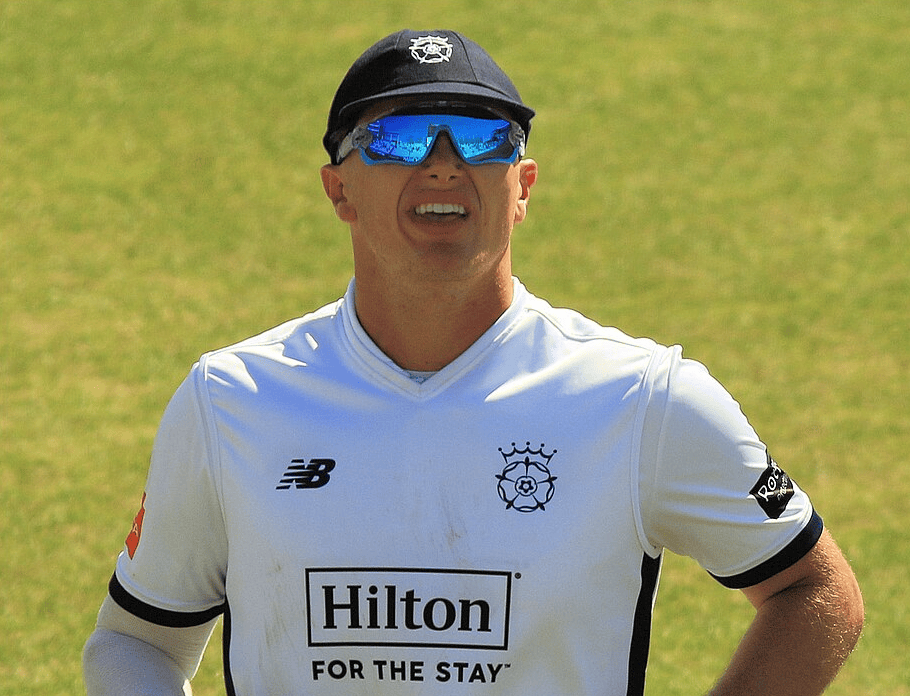
All statistics accurate on 7 September 2026
For the best part of two decades, England did not really need to worry about where their next fast bowler was coming from.
James Anderson and Stuart Broad took 1,308 Test wickets between them. Chris Woakes spent much of the same period being very good whenever England remembered to pick him. Behind them came Mark Wood, Jofra Archer and a rotating cast of others who briefly appeared, took a few wickets and, in several cases, promptly got injured.
That security has disappeared remarkably quickly.
Broad retired in 2023. Anderson followed a year later. Woakes has now gone too. Wood is 36 and is likely to never be seen again in an England shirt. Archer is back but is 31, planning England’s long-term bowling attack around his availability would still constitute an unusually optimistic approach to risk management. Ollie Robinson is back too, but is 32 with, similarly to Archer, no real evidence of being able sustain long periods of availability.
This all means that correctly predicting England’s pace attack in five years time would require Mystic Meg levels of clairvoyance.
England therefore need fast bowlers – fortunately, they appear to have quite a lot of them.
The obsession with pace is obvious. England have increasingly looked for bowlers capable of reaching 90mph, producing steep bounce or offering some other physical point of difference. Ollie Robinson delivering his highly accurate seamers at less than 80mph would probably be rather less effective if he were 5ft 10in. Gus Atkinson and Brydon Carse have established themselves at Test level (and been offered a seat at the World Lager Drinking Championships). Josh Tongue has returned from the sort of injury absence normally measured using geological periods. Sonny Baker has now played Test cricket. Josh Hull was picked for England before he had really established himself for Leicestershire.
Behind them is another generation of young English fast bowlers, several of whom could be pushing for England selection before the end of the decade.
There are conventional seamers, genuine quicks, 6ft 7in giants and enough left-armers to suggest that somebody at Loughborough has been collecting them.
So who are the best?
Having previously ranked England’s best young cricketers, batsmen, spinners and wicketkeepers this time I have narrowed the question to perhaps the most important part of England’s future Test side: the fast bowlers.
I have ranked England’s 20 leading fast-bowling prospects aged 23 or under. This is not quite a list of the best bowlers today. Age matters. So does what they have already achieved, how they bowl and what they might eventually become.
Which inevitably makes parts of the list highly debatable.
A 23-year-old who has been taking county wickets for several seasons is probably better today than a 17-year-old who has played three matches. But if the question is who might eventually play 50 Tests for England, that is not necessarily the end of the argument.
Pace and potential matter. It does, nevertheless, remain useful to take some wickets.
One or two of these players will probably feature in the England team in 2030. A few also have genuine all-rounder aspirations, albeit more in the Woakes than Stokes mould. There are plenty of runners and riders for that job too.
The 20 Best Young English Fast Bowlers
Sonny Baker ranks as England’s best young fast bowler, followed by Glamorgan’s Tom Norton and Middlesex’s Naavya Sharma. Sebastian Morgan and James Minto complete the top five, while Test-capped Josh Hull, England Lions bowler Eddie Jack and 6ft 7in Leicestershire quick Alex Green also rank among England’s leading fast-bowling prospects.
| Player | Age | County | Bowling style | Highest England level | |
| 1 | Sonny Baker | 23 | Hampshire | Right-arm fast | Test |
| 2 | Tom Norton | 19 | Glamorgan | Right-arm fast-medium | U19 Squad |
| 3 | Naavya Sharma | 20 | Middlesex | Right-arm fast-medium | Lions |
| 4 | Sebastian Morgan | 19 | Middlesex | Right-arm fast-medium | U19 |
| 5 | James Minto | 18 | Durham | Left-arm fast-medium | U19 |
| 6 | Eddie Jack | 20 | Hampshire | Right-arm fast-medium | Lions |
| 7 | Alex Green | 19 | Leicestershire | Right-arm fast | U19 |
| 8 | Tom Lawes | 23 | Surrey | Right-arm fast-medium | Lions |
| 9 | Josh Hull | 22 | Leicestershire | Left-arm fast-medium | Test |
| 10 | Noah Cornwell | 21 | Middlesex | Left-arm fast-medium | U19 |
| 11 | Tom Aspinwall | 22 | Lancashire | Right-arm medium | U19 |
| 12 | Raphy Weatherall | 21 | Northamptonshire | Right-arm fast-medium | U19 |
| 13 | Harry Moore | 19 | Derbyshire | Right-arm fast-medium | U19 |
| 14 | Manny Lumsden | 17 | Hampshire | Right-arm fast-medium | U19 |
| 15 | Charlie Bennett | 20 | Essex | Right-arm medium | — |
| 16 | Alex French | 19 | Surrey | Right-arm fast | U19 |
| 17 | Daniel Hogg | 21 | Durham | Right-arm medium-fast | U19 |
| 18 | Alfie Ogborne | 23 | Somerset | Left-arm fast-medium | Lions |
| 19 | Byron Hatton-Lowe | 19 | Nottinghamshire | Right-arm fast-medium | U19 |
| 20 | Luke Hands | 17 | Lancashire | Right-arm fast-medium | U19 |
Ages, county and highest England level correct as of 7 September 2026
20. Luke Hands
Lancashire | 17 | Right-arm fast-medium
Made his List A debut for Lancashire at 16 • Represented England at the 2026 Under-19 World Cup • Does not turn 18 until November 2026
There are speculative selections on this list and then there is putting a 17-year-old with barely any senior cricket in England’s top 20.
There is no great body of county statistics to analyse because there could hardly be one. Plenty of bowlers immediately outside this list have achieved much more.
But very few were playing professional cricket at 16. Hands is 20th because getting that far that young is interesting enough to take seriously.
19. Byron Hatton-Lowe
Nottinghamshire | 19 | Right-arm fast-medium
Made his Nottinghamshire List A debut at 18 • Took five wickets in his first two List A matches • Represented England Under-19s
Hatton-Lowe is only marginally easier to assess.
At 19, that is inevitable. What is encouraging is that he has already begun doing something more useful than looking promising against other teenagers: taking wickets against professional batsmen.
There are younger quicks around the counties with perhaps greater raw potential. There are older ones with considerably better records. Hatton-Lowe sits somewhere between the two. His batting potential is also an exciting second string to his bow.
For now, that is enough for 19th.
18. Alfie Ogborne
Somerset | 23 | Left-arm fast-medium
Earned his first England Lions call-up in May 2026 • 26 first-class wickets • Offers the relatively scarce variation of left-arm seam
Ogborne is almost the reverse of the two teenagers below him.
He is 23, has already reached the England Lions and offers something England do not possess in abundance: a left-arm seamer with enough pace to be interesting.
The problem is that the first-class wickets have not really arrived in sufficient quantities.
Twenty-six wickets at around 39 is not a compelling red-ball record at 23. His white-ball returns are more persuasive and the Lions call-up shows that England see something worth developing.
But, at 23, there is rather less value in simply being an intriguing prospect.
A 19-year-old can be ranked on what he might become. By 23, we should probably have a little more evidence of what he actually is.
The left-arm angle keeps Ogborne on the list. It cannot keep him climbing it indefinitely.
17. Daniel Hogg
Durham | 21 | Right-arm medium-fast
Has a first-class best of 7-66 • Made his Championship debut at 19 • Represented England Under-19s
There are plenty of young seamers who spend their early careers being described as skilful, threatening or unlucky.
Daniel Hogg has already taken seven wickets in a first-class innings – that is rather more useful.
His overall record — 17 wickets at a little under 38 — is still uneven, but the seven-for provides evidence that when things click he can do more than bowl a respectable spell. He can take a match apart.
Durham has produced enough England fast bowlers for comparisons to become unavoidable whenever somebody young emerges there. Hogg is nowhere near that level yet, and there are bowlers of a similar age with more impressive overall numbers.
But very few have already produced a spell as destructive.
16. Alex French
Surrey | 19 | Right-arm fast
Stands 6ft 7in • Took 16 England Under-19 ODI wickets at under 19 apiece • Selected for England U19s’ 2026 Test series against South Africa
Alex French presents one of the recurring problems with judging Surrey prospects.
How exactly are they supposed to get into the team? He needs to force his way up a list that includes Dan Worrall, Gus Atkinson, Reece Topley, Matthew Fisher, Tom Curran, Sam Curran, Tom Lawes and Jordan Clark.
French has taken wickets cheaply for England Under-19s and is clearly regarded as one of the more promising quicks of his age.
He has not yet made his first-class debut. Normally that would count against him more heavily. At Surrey, where international seamers appear to reproduce whenever nobody is looking, it is slightly easier to forgive.
Eventually, of course, pathway performances have to become county performances.
French is high enough because he is 19 and has already shown plenty against his own age group.
He is not higher because we are still waiting to see what happens against everybody else.
15. Charlie Bennett
Essex | 20 | Right-arm medium
12 wickets at 23.66 in the 2025 One-Day Cup • Took 5-36 against Surrey • Has already taken senior wickets in all three domestic formats
Bennett is not really what England appear to have spent the last few years looking for.
He is not 6ft 7in. He is not a 90mph curiosity. He does not bowl left-arm and nobody needs a diagram to explain his release point.
He just keeps taking wickets, there are worse characteristics for a bowler.
His 2025 One-Day Cup was particularly impressive and he has already begun transferring that success into Championship and T20 cricket.
Nine first-class wickets at 35 are hardly sufficient to make grand predictions, but combined with his white-ball record they provide a considerably more substantial senior case than some of the more physically exciting players around him.
There will probably always be questions about whether his pace is sufficient for Test cricket.
At 20, though, a bowler who is already working out how to dismiss professional batsmen deserves rather more attention than he tends to receive.
14. Manny Lumsden
Hampshire | 17 | Right-arm fast-medium
Made his Hampshire List A debut at 16 • Took six wickets in his first three senior List A matches • Took 16 wickets at the 2026 Under-19 World Cup
Manny Lumsden is what happens when projection wins the argument. He has not yet played first-class cricket. There is almost nothing sensible to conclude from his senior sample.
He is 17.
Projecting fast bowlers at that age is somewhere between scouting and fortune telling, particularly when half of the challenge over the next few years will simply be seeing how his body develops.
But playing senior county cricket at 16 is sufficiently unusual that it cannot simply be ignored.
The Under-19 World Cup provided considerably more evidence. Sixteen wickets against the best players of his age suggests that the early Hampshire exposure was not simply a curiosity.
There are better bowlers below 23 who are not on this list, but very few have been this advanced this early.
13. Harry Moore
Derbyshire | 19 | Right-arm fast-medium
Stands 6ft 7in • Six first-class wickets at 23.83 before turning 18 • Back stress fractures ruled him out of both 2025 and 2026
If this list were based solely on talent, Harry Moore would be nowhere near 13th.
He would probably be in the top five. But 13 is unlucky for some, and Moore has been hugely unlucky with injuries so far.
The physical ingredients are obvious and, unusually for someone so young, there was already evidence that they worked against senior batsmen.
Six first-class wickets at 23.83 before turning 18 is an extremely promising place to start.
Then he effectively disappeared for two years, a back stress fracture wiped out 2025. Another ruled him out for all of 2026.
Moore is consequently the one exception to my general requirement that players had to feature in senior cricket during one of those seasons. Excluding him for getting injured would rather defeat the point of ranking prospects.
Ignoring the injuries would be equally silly.
Two successive back problems are serious for any fast bowler. For a 6ft 7in teenager whose body is still developing, they are particularly concerning.
If Moore returns next summer, stays fit and immediately looks anything like the bowler Derbyshire had in 2024, 13th will look absurd.
12. Raphy Weatherall
Northamptonshire | 21 | Right-arm fast-medium
19 first-class wickets • Capable of genuine pace • Represented England Under-19s
Weatherall is the first player on this list whose reputation currently runs noticeably ahead of his figures.
That is not necessarily a criticism.
He is properly quick, and proper pace remains one of the hardest things in cricket to manufacture. England have spent much of the last few years betting that they can teach genuinely fast bowlers to become better bowlers more easily than they can teach excellent medium-fast bowlers to become genuinely fast.
Weatherall fits that theory rather neatly – the county returns, so far, do not.
Nineteen first-class wickets at a little over 38 is nowhere near as compelling as the records of Norton, Sharma or Morgan.
If this were a ranking of who had bowled best in senior cricket, he would be considerably lower.
But 21-year-olds who can hurry good batsmen will always be interesting.
Weatherall has the difficult bit, now he needs the wickets.
11. Tom Aspinwall
Lancashire | 22 | Right-arm medium
26 first-class wickets at 32.46 • Career-best 5-41 • Represented England at the 2022 Under-19 World Cup
Aspinwall may not technically be the ideal subject for an article about England’s best young ‘fast’ bowlers.
He is not especially fast. What he is, inconveniently, is good.
Twenty-six first-class wickets at 32 are not spectacular numbers, but they are the beginnings of a serious county career, particularly when combined with the fact that Aspinwall can bat properly and contribute in every format.
The obstacle is England’s recent philosophy. They have increasingly pursued pace, bounce and physical difference. Aspinwall offers rather less of that than Weatherall or Jack. But selection fashions have a habit of changing.
If England eventually decide that dismissing batsmen remains a desirable quality in a bowler, Aspinwall has given himself a decent chance.
10. Noah Cornwell
Middlesex | 21 | Left-arm fast-medium
15 wickets at 21.13 in the 2026 One-Day Cup • Took 3-1 as Glamorgan were bowled out for 66 • 16 first-class wickets at 34.06
Middlesex appear to have decided that developing one interesting young seamer at a time would be inefficient. Cornwell is one of three in the top nine, and the left-arm angle immediately makes him interesting.
His 2026 One-Day Cup was excellent and 16 first-class wickets at just over 34 suggest he is beginning to build a useful red-ball record too.
There are younger Middlesex bowlers with more eye-catching age-adjusted Championship numbers. But Cornwell is taking enough senior wickets to ensure that the left-arm angle is more than simply a point of difference on a scouting report.
At several counties he would comfortably be the most interesting young fast bowler.
At Middlesex, he is third.
9. Josh Hull
Leicestershire | 22 | Left-arm fast-medium
Stands 6ft 7in • Made his England Test debut at 20 • 50 first-class wickets
Nobody has ever needed much explanation as to why England picked Josh Hull.
He is 6ft 7in. He bowls left-arm. He bowls reasonably fast.
Selectors presumably got to that point and decided the rest could be worked out later.
Hull made his Test debut before he had anything resembling a dominant first-class record. That made him perhaps the purest example of England selecting the bowler they wanted him to become rather than the one he was at the time.
His career record now makes the debate even more interesting – Hull has taken 50 first-class wickets and they have cost 45.51 apiece.
For a Test-capped bowler with his physical gifts, that is the uncomfortable part of the argument.
He did take 22 Championship wickets during Leicestershire’s division two title-winning 2025 season and, still only 22, remains a physical proposition unlike almost anybody else in English cricket.
The upside is obvious, so is the reason he is only eighth.
Eventually the statistical case needs to catch up with the physical one.
8. Tom Lawes
Surrey | 23 | Right-arm fast-medium
Passed 100 first-class wickets in 2026 • Selected for the England Lions • Has four first-class fifties as well as his seam bowling
Tom Lawes could probably play more county cricket tomorrow than most of the players above him. That is precisely why ranking prospects becomes awkward.
He has passed 100 first-class wickets, has represented the England Lions and offers useful batting alongside his bowling. He is not merely a promising county cricketer, he is already a very good one.
At 23, however, the question starts to change.
The comparison is no longer really with teenage prospects. It is with the seamers already playing for England, or sitting immediately outside the side.
That is a rather more intimidating queue.
Lawes may well be closer to Test cricket today than several names in the top ten. But if we are trying to identify who has the greatest chance of becoming a frontline England bowler for much of the 2030s, age begins to count against him.
A harsh distinction, perhaps, but prospect lists are inherently unkind to people who have already become good.
7. Alex Green
Leicestershire | 19 | Right-arm fast
Stands 6ft 7in and is genuinely quick • Took 18 wickets in the 2025 One-Day Cup • Claimed three five-wicket hauls during that competition
Apparently Leicestershire decided one 6ft 7in fast bowler was insufficient. Alex Green is another.
He is right-arm rather than left-arm, three years younger than Hull and, at the moment, considerably less proven in first-class cricket.
In fact, his first-class record currently consists of seven wickets at 40.
That is not why he is seventh – the reason is what has happened in one-day cricket.
Green took 18 wickets in the 2025 One-Day Cup and somehow managed three five-wicket hauls in the competition. For a teenager, that is an extraordinary return.
England want height and pace because those things can produce wickets when conventional seam bowling does not.
Green has already shown, albeit in one-day cricket, that his unusual attributes can actually produce the wickets too.
There is plenty of projection involved here.
But if I were buying shares in anyone outside the top five, he might be the choice.
6. Eddie Jack
Hampshire | 20 | Right-arm fast-medium
38 first-class wickets before turning 21 • Toured Australia with the England Lions • Selected again for the Lions against South Africa A in May 2026
Eddie Jack presents perhaps the most interesting argument in the whole ranking.
England clearly think he is extremely good. Few fast bowlers accumulate that much first-class and Lions experience by 20, and Jack possesses precisely the pace England have spent recent years prioritising.
There is only one slightly awkward issue – thirty-eight wickets have come at 37.31 apiece.
That is perfectly forgivable for a 20-year-old fast bowler, particularly one whose best years ought to be a long way away.
It becomes harder to overlook when several bowlers of a similar age are already producing much better senior records.
Jack could still end up comfortably better than everyone immediately above him.
Indeed, England may already believe that he will.
But at some point, potential has to take some wickets.
5. James Minto
Durham | 18 | Left-arm fast-medium
Does not turn 19 until November 2026 • Took 5-21 against Zimbabwe A • 14 first-class wickets at 27.92
James Minto’s age is the statistic that makes everything else look slightly ridiculous.
He is still 18.
At 21, 14 first-class wickets at under 28 and a five-wicket haul would be encouraging.
At 18, they are exceptional.
There is a tendency with teenage prospects to talk almost entirely about what they might eventually do.
Minto has inconveniently started doing some of it already. The fact that he bowls left-arm only adds to the attraction.
There are obvious caveats. Teenage fast bowlers rarely develop in straight lines. Harry Moore provides a fairly brutal reminder of that only a few places below.
But an 18-year-old left-armer already capable of taking first-class wickets (and scoring more than useful runs) has an enormous head start.
4. Sebastian Morgan
Middlesex | 19 | Right-arm fast-medium
26 first-class wickets before turning 19 • Played nine first-class matches before his 19th birthday • Represented England at the 2026 Under-19 World Cup
Sebastian Morgan turned 19 at the end of August.
By then he had already played nine first-class matches and taken 26 wickets.
That is really the whole argument.
His average of 32.34 is good rather than spectacular. He has not yet produced the sort of absurd opening burst to a career that Tom Norton has.
But most 18-year-old fast bowlers are still being judged on school, academy or Under-19 performances. Morgan was already building a proper first-class record, and, like Minto, has the ability to turn into a genuine all-rounder.
There are quicker and taller bowlers below him. There may even be bowlers with higher theoretical ceilings.
Very few have achieved as much before turning 19.
3. Naavya Sharma
Middlesex | 20 | Right-arm fast-medium
41 first-class wickets at 23.19 • 15 wickets at 18.73 in the 2026 One-Day Cup • First England Lions call-up in May 2026
Fast-bowling prospect lists can become slightly ridiculous. Height is discussed. Pace is discussed. Release points are discussed. Somebody mentions whether a bowler has a “point of difference”.
Middlesex seamer Naavya Sharma has adopted the rather old-fashioned alternative of taking wickets – and rather a lot of them.
Forty-one first-class wickets at 23.19is already a serious record for a 20-year-old. He added 15 wickets at 18.73 in the One-Day Cup this summer and received his first England Lions call-up in May.
England have noticed.
Sharma does not have the physical novelty of Hull, Green or Moore. He may not generate quite the same excitement among people searching for the next 90mph Test quick.
He has something rather useful instead: an increasingly substantial body of evidence that he can dismiss professional batsmen.
At this stage of their careers, considerably less of Sharma’s case requires imagination than almost anyone else on the list.
2. Tom Norton
Glamorgan | 19 | Right-arm fast-medium
21 wickets at 22.80 in his first four first-class matches • Took a Championship hat-trick on first-class debut • Followed it with 5-50 against Surrey
Glamorgan fast bowler Tom Norton was nowhere near second when I started looking at this. Then I looked at what he had actually done…
Twenty-one wickets in four matches.
Four games are obviously not a career, they are barely a sample.
But 19-year-old seamers are not supposed to average 22.80 in first-class cricket while taking a wicket roughly every five overs.
Nor were these anonymous wickets buried in scorecards.
Norton took a hat-trick on his Championship debut against Somerset – the first player to do so for 120 years – as part of a seven-wicket match. He then took his maiden five-for against Surrey in only his fourth first-class appearance.
His performances were impressive enough to earn a first England Under-19 call-up this summer.
That last point is particularly interesting, he has not spent years being presented to us as one of England’s chosen prospects.
The performances came first and then the recognition followed.
Norton does not possess the extraordinary physical profile of some players below him – so far, he has not needed one.
1. Sonny Baker
Hampshire | 23 | Right-arm fast
54 first-class wickets at 29.83 • Made his Test debut against New Zealand in June 2026 • Has represented England in all three international formats
Hampshire fast bowler Sonny Baker is the simplest selection on the list because he is quick, properly quick.
And, unlike everyone else here except Hull, we no longer have to speculate about whether England might eventually pick him for a Test – they already have.
Baker made his Test debut against New Zealand at The Oval in June, taking three wickets in the match. He had already represented England in both ODI and T20I cricket.
More importantly for the purposes of this ranking, the county record increasingly supports the excitement.
He now has 54 first-class wickets at 29.83.
That changes the argument.
Baker is not ranked first simply because he bowls fast and England like him. He is a 23-year-old genuinely quick bowler averaging below 30 in first-class cricket who has already played international cricket in every format.
The younger players may have greater theoretical upside.
Norton has the extraordinary early record. Sharma has perhaps the strongest age-adjusted body of county evidence. Morgan and Minto have achieved remarkable amounts before turning 20. Green and Jack possess attributes that England plainly covet.
But all of them still need to make several jumps.
Baker has made them.
At 23, ‘prospect’ may not describe him for much longer.
For now, though, he is England’s best young fast bowler.
The ones who just missed out
Rory Haydon is probably entitled to feel most aggrieved.
His early first-class record is excellent and, if this were simply a ranking of who has bowled best so far, he would be safely inside the 20. The problem is that at 23 he is competing against players five and six years younger while possessing rather less obvious physical upside.
That may prove completely unfair.
Che Simmons has almost the opposite case. There is plenty of pace and plenty to like, but not yet enough senior cricket to push him past the players above.
Jamie Feldman is still only 19 and already involved with England Under-19s. Dom Kelly has meaningful Hampshire and age-group experience. Jack Home has produced some excellent one-day performances without yet transferring them into first-class cricket.
Any of them could make this list look silly within 12 months.
Somebody almost certainly will.
That is the trouble with predicting fast bowlers.
England’s next generation
The encouraging thing for England is not simply that there are 20 names to choose from.
It is that they are not all the same bowler.
Hull, Green and Moore provide extraordinary height. Minto and Cornwell offer left-arm variation. Baker, Jack and Weatherall bring pace. Norton and Sharma have forced themselves upwards through weight of wickets. Morgan has played an absurd amount of senior cricket for his age. Lumsden and Hands are still years away from the point at which fast bowlers normally become interesting.
The temptation will be to focus on the spectacular ones, that is understandable.
Modern Test cricket increasingly requires bowlers who can take wickets without assistance from the pitch, and there are only so many ways of doing that. Pace helps. Bounce helps. An unusual angle helps.
England’s recent selections suggest they know exactly what they are looking for.
The risk is that the search becomes so specific that the actual bowling gets forgotten.
Hull is perhaps the clearest example. England saw a 6ft 7in left-armer capable of bowling fast and picked him for Test cricket despite a first-class record which would not ordinarily have put a young seamer anywhere near the side.
That may ultimately prove inspired, it may not.
Norton provides almost the opposite case.
There is nothing particularly exotic about a right-arm seamer taking wickets at Glamorgan. But 21 wickets at 22.80 before your 20th birthday has a habit of making people interested anyway.
That is what makes this generation particularly intriguing.
England do not have to choose exclusively between physical potential and actual production.
There is pace. There is height. There are left-armers. There are teenagers already playing first-class cricket.
And, rather inconveniently for anyone who prefers more sophisticated scouting terminology, quite a few of them keep taking wickets.
That depth also makes projecting an England Test XI for 2030 considerably more interesting. Several of the bowlers above will be approaching their peak by then; others will still be younger than Baker is today. The strong bowling stocks also contrast with India. In my ranking of the best young Indian cricketers, the top 30 is overwhelmingly weighted towards batsmen and all-rounders rather than specialist fast bowlers.
Frequently asked questions
Who is England’s best young fast bowler?
Sonny Baker tops this ranking. The 23-year-old Hampshire fast bowler has 54 first-class wickets at 29.83 and made his Test debut against New Zealand in June 2026. He has also represented England in ODI and T20I cricket.
Who are England’s best teenage fast bowlers?
Tom Norton, Sebastian Morgan and James Minto are the three highest-ranked teenagers. Alex Green, Harry Moore, Manny Lumsden, Alex French, Byron Hatton-Lowe and Luke Hands also make the top 20.
Norton currently has the most remarkable senior record of the group, taking 21 wickets at 22.80 in his first four first-class appearances.
Who are England’s best young left-arm fast bowlers?
James Minto ranks highest among the left-armers, followed by Josh Hull, Noah Cornwell and Alfie Ogborne. Hull has already played Test cricket for England, while Minto’s appeal comes from having taken 14 first-class wickets at under 28 before his 19th birthday.
Which young English fast bowlers could play Test cricket?
Sonny Baker and Josh Hull have already played Test cricket. Behind them, Tom Norton, Naavya Sharma, Sebastian Morgan, James Minto, Eddie Jack and Alex Green are among the leading candidates to push towards international cricket over the coming years.
Who are England’s fastest young bowlers?
Sonny Baker is the standout for outright pace and has regularly been capable of bowling around 90mph and above. Raphy Weatherall and Eddie Jack are also among England’s quickest young bowlers, while 6ft 7in Alex Green combines genuine pace with the steep bounce created by his height.
Josh Hull offers a different threat as a 6ft 7in left-armer, while Harry Moore has similar height and significant pace potential if he can return successfully from his back injuries.
England’s recent selections suggest that bowlers with this sort of pace, height or unusual angle are increasingly being prioritised — although, as this ranking shows, actually taking wickets remains quite useful too.
 The Penwarden Review
Leave a comment