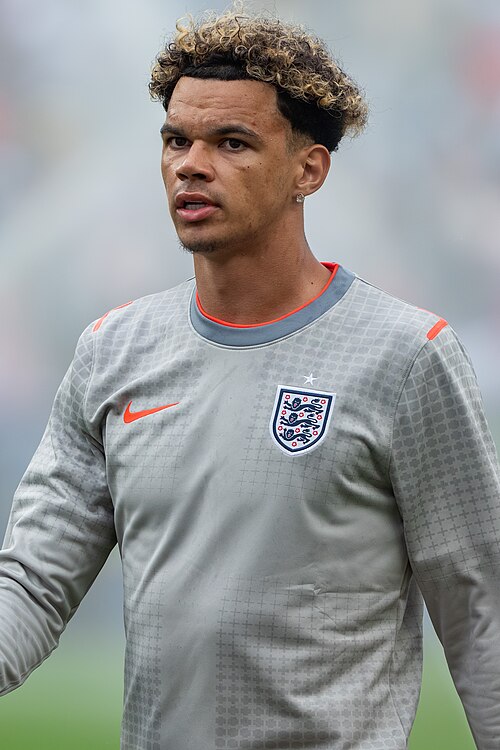
England have rarely been short of exciting young footballers, but the sheer volume of talent coming through in 2026 makes putting together a list of the best players aged 21 and under surprisingly difficult.
There are teenagers already playing for England, Premier League regulars who are still several years away from their supposed peak and, perhaps most intriguingly, a collection of players who do not fit particularly neatly into traditional positions at all. Myles Lewis-Skelly and Nico O’Reilly were developed as midfielders but are now playing at left-back, Rico Lewis regularly moves from full-back into midfield, while Archie Gray and Jack Hinshelwood have already been used in several different positions across defence and midfield.
There are also some conspicuous absences. There is not a goalkeeper in this top 20 and there is not really a conventional centre-forward either. That tells us something about the type of player England is producing, but it also says something about how difficult it is for young players in certain positions to get the senior minutes they need.
So this is not simply a ranking of the 20 players with the highest potential, nor is it an attempt to predict who will eventually have the best career. The question is slightly different: who are the best young English footballers right now, once what they have actually achieved in senior football is balanced against their age and what they might eventually become? Many of these players will be in (or in the conversation to get in) England’s 2030 World Cup squad.
How I ranked the 20
To qualify, a player had to be aged 21 or younger in September 2026, be eligible to represent England and have made at least one senior league appearance during either 2025/26 or the beginning of 2026/27 in the Premier League, Bundesliga, Ligue 1, La Liga or Serie A.
The ranking is weighted roughly 70% towards current ability and senior achievement and 30% towards future potential.
That distinction matters. Playing 2,000 Premier League minutes at 20 is evidence in a way that dominating academy football at 16 is not, however exciting the younger player might eventually become.
Age is still taken into account. Max Dowman obviously does not need to have achieved as much as a 21-year-old to justify his place, but equally I have tried not to treat simply being very young as an achievement in itself.
The 20 best young English footballers in 2026
| Rank | Player | Age | Club | Position |
| 1 | Nico O’Reilly | 21 | Manchester City | LB / CM |
| 2 | Kobbie Mainoo | 21 | Manchester United | CM |
| 3 | Myles Lewis-Skelly | 19 | Arsenal | LB / CM |
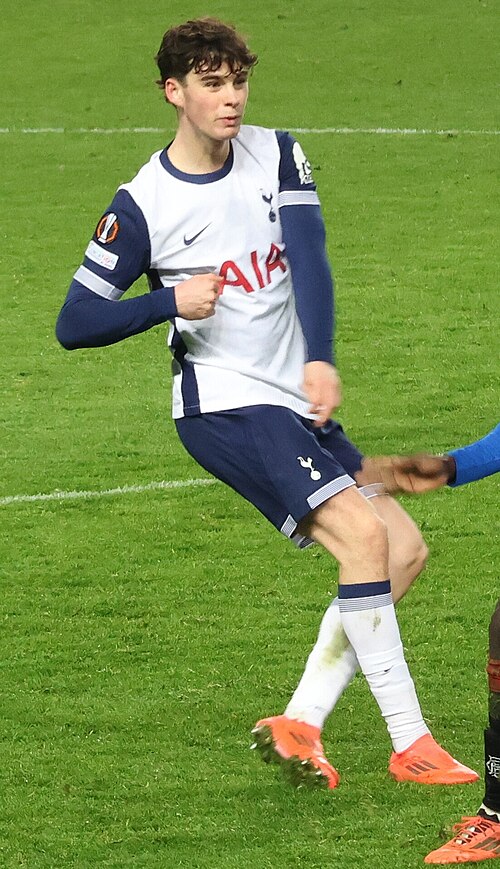
| 4 | Archie Gray | 20 | Tottenham Hotspur | CM / DF |
| 5 | Jack Hinshelwood | 21 | Brighton | CM / FB |
| 6 | Jobe Bellingham | 20 | Borussia Dortmund | CM |
| 7 | Josh King | 19 | Fulham | AM / CM |
| 8 | Lewis Miley | 20 | Newcastle United | CM / RB |
| 9 | Rico Lewis | 21 | Manchester City | RB / CM |
| 10 | Rio Ngumoha | 18 | Liverpool | LW |
| 11 | Ethan Nwaneri | 19 | Borussia Dortmund, loan from Arsenal | AM / RW |
| 12 | Tyler Dibling | 20 | Everton | RW / AM |
| 13 | Josh Acheampong | 20 | Chelsea | CB / RB |
| 14 | Max Dowman | 16 | Arsenal | AM / RW |
| 15 | Chris Rigg | 19 | Sunderland | CM / AM |
| 16 | Samuel Amo-Ameyaw | 20 | Strasbourg | Winger |
| 17 | Tyrique George | 20 | Everton | Winger |
| 18 | Harrison Armstrong | 19 | Everton | CM |
| 19 | Ayden Heaven | 19 | Manchester United | CB |
| 20 | Jahmai Simpson-Pusey | 20 | Köln | CB |
20. Jahmai Simpson-Pusey — Köln
Age: 20 | Position: Centre-back
- His first loan at Celtic produced only 64 league minutes before Manchester City recalled him.
- He then made 11 Bundesliga appearances during the second half of 2025/26 after joining Köln.
- Köln were sufficiently impressed to make the move permanent, while Simpson-Pusey has subsequently progressed into the England U21 squad.
Simpson-Pusey is a useful place to start because his last year illustrates how dramatically a young player’s prospects can change once he actually finds somewhere willing to play him. Celtic looked like an attractive loan on paper but provided almost no football; Köln gave him meaningful Bundesliga minutes and then decided they wanted to keep him permanently.
He remains more projection than finished product, particularly compared with the defenders nearer the top of this ranking, but a technically comfortable centre-back already playing senior football in Germany at 20 is exactly the sort of player worth watching.
19. Ayden Heaven — Manchester United
Age: 19 | Position: Centre-back
- Heaven left Arsenal for Manchester United in February 2025 after making only one senior appearance for Arsenal.
- He played 17 Premier League matches and more than 900 league minutes during 2025/26.
- Manchester United named him their Player of the Month for December 2025 after he established himself in the side.
Heaven’s move initially looked like another large club taking a chance on potential rather than proven first-team quality, but the following season provided much more concrete evidence.
Centre-backs can be particularly difficult to rank at this age. A teenage winger can announce himself with two goals and a dribble compilation; a young central defender’s progress is usually less spectacular. Simply being trusted repeatedly in the middle of a Premier League defence before your 20th birthday is significant.
18. Harrison Armstrong — Everton
Age: 19 | Position: Central midfield
- Everton gave Armstrong his Premier League debut when he was still only 17.
- Loans at Derby and Preston subsequently produced more than 2,200 Championship minutes.
- He returned to Everton before turning 20 having already played the equivalent of around 25 complete Championship matches.
Armstrong’s pathway looks almost old-fashioned compared with many players on this list: academy, first-team taste, Championship loans, then another attempt at establishing himself in the Premier League.
There is a lot to like about that route. Rather than spend two years collecting ten-minute substitute appearances, Armstrong went away and learned how to survive entire senior matches every week. He may not have the spectacular ceiling of Dowman or Ngumoha, but by 19 he already had more than 2,000 Championship minutes behind him.
17. Tyrique George — Everton
Age: 20 | Position: Winger
- George joined Chelsea at Under-8 level and spent virtually his entire academy development at Cobham.
- He left Chelsea having made 37 first-team appearances and scored six goals.
- His initial loan to Everton was turned into a permanent transfer in 2026, giving him a clearer route to regular Premier League football.
Being a highly regarded Chelsea academy graduate is one thing; becoming a regular Premier League player is something else.
George’s next step is therefore straightforward. He needs minutes, starts and production. At 17 or 18, evidence of unusual talent can carry a player a long way in a ranking like this. By 20 or 21, increasingly you want that talent to turn into goals, assists and sustained first-team football.
16. Samuel Amo-Ameyaw — Strasbourg
Age: 20 | Position: Winger
- Amo-Ameyaw spent part of his academy career at Tottenham before moving to Southampton at 16.
- He received only 103 league minutes for Southampton before leaving English football.
- Since moving to Strasbourg he has accumulated more than 1,100 Ligue 1 minutes and progressed into the England U21 squad.
Southampton never quite gave Amo-Ameyaw enough football for his potential to become evidence, but France has.
That does not necessarily mean Ligue 1 is inherently a better place for young English footballers. It means Strasbourg had minutes available that Southampton did not, which is a recurring theme throughout this article. For a 19- or 20-year-old, the prestige of the club matters considerably less than the likelihood of actually getting onto the pitch.
15. Chris Rigg — Sunderland
Age: 19 | Position: Central / attacking midfield
- Rigg made his competitive Sunderland debut aged just 15.
- He played 45 Championship matches and more than 3,100 league minutes during 2024/25.
- Almost that entire Championship season came before his 18th birthday.
Rigg has been playing senior football for so long that it is easy to forget he only turned 19 in June.
There are plenty of teenagers who can be handed a cup debut because a manager sees enormous potential. There are extremely few who can cope with the relentlessness of a Championship season while still 17. His first Premier League season was less straightforward, which is why he sits 15th rather than considerably higher, but the body of senior experience is already exceptional for his age.
14. Max Dowman — Arsenal
Age: 16 | Position: Attacking midfield / right wing
- Dowman became the youngest goalscorer in Premier League history, scoring against Everton aged 16 years and 73 days.
- He was shortlisted for the 2026 PFA Young Player of the Year award while still only 16.
- Born on 31 December 2009, he is comfortably the youngest footballer anywhere in this top 20.
There is a perfectly reasonable argument that Dowman has the highest ceiling of anyone in the article. The reason he is only 14th is that this is not purely a ranking of potential.
The temptation with a player this young is to fast-forward the story. Dowman has already done things at 16 that almost nobody in English football history has done, but there remains an enormous gap between making history as a teenager and becoming an established Premier League player. The remarkable thing is not that he is only 14th; it is that somebody born at the end of 2009 has already provided enough senior evidence to make the list at all.
13. Josh Acheampong — Chelsea
Age: 20 | Position: Centre-back / right-back
- Acheampong joined Chelsea at Under-8 level.
- He has already been used at centre-back and right-back, while his coaches have also discussed his ability to play on the left, in midfield and even wider.
- He has progressed into the England U21 squad despite still having a relatively modest amount of senior league football behind him.
Acheampong is one of the clearest examples of the positional flexibility running through this generation.
The attraction is obvious: he has the physical profile of a defender, the technical background expected of a modern Chelsea academy graduate and enough tactical flexibility that a manager can find several routes to getting him onto the pitch. At this stage of a young player’s career, that versatility is not simply tactically useful; it can accelerate development.
12. Tyler Dibling — Everton
Age: 20 | Position: Right wing / attacking midfield
- Dibling played 33 Premier League matches and around 1,875 minutes for Southampton in 2024/25 while still a teenager.
- His academy journey included Southampton, a move to Chelsea and then an unusual return to Southampton.
- After becoming a Premier League regular as a teenager, his first Everton league season produced only a few hundred minutes, showing how quickly a young player’s pathway can change.
Dibling’s position in this ranking is heavily influenced by what he showed at Southampton. Playing nearly 1,900 Premier League minutes as a teenager in a struggling team is more persuasive than almost any academy reputation.
The following season was less straightforward, but his qualities remain unusual: tall, technically gifted, comfortable carrying through contact and capable of creating transition moments against senior defenders. At 20, however, the question increasingly becomes whether those qualities will turn into consistent production.
11. Ethan Nwaneri — Borussia Dortmund, loan from Arsenal
Age: 19 | Position: Attacking midfield / right wing
- Nwaneri remains the youngest player in Premier League history, having debuted aged 15 years and 181 days.
- He scored four Premier League goals in 2024/25 during his breakthrough Arsenal campaign.
- He is spending 2026/27 at Borussia Dortmund, following the route previously taken by several outstanding young English players.
Nwaneri’s name has been attached to records since he was 15, but his career since then illustrates why debut age and genuine establishment should never be treated as the same thing.
His talent has never really been in question. The issue is volume. A player can become a Premier League record-holder at 15 and still reach 19 needing to move elsewhere to get enough football. That does not mean the original hype was wrong; it means development is rarely linear.
10. Rio Ngumoha — Liverpool
Age: 18 | Position: Left wing
- Ngumoha made 29 Liverpool first-team appearances in 2025/26 while still only 17.
- His stoppage-time winner at Newcastle made him the youngest goalscorer in Liverpool’s history.
- He became one of the youngest players ever to represent England when he made his senior debut in 2026.
Ngumoha’s rise has been extraordinarily fast. He moved from Chelsea to Liverpool’s academy, reached the first team almost immediately and then went from exciting youth prospect to senior England international in little more than a year.
The obvious caveat is playing time. Twenty-nine appearances sounds enormous for a teenager, but many came from the bench, so his actual league minutes remain well below those of the established players nearer the top. Still, an 18-year-old winger already playing for Liverpool and England does not require much imagination.
9. Rico Lewis — Manchester City
Age: 21 | Position: Right-back / central midfield
- Lewis joined Manchester City’s academy aged eight.
- He reached 100 Manchester City appearances before his 21st birthday.
- At 17 years and 346 days he became the youngest player ever to score on his first Champions League start.
Rico Lewis almost feels like a veteran in this company. He was already starting Champions League matches while some of the players below him were waiting for their senior debuts.
He is also one of the clearest examples of how Guardiola-era football has blurred the distinction between full-back and midfielder. That versatility is valuable, although it may also make it harder to identify the one position in which Lewis is unquestionably first choice. It should not obscure how unusual 100 senior appearances by 20 actually is.
8. Lewis Miley — Newcastle United
Age: 20 | Position: Central midfield / right-back
- Miley joined Newcastle’s academy at the age of seven.
- He has already accumulated around 80 senior appearances for Newcastle despite only turning 20 in May 2026.
- Newcastle have used him at right-back as well as central midfield, adding another route into the first team.
Miley is perhaps the least flashy player in the top ten, but he keeps doing the sort of things that become more persuasive the longer they continue.
There has rarely been a sense that senior football is moving too quickly around him. That is a remarkably valuable quality for a midfielder who has been playing Premier League football since 17, and his ability to cover right-back gives Newcastle another reason to keep him involved.
7. Josh King — Fulham
Age: 19 | Position: Attacking midfield / central midfield
- King has been part of Fulham’s academy since Under-9 level.
- He played more than 1,300 Premier League minutes during his breakthrough 2025/26 campaign.
- Thomas Tuchel invited him into England’s pre-World Cup senior training camp and later said he had been very close to a full senior call-up.
King’s rise is one of the reasons rankings like this can change dramatically within 12 months.
What stands out is how naturally he receives the ball in crowded central areas, turns and progresses possession rather than merely retaining it. His immediate England problem is almost comically difficult: he plays largely as a No.10, where the senior side already has Jude Bellingham and Cole Palmer. King can become an excellent Premier League footballer and still face an enormous battle to accumulate England caps.
6. Jobe Bellingham — Borussia Dortmund
Age: 20 | Position: Central midfield
- Bellingham had already made 26 senior appearances for Birmingham City before leaving at 17.
- He subsequently accumulated two full Championship seasons with Sunderland while still a teenager.
- By 20 he had already played senior football in the Championship, Bundesliga and Champions League.
The surname makes comparison impossible to avoid, but Jobe Bellingham’s career deserves to be assessed on its own terms.
He has already experienced three very different development environments: Birmingham gave him senior football remarkably young, Sunderland gave him enormous volume and Dortmund have exposed him to the Bundesliga and Champions League. There are players on this list with greater obvious flair, but relatively few 20-year-olds anywhere in Europe have built a comparable body of senior experience.
5. Jack Hinshelwood — Brighton
Age: 21 | Position: Central midfield / full-back
- Hinshelwood had already made 70 Brighton first-team appearances by March 2026.
- At that point he had played 33 times in midfield and 23 times at full-back.
- Brighton even used him as a makeshift centre-forward on the final day of 2024/25 — and he scored twice.
Hinshelwood might be the player on this list most likely to be underrated because it is difficult to decide what he actually is.
Midfielder? Full-back? No.10? Emergency striker? What is easier to identify is his value to managers. Brighton can change shape, lose a player to injury or need a different tactical solution and still find somewhere useful to put Hinshelwood. In modern football, that may be one of his greatest strengths.
4. Archie Gray — Tottenham Hotspur
Age: 20 | Position: Central midfield / defence
- Gray played 3,873 Championship minutes for Leeds in 2023/24 despite beginning the season aged only 17.
- He has already played senior football at central midfield, right-back, left-back and centre-back.
- Tottenham supporters voted him the winner of all three of the club’s Player of the Season awards for 2025/26.
If we were ranking these players purely on senior experience accumulated before 20, Gray might be number one.
Central midfield is probably his long-term home, but the nearly 4,000 Championship minutes he collected at Leeds gave him a volume of competitive football that almost no teenager at an elite Premier League academy could realistically expect to receive. His versatility has then allowed that experience to translate into several different roles at Tottenham.
3. Myles Lewis-Skelly — Arsenal
Age: 19 | Position: Left-back / central midfield
- Lewis-Skelly was developed primarily as a central midfielder before Mikel Arteta moved him into Arsenal’s senior team at left-back.
- He became the youngest player ever to score on his senior England debut.
- He reached the senior England team while still a teenager, despite only beginning his Premier League breakthrough in 2024/25.
Lewis-Skelly encapsulates several themes running through this article.
Technically, he looks like a midfielder because that is what he was for most of his development. At senior level, that education has made him unusually comfortable receiving the ball in central areas from left-back rather than simply running up and down the touchline. The question is no longer whether he can play at this level, but eventually which position best exploits everything he can do.
2. Kobbie Mainoo — Manchester United
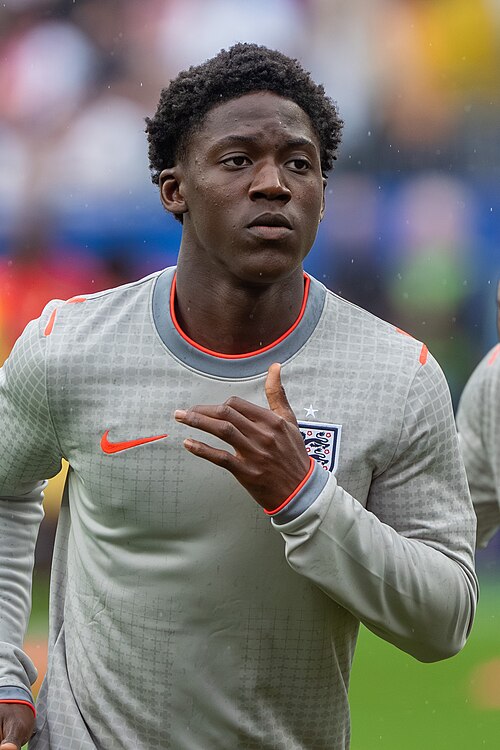
Age: 21 | Position: Central midfield
- Mainoo played almost 2,000 Premier League minutes during his breakthrough 2023/24 season.
- He scored Manchester United’s decisive second goal in the 2024 FA Cup final victory over Manchester City.
- By the age of 21 he had already represented England at both a European Championship and the 2026 World Cup.
Mainoo’s career has already contained enough peaks and interruptions for several different narratives to be written about him, but the central fact remains that he has proven he can play elite senior football in a way very few midfielders his age have.
He is particularly effective when matches become compressed: receiving under pressure, escaping the first challenge and carrying or passing through midfield rather than simply circulating possession around it. At 21, potential is no longer enough on its own. Mainoo ranks second because he has already provided the evidence.
1. Nico O’Reilly — Manchester City
Age: 21 | Position: Left-back / central midfield
- O’Reilly made 53 Manchester City appearances in 2025/26, contributing nine goals and six assists in all competitions.
- He won Manchester City’s Player of the Season, the Premier League Young Player of the Season and the PFA Young Player of the Year.
- Despite not making his competitive Manchester City debut until he was 19, he had become an England World Cup player and one of City’s most important first-team players by 21.
Twelve months ago, O’Reilly probably would not have topped this ranking. In 2026, there is a very strong argument that nobody else can.
Perhaps the most interesting part is that he reached this point through adaptation rather than inevitability. O’Reilly spent most of his academy career as a midfielder before Guardiola converted him into a left-back at senior level. Ethan Nwaneri was already a Premier League player at 15; O’Reilly had not played a competitive senior game at the same age, 16, 17 or 18. By 21, O’Reilly had become one of the best young players in the Premier League.
That is why he is number one.
Where are all the young English goalkeepers?
There is one position conspicuous by its complete absence from the top 20 – not one goalkeeper qualified.
That does not mean England has stopped producing good young goalkeepers. It tells us something about how differently the position develops.
I looked at the England World Cup goalkeepers selected between 2010 and 2026 and asked a simple question: how old were they when they reached 50 starts in a top domestic division? Of the ten who eventually reached the landmark, the average was roughly 24 years and ten months, with a median of around 24 and a half.
Bukayo Saka reached 50 top-flight starts at roughly 19 years and 11 months, Declan Rice at around 20 years and six months, while Harry Kane got there at approximately 22 years and four months.
The reason is fairly obvious. There are ten outfield positions and one place in goal. A manager can give an 18-year-old winger 15 minutes at the end of a match or use Archie Gray in four different positions.
Nobody brings on a teenage goalkeeper for the last quarter of an hour because he looks promising.
A goalkeeper generally needs one manager to make the much bigger decision that he is now the goalkeeper, and have the confidence to stick with him. A 19-year-old attacking midfielder who loses the ball five times will probably not be mentioned, a 19-year-old goalkeeper who lets in two goals that xG statistics suggests he should have prevented will be dropped.
Which English goalkeepers came closest?
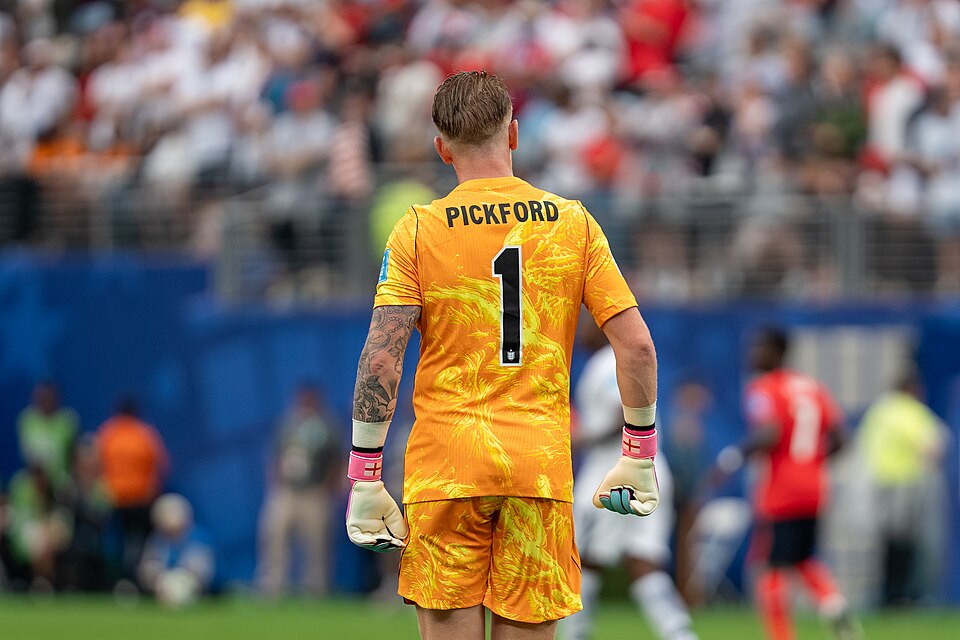
If I had relaxed the requirement that a player must have appeared in one of Europe’s five biggest leagues, Tommy Simkin would probably have come closest to making the top 20.
Simkin played 43 League Two matches for Walsall in 2024/25, followed by Championship football with Stoke. By 21 he had already accumulated far more senior league experience than most goalkeepers of the same age and had progressed into England’s U21 squad.
The most intriguing long-term prospect may be Oliver Whatmuff. The Manchester City goalkeeper spent 2025/26 at Rochdale while still only 17 and 18, keeping 18 clean sheets in 37 appearances during a promotion-winning season before moving another step up the pyramid.
Sunderland’s Matty Young also played all 44 League Two matches for Salford in 2025/26, while Arsenal’s Tommy Setford is another highly regarded young goalkeeper trying to obtain regular senior football on loan.
So the problem is not a complete absence of talented English keepers.
It is that the best of them are accumulating their experience in League One, League Two or below, while outfield players of the same age can already have substantial Premier League résumés.
Wales: what happens when no goalkeeper gets the chance to become a No.1?
Wales provides an extreme illustration of where the problem can lead.
The striking fact about Wales’s current senior goalkeeping situation is not simply that the options are getting older. It is that not one of the three senior Wales goalkeepers is currently the first-choice goalkeeper for a professional football club (and you have to look very hard to find any Welsh eligible goalkeeper playing professional football as a No.1.
Of Wales’ three top goalkeepers today: Karl Darlow is at Manchester United as a back-up;
Danny Ward is at Wrexham but is not their regular Championship No.1; and Tom King is at Everton as another reserve goalkeeper.
At the time of writing, the three senior Wales goalkeepers had started zero league matches between them this season.
There is no obvious young No.1 immediately behind them either.
The current Wales U21 goalkeepers – Joe Duncan, Logan Stretch and Luke Armstrong – all belong to professional clubs but have had to leave them on loan simply to obtain senior football. Duncan has gone from Bristol City to Southend, Stretch from Sheffield Wednesday to Buxton and Armstrong from Cardiff City to Raith Rovers.
That is the goalkeeper pathway problem in its clearest form.
A promising young midfielder at a Championship club can come off the bench, start cup matches, cover several positions and slowly accumulate football.
A promising goalkeeper at the same club essentially has two options: the manager makes him No.1, or he does not play.
If young keepers cannot get enough matches at 18, 19 or 20, they can then reach 22 or 23 without the experience required to persuade a manager to make them first choice. Managers choose an older, proven goalkeeper instead, and the cycle continues.
At 18, Max Dowman can score a Premier League goal.
At 18, Oliver Whatmuff can have an outstanding entire season and still be doing it in the National League.
That is not necessarily a reflection of their relative talent. It is a reflection of how difficult goalkeeper development is.
Where are all the strikers?
The other absence is harder to explain away. There is not really a conventional No.9 anywhere in the top 20.
England can seemingly produce attacking midfielders faster than it can find places to put them. King, Nwaneri and Dowman can operate centrally; Ngumoha, George, Amo-Ameyaw and Dibling can play wide; Lewis-Skelly, O’Reilly, Gray, Miley and Hinshelwood can all move between positions.
But where is the 19-year-old Harry Kane?
England’s current U21 group contains genuine centre-forward options such as Will Lankshear and Divin Mubama, but the wider attacking group again contains lots of technically gifted players who naturally operate around a striker rather than necessarily being one.
At senior level, Harry Kane remains the reference point, while Liam Delap, now too old for this ranking, is one of the more obvious candidates from the following generation.
There may be tactical reasons for the shortage. Modern academy football places enormous emphasis on receiving between the lines, combination play, pressing, carrying the ball and positional interchange. Elite teams increasingly obtain goals from wide forwards and attacking midfielders that previous generations might have expected to come primarily from centre-forwards.
The modern No.9 also has something of the goalkeeper problem. Most teams use only one, and a manager is often more willing to give an exciting teenage winger 20 minutes than ask an unproven 18-year-old striker to lead the line.
England appear extremely good at producing footballers who can play either side of a striker, behind a striker or occasionally instead of one. Finding the striker himself looks considerably harder.
Like with goalkeepers, strikers play in a position where mistakes are far more meaningful and therefore far more likely to be noticed. A 30-year-old striker is allowed to miss the odd chance, but a 19-year-old doing the same thing is not ready for senior football. It takes a brave manager to stick his neck on the line and pick that youngster up front.

Why are so many of England’s best young players positionally versatile?
Look again at the top ten.
O’Reilly was a midfielder who became a left-back. Lewis-Skelly was a midfielder who became a left-back. Rico Lewis is nominally a right-back but frequently operates in midfield. Gray has played central midfield, right-back, left-back and centre-back. Hinshelwood has played midfield, full-back, No.10 and even No.9.
This is too widespread to dismiss as coincidence.
England deliberately changed the type of player it wanted
The first part of the explanation predates Pep Guardiola’s arrival in England.
The Premier League’s Elite Player Performance Plan began in 2012, while the FA formally launched England DNA in 2014.
England DNA explicitly called for development teams to play with “tactical flexibility”, while the future England player was supposed to combine technical ability, tactical awareness and game intelligence.
So when we look at a generation full of footballers who are technically secure and comfortable in multiple roles, we probably should not regard that as accidental.
It is at least partly what England has spent more than a decade trying to produce.
Guardiola then changed what those players were being asked to do
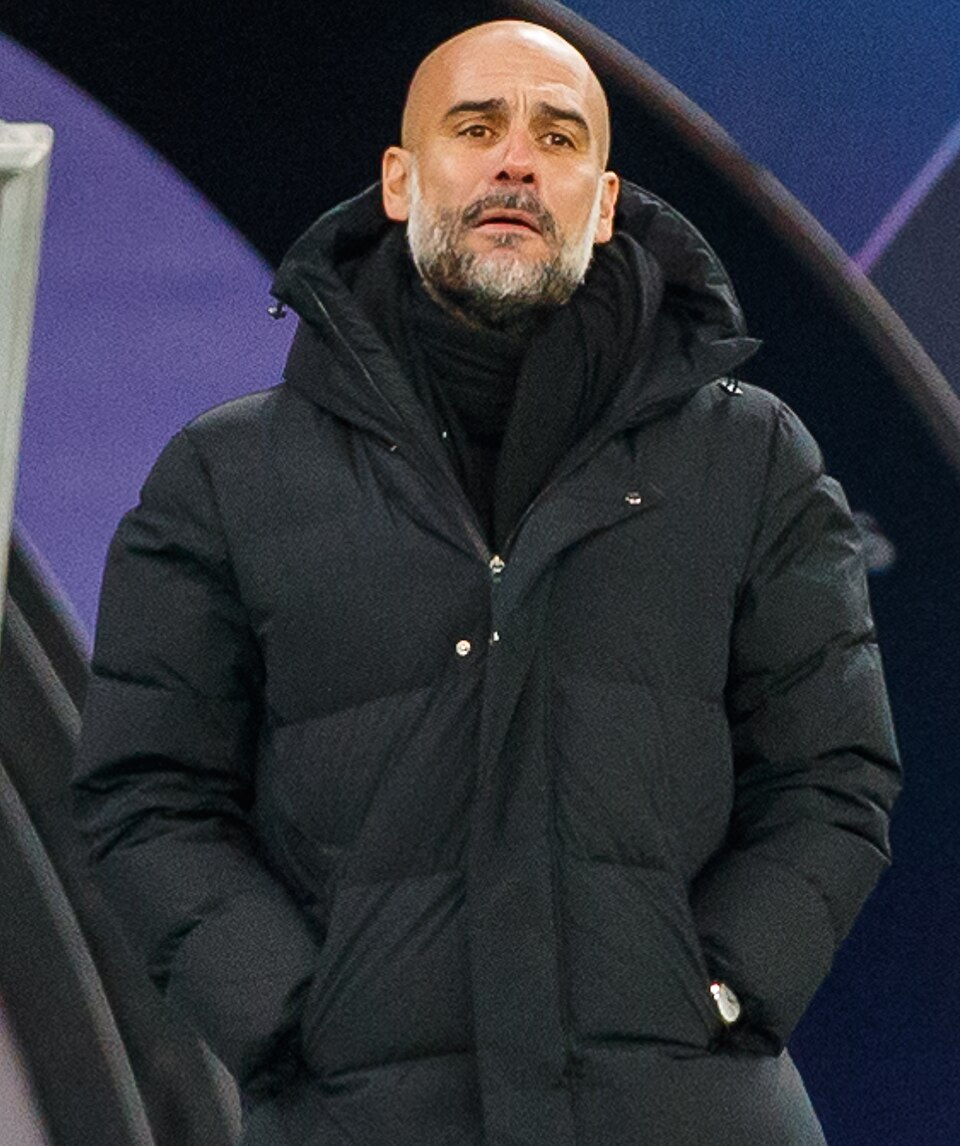
Pep Guardiola did not introduce technical football to England, and the improvement in English youth development cannot simply be credited to one Spanish coach.
But his arrival at Manchester City in 2016 accelerated a tactical shift.
The traditional full-back overlaps outside the winger. An inverted full-back can instead move centrally and become another midfielder.
A midfielder may drop into defence.
A centre-back is increasingly judged not only on defending but on whether he can step forward and progress the ball.
O’Reilly and Lewis-Skelly demonstrate the change particularly clearly. Both were developed as midfielders. Guardiola and Arteta looked at those midfield qualities and concluded that they could make them unusually effective modern left-backs.
Twenty years ago, moving a promising central midfielder to full-back might have looked like a demotion.
Today it can put him at the centre of how an elite team builds its attacks.
Has England learned to produce Spanish-style footballers?
That brings us to Spain.
For years, Spain’s great competitive advantage was not simply producing footballers who could pass the ball accurately. Its best players had spent their development constantly being asked to read the game.
Rondos, positional play and small-sided exercises encouraged players to understand where the space was, where it would appear next and how their position related to everybody around them.
England has not simply copied Spain. EPPP and England DNA were domestic reforms responding to England’s own shortcomings, and the timelines overlap rather than follow one another neatly.
But the convergence is fascinating:
2012 – EPPP begins.
2014 – England DNA explicitly calls for technical quality and tactical flexibility.
2016 – Guardiola arrives and accelerates the spread of positional football in the Premier League.
2026 – many of England’s best young players barely fit into traditional positional descriptions.
England has not merely become better at producing young footballers. It may have changed what it believes a good footballer looks like.
How hard is it to become a top-level regular before 21?
Perhaps the most important distinction in youth football is one we often ignore: making your debut is not the same as becoming part of the squad, and becoming part of the squad is not the same as becoming a regular.
CIES examined top-flight playing time for U21 players eligible for the home national team during 2025. In Ligue 1, those players received 7.8% of available minutes. La Liga was at 4.0%, the Bundesliga 3.4% and Serie A 1.9%.
The Premier League was only 2.4%.
Now look at our 20. I used 1,500 league minutes in a single Big Five season as a rough definition of becoming a genuine top-flight regular – equivalent to 16⅔ complete matches. Only seven have done it:
Nico O’Reilly, Kobbie Mainoo, Rico Lewis, Tyler Dibling, Jack Hinshelwood, Jobe Bellingham and Archie Gray.
That means 13 of the 20 best young English players in this article have never yet played the equivalent of even 17 complete matches across one Big Five league season.
Yet 15 of the 20 made a competitive senior debut before turning 18. Six debuted before 17.
That contrast is much more revealing than the debut records themselves. At this level of prospect, getting onto a senior pitch very young is almost normal. Being trusted for 1,500 or 2,000 minutes is not.
Nwaneri and O’Reilly provide the perfect comparison. Nwaneri became the youngest Premier League player ever at 15. O’Reilly did not make his competitive Manchester City debut until 19.
By 2025/26, O’Reilly was making 53 appearances for City and being voted PFA Young Player of the Year.
Debuting young is impressive. Playing every week while young is much more impressive.
What is the best pathway into senior football?
There is no single answer, and the 20 demonstrate almost every possible route.
Only three became substantial EFL regulars before establishing themselves at top-flight level: Archie Gray, Chris Rigg and Jobe Bellingham.
Gray played nearly 4,000 Championship minutes for Leeds in one season. Rigg played more than 3,100 Championship minutes before turning 18. Bellingham accumulated two full seasons of Championship football before moving to Dortmund.
For them, the development question is almost the reverse of the one facing a player at Arsenal or Manchester City: what is more valuable at 18: 500 Premier League minutes or 3,000 Championship minutes?
There is no universal answer, but Gray, Rigg and Bellingham demonstrate the enormous advantage of simply playing.
Armstrong provides another model. Everton gave him a taste of the Premier League, then sent him into the Championship to collect more than 2,000 minutes before bringing him back.
Other players have had to move abroad. Bellingham and Nwaneri are at Dortmund, Amo-Ameyaw at Strasbourg and Simpson-Pusey at Köln.
Again, the lesson is not that Germany or France automatically develops players better.
Phil Foden stayed at Manchester City and became one of England’s best players. Lewis-Skelly stayed at Arsenal and became a senior international as a teenager. Jadon Sancho needed Dortmund. Jude Bellingham benefited enormously from Dortmund.
Young English players do not need to go abroad. They need somewhere to play.
The country matters less than the depth chart.
The best players are not all coming through the biggest clubs
The pathways also challenge the idea that the Big Six simply produce everyone. These 20 players received their first senior appearances from 13 different clubs.
Arsenal lead with four. Manchester City have three. Chelsea and Southampton account for two each. Nine other clubs provided one senior debut apiece.
Only 11 of the 20 made their senior debut for one of the traditional Big Six.
The other nine broke through at Birmingham, Leeds, Fulham, Newcastle, Southampton, Everton, Sunderland and Brighton.
Modern academy histories are complicated – Ngumoha spent years at Chelsea before joining Liverpool, for example – so the club giving the senior debut should not receive all the developmental credit.
But it highlights something important. The biggest academies may have extraordinary coaching and facilities but smaller clubs can sometimes offer something even more valuable: a route onto the pitch.
How many of these 20 will actually become England regulars?
Here is the statistic that best captures how highly rated this group already is: nineteen of the 20 players in this article were selected in an England senior or age-group squad in the September 2026 international window.
O’Reilly, Mainoo, Lewis-Skelly and Ngumoha are already with the seniors.
Acheampong, Rico Lewis, Simpson-Pusey, Jobe Bellingham, Gray, King, Miley, Amo-Ameyaw, Dibling, George and Nwaneri are in the U21 picture.
Heaven, Armstrong and Rigg remain within the younger England pathway, while Dowman is already playing above his natural age group.
Hinshelwood is the sole exception.
That sounds like evidence that almost everybody here will eventually play regularly for England – history says otherwise.
England won the 2017 U20 World Cup with a squad of 21. Only eight members of that squad subsequently won a senior England cap: Dean Henderson, Fikayo Tomori, Kyle Walker-Peters, Lewis Cook, Ainsley Maitland-Niles, Dominic Solanke, Dominic Calvert-Lewin and Ezri Konsa.
Even within those eight, becoming capped and becoming an England regular are very different things.
Josh King provides a good contemporary example. Thomas Tuchel has already said he was very close to a senior call-up, but King plays largely as a No.10.
England’s existing options there include Jude Bellingham and Cole Palmer.
King can therefore become an excellent Premier League footballer and still struggle to accumulate international minutes.
A goalkeeper or centre-forward of equivalent talent could conceivably have a clearer route simply because the competition is less ferocious.
So the question is not really which of these 20 will make it? Most have already made it by any normal definition.
The better question is: how good do you actually have to become to be a regular for England when almost everybody around you is exceptionally good too?
What does this generation tell us about English football?
It is tempting to call every good group of youngsters a golden generation, and usually far too early. Some players on this list will plateau. Some will suffer serious injuries. Others will make transfers that do not work, find themselves stuck behind expensive senior signings or simply become very good Premier League players rather than great ones.
That is normal.
What is unusual is the volume – and the type of player being produced.
England has central midfielders, attacking midfielders, wide players and tactically flexible defenders in remarkable numbers. The best youngsters are technically comfortable, increasingly multi-positional and accustomed to sophisticated tactical roles at ages when previous generations were often still being sent out on their first lower-league loan.
The FA spent the decade after repeated tournament disappointments trying to produce more technical and tactically intelligent players. At the same time, English club football absorbed many of the ideas associated with Spain’s development culture and Guardiola’s positional game.
A decade later, characteristics once perceived as English weaknesses increasingly look like strengths.
But the bottlenecks have not disappeared – they have moved.
Getting into an academy is one challenge, getting a senior debut is another.
Going from a debut to regular senior football is considerably harder. Becoming one of the best players at a Premier League or major European club is harder again. Then, after all of that, you have to get into an England side already containing some of the best footballers in the world.
That may ultimately be the defining feature of this generation.
England’s problem is increasingly not finding talented young footballers, it is finding enough places for all of them to play.
FAQs
Who is the best young English footballer in 2026?
I have ranked Nico O’Reilly first. The Manchester City player established himself as a first-team regular during an outstanding 2025/26 campaign, represented England at the World Cup and won the PFA Young Player of the Year award.
Who is the best English teenage footballer?
Myles Lewis-Skelly is the highest-ranked teenager in this list at No.3, while Josh King, Rio Ngumoha, Ethan Nwaneri, Chris Rigg and Max Dowman are among the other outstanding English teenagers.
Who is the youngest player in the ranking?
Max Dowman, born on 31 December 2009, is the youngest. He is only 16 but has already become the youngest goalscorer in Premier League history.
Which young English players are already senior internationals?
Nico O’Reilly, Kobbie Mainoo, Myles Lewis-Skelly and Rio Ngumoha from this top 20 have already reached the senior England squad.
Which young English players currently play abroad?
Jobe Bellingham plays for Borussia Dortmund, Ethan Nwaneri is spending 2026/27 there on loan from Arsenal, Samuel Amo-Ameyaw plays for Strasbourg and Jahmai Simpson-Pusey is at Köln.
Why are there no goalkeepers in the top 20?
Goalkeepers generally establish themselves later than outfield players because there is only one starting position, substitute opportunities are rare and managers tend to value experience. England has promising young goalkeepers such as Tommy Simkin and Oliver Whatmuff, but none yet has the top-flight senior résumé of the outfield players in this ranking.
Which of these players could be involved at the 2030 World Cup?
Several will be in their early or mid-20s by 2030, but predicting an international squad four years in advance is inherently uncertain. O’Reilly, Mainoo, Lewis-Skelly and Ngumoha have already reached senior level, while most of the remainder are within England’s U21 or younger development system.


Leave a comment