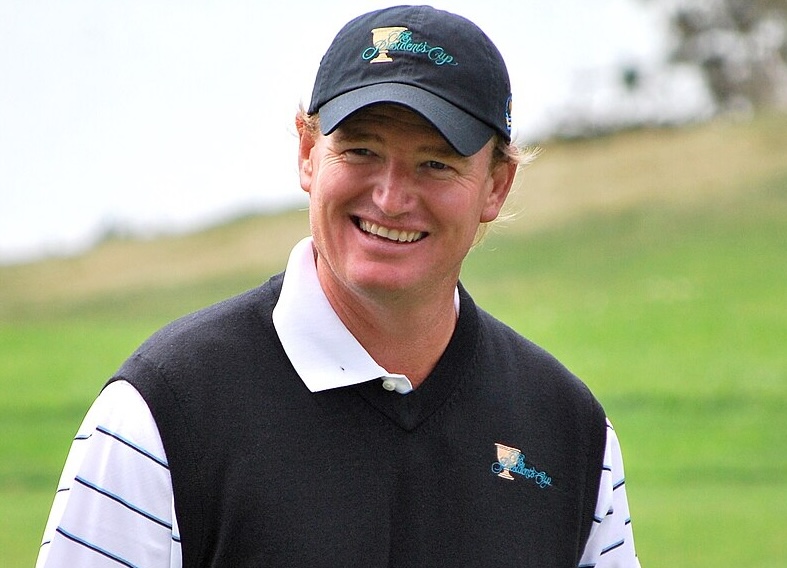
In the 2026 Presidents Cup the International team was made up of five Asians, three Antipodeans, two Canadians, along with a single Colombian and South African.
One South African representative is not a new thing. Christiaan Bezuidenhout has been a lone wolf in the past three teams – and each time he has been, at best, the third lowest ranked golfer on the team – and Louis Oosthuizen played alone in 2019.
This is some fall from the heady heights South Africans once occupied at the top of the game. From 2003 to 2017 there were at least three South Africans on each International team, and generally they were not skulking around at the back like Bezuidenhout. The 2007 quartet (Ernie Els, Rory Sabbatini, Retief Goosen and Trevor Immelman) were all inside the world’s top 20 and were the fulcrum of the team – two of them played all five sessions, and the other two played four. There was a similar story in 2013: five South Africans played. Three of them were ever present, and two were rested for just one session. Richard Sterne was the lowest ranked of the five, he was 41st in the world on the day the teams were finalised.
In 2026 Bezuidenhout played one foursomes session before the singles.
The decline in South African representation has happened at the same time as the identity of the International team has become much more Asian. From 2003 to 2017, South Africa averaged 3.4 players per Presidents Cup while Asia averaged 2. Since 2019, South Africa has supplied exactly one player each time, while Asia has supplied five. There are no regional quotas, so it would be too simplistic to say that Asian golfers have literally taken South Africa’s places. But in practical terms, that is where much of the shift in the composition of the team has occurred. The International side once relied heavily on South Africa and Australasia; it is now much more geographically diverse, with Japan and South Korea in particular producing a greater number of world-class players.
The land of Gary Player (an extraordinary golfer – just ask him, he’ll tell you); Bobby Locke; and Ernie Els now does not have a golfer in the world’s top 50. Including all South African golfers, not just those at the very top of the game, what has the historical world ranking picture looked like? Has South African golf genuinely declined, or has the elite end simply gone through a barren spell?
Has South African golf really declined?
On almost every measure, the answer appears to be yes. South Africa is still producing good professional golfers, and the country remains far too strong for its decline to be described as a collapse. But compared with the position it occupied 10, 15 or 20 years ago, there are fewer South Africans near the top of the world rankings, fewer serious major contenders and, increasingly, fewer places for them in the International Presidents Cup team.
South Africans in world’s top 50 and 100 in 1995; 2000; 2005; 2010; 2015; 2020; and 2025
| Year | Number in world’s top 50 at year end | Number in world’s top 100 at year end | Players |
| 1995 | 2 | 2 | Ernie Els (3); David Frost (25) |
| 2000 | 2 | 3 | Ernie Els (2); Retief Goosen (38); Rory Sabbatini (84) |
| 2005 | 3 | 5 | Retief Goosen (4); Ernie Els (5); Tim Clark (20); Trevor Immelman (62); Rory Sabbatini (71) |
| 2010 | 5 | 6 | Ernie Els (12); Retief Goosen (16); Louis Oosthuizen (20); Tim Clark (25); Charl Schwartzel (34); Rory Sabbatini (94) |
| 2015 | 2 | 5 | Branden Grace (14); Louis Oosthuizen (18); Charl Schwartzel (67); Jaco van Zyl (67); George Coetzee (89) |
| 2020 | 2 | 6 | Louis Oosthuizen (22); Christiaan Bezuidenhout (34); Erik van Rooyen (51); Dylan Frittelii (68); Garrick Higgo (90); George Coetzee (92) |
| 2025 | 0 | 6 | Jayden Schaper (62); Thriston Lawrence (65); Garrick Higgo (66); Christiaan Bezuidenhout (79); Aldrich Potgieter (83); Shaun Norris (100) |
South Africa used to have genuine depth: not simply one star at the top, but several players capable of sitting inside the world’s top 20, 50 or 100 at the same time. Today there are still South Africans competing successfully around the world, but far fewer occupy those upper reaches of the game.
There are obvious complications to looking at the world rankings. LIV Golf complicates the comparison. Its players spent several years outside the normal world-ranking system and, although LIV events began receiving OWGR points in 2026, only the top 10 and ties earn them – the world rankings are therefore a less complete measure of South African strength than it was a decade ago.
Oosthuizen, Schwartzel, Grace and Dean Burmester, for example, are better golfers than their conventional world rankings alone would suggest. But LIV cannot explain the whole trend. Dean Burmester was 17th on LIV in 2026 and has been as high as 55th in the world, Branden Grace was 18th and was once as high as world number 10 (but more than 10 years ago). It would be quite the stretch to imagine either of them in the top 50 today, however. Louis Oosthuizen (aged 43 and 43rd on LIV in 2026) and Charl Schwartzel (aged 42 and 41st on LIV in 2026) are past their best so would have probably, at best, been on the fringes of the top 100 if they’d stayed on one of the main tours.
The Presidents Cup decline began before LIV became a factor, while the shortage of young South Africans emerging towards the very top of the game remains noticeable.
Perhaps the fairest conclusion is therefore that South African golf has declined rather than disappeared. It is not the only country to be going through this – in an article relating to the possible new European countries to provide a European Ryder Cup player I have discussed the decline in the number and quality of Scottish and Welsh golfers.
South Africa still produces tour winners and excellent professionals, but the extraordinary depth that once made three, four or even five South Africans in a Presidents Cup team seem normal is no longer there. The question is whether this is simply a fallow generation – the sort of cycle every sporting nation goes through – or whether the balance of world golf has shifted more permanently towards countries that are now producing elite players in greater numbers.
Where did the major winners go?
The decline at the very top of South African golf is perhaps even more striking when you look at the majors. For most of the modern era, South Africa did not just produce good tour professionals or reliable Presidents Cup players; it produced golfers capable of winning the biggest tournaments in the game. From Ernie Els’ first US Open victory in 1994 to his final Open Championship win in 2012, South Africans won nine major championships between them. Els won four, Retief Goosen two, while Trevor Immelman, Louis Oosthuizen and Charl Schwartzel each won one.
There was a particularly remarkable run between 2004 and 2012. In the space of nine seasons, five different South Africans won a major: Goosen won the 2004 US Open, Immelman the 2008 Masters, Oosthuizen the 2010 Open Championship, Schwartzel the 2011 Masters and Els the 2012 Open Championship. It meant that for much of that period South Africa did not merely have one exceptional golfer carrying the flag. Major champions seemed to arrive in waves.
And then it stopped. No South African has won a men’s major since Els at Royal Lytham in 2012. There have been near misses – Oosthuizen in particular accumulated an extraordinary collection of runner-up finishes after winning at St Andrews – but nobody has followed him, Schwartzel or Immelman into the winners’ circle. That is now a 14-year drought, and it is beginning to look increasingly conspicuous for a country with South Africa’s golfing history.
It is worth adding some perspective. South African golf has had major droughts before – Gary Player’s final major came at the 1978 Masters and Els did not win the US Open until 1994, a gap of 16 years. So the current drought is not yet unprecedented, the difference is what surrounded those periods. The modern lull has coincided with the disappearance of South Africa’s depth near the very top of the world rankings and, eventually, its shrinking presence in the Presidents Cup as well. The concern is therefore not simply that nobody has happened to win one of four tournaments in a particular year – it is that the pipeline of South Africans regularly putting themselves in position to win majors appears to have become much thinner. If no South African wins a major before the 2028 Open Championship, the drought will have reached 16 years – stranger things have happened, but a South African major winner before then seems unlikely.
That is what makes the next generation so interesting. South Africa does not necessarily need to find another Gary Player or Ernie Els for this trend to reverse. But after a period in which major champions seemed almost routine, producing even one player capable of consistently contending at that level again would feel significant.
How good were Els, Goosen and Oosthuizen at the same age?
It is easy, with the benefit of hindsight, to look back at Ernie Els, Retief Goosen and Louis Oosthuizen as obvious future major champions. Between them they won seven majors and recorded 62 top-10 finishes in golf’s four biggest championships. At 21 or 22, however, none had yet become the player we now remember.
Els was still ranked 413th in the world at the end of the year in which he turned 22. Twelve months later he had climbed all the way to 40th and by the end of 1994, the year in which he won his first US Open, he was sixth. His rise was spectacular, but it was also very sudden.
Goosen’s development was slower. He was outside the world’s top 200 at the end of the year in which he turned 23, reached 86th at 24 and was still only 100th at 25. He would eventually spend more than 250 weeks inside the world’s top 10 and win two US Opens.
Oosthuizen took even longer. At 23 he was ranked 251st in the world and at 24 had actually slipped to 337th. Even at 25 he was only 112th. Three years later he was lifting the Claret Jug at St Andrews after winning the Open Championship by seven shots.
| Golfer | Year End OWGR at 21 | Year End OWGR at 22 | Year End OWGR at 23 | Year End OWGR at 24 | Year End OWGR at 25 |
| Ernie Els | 381 (1990) | 413 (1991) | 40 (1992) | 20 (1993) | 6 (1994) |
| Retief Goosen | No ranking (1990) | 470 (1991) | 209 (1992) | 86 (1993) | 100 (1994) |
| Louis Oosthuizen | 512 (2003) | 244 (2004) | 251 (2005) | 337 (2006) | 112 (2007) |
| Casey Jarvis | 302 (2024) | 211 (2025) | TBC end of 2026 | TBC end of 2027 | TBC end of 2028 |
| Aldrich Potgieter | 83 (2025) | TBC end of 2026 | TBC end of 2027 | TBC end of 2028 | TBC end of 2029 |
| Jayden Schaper | 495 (2022) | 309 (2023) | 294 (2024) | 62 (2025) | TBC end of 2026 |
Development in golf is not linear, and three examples cannot tell us what will happen to the current generation. But they do provide useful context when looking at Aldrich Potgieter, Casey Jarvis and Jayden Schaper.
Potgieter ended 2025, the year in which he turned 21, ranked 83rd in the world. Jarvis was 211th at the end of the year in which he turned 22, while Schaper made one of the biggest jumps of the group when he climbed from 294th at the end of 2024 to 62nd a year later.
That does not mean Potgieter is going to win two US Opens, or that Jarvis and Schaper will become major champions. What it does show is that their current rankings are hardly a reason to write off their chances of reaching the very top of the game.
Indeed, when compared with three of South Africa’s greatest modern players at similar ages, the current generation looks perfectly competitive.
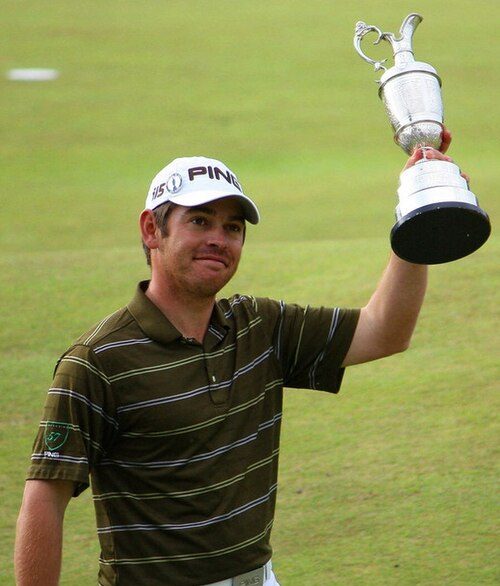
Who are South Africa’s best young golfers?
Of the current group, Aldrich Potgieter has probably done the most to justify the excitement around him.
He lost a play-off at the Mexico Open in February 2025 before going one better four months later, winning the Rocket Classic on the PGA Tour. That victory gave him exemption through to the end of 2027 and, at only 22, means he is already established at a level that Jarvis and Schaper are still trying to reach.
Potgieter has the obvious physical gifts as well. He is one of the longest hitters in professional golf and has already shown that his game can translate to the PGA Tour. He is still inconsistent, as virtually every player of his age is, but he has already won on the strongest tour in the world before turning 23. Of the current South African youngsters, he is the one furthest ahead.
Jarvis and Schaper have taken a different route.
Both have made major progress on the DP World Tour and are now well placed to earn PGA Tour cards for 2027 through the Race to Dubai (a full PGA Tour schedule would also give them more opportunities to accumulate the world-ranking points used for Presidents Cup qualification). That could be particularly important given the changes coming to the PGA Tour structure in 2028. Establishing themselves in America before then would give both a much better chance of getting into stronger fields, accumulating more world ranking points and qualifying regularly for the majors.
They have also already demonstrated something that cannot be taken for granted with young players: both know how to win.
Schaper won the Alfred Dunhill Championship and Mauritius Open in consecutive weeks in December 2025, transforming his world ranking in the process. Jarvis followed with two DP World Tour victories of his own in 2026, winning the Kenya Open in February and South African Open Championship a month later. These victories show they both know how to get over the finish line.
Behind those three, there are further reasons for optimism.
Yurav Premlall is only 23 and has already won on the DP World Tour, taking the Catalunya Championship in 2026. Barend Botha, 24, is progressing on the Korn Ferry Tour and remains on a realistic route towards the PGA Tour. Samuel Simpson, also 24, has been one of the dominant players on the Sunshine Tour this season, winning three times and leading its Order of Merit. Promotion details have not been confirmed but if he wins the Sunshine Tour this year he should earn a DP World Tour card.
Then there is Christo Lamprecht, whose presence is useful for the opposite reason. Few South African youngsters arrived in professional golf with greater expectations, but his 2026 season has been difficult. He has missed 14 cuts in 19 events across the PGA Tour and DP World Tour and has slipped backwards rather than making the anticipated jump.
That is another reminder of how unpredictable player development can be. Els went from 413th to 40th in the world in a year. Oosthuizen was still outside the top 300 at 24. Lamprecht has gone in the other direction after being one of the most highly rated amateurs in the game.
No one can know which of the current group will make the biggest jump next.
What South Africa does have, perhaps for the first time in a while, is numbers. Potgieter is already a PGA Tour winner. Jarvis and Schaper are pushing towards the PGA Tour. Premlall has won on the DP World Tour. Botha is progressing through the Korn Ferry Tour, while Simpson is winning repeatedly at home.
None of them yet resemble Els, Goosen or Oosthuizen at their peaks. But their careers in their early twenties did not give that many clues to the peaks that they would each achieve.
Could South Africa be a Presidents Cup force again?
The Presidents Cup is where the decline in South African golf has been most visible. The question now is whether that changes in 2028.
By then Aldrich Potgieter will still only be 24, Casey Jarvis 25, Yurav Premlall 25, Jayden Schaper 27, Barend Botha 26 and Samuel Simpson 26. None can be regarded as a likely selection this far out, but there are suddenly several South Africans who could plausibly put themselves into that conversation over the next two seasons.
Potgieter is already the furthest along. Jarvis and Schaper could be playing full PGA Tour schedules in 2027, while Premlall, Botha and Simpson each have a realistic route towards stronger tours and better fields. If even two or three of that group take another significant step forward, South Africa’s Presidents Cup representation could look very different very quickly.
That does not mean another golden generation is inevitable. The era of Els, Goosen, Oosthuizen, Schwartzel, Immelman and Grace was exceptional and may never be repeated. South Africa had multiple golfers capable of winning majors and spending long periods inside the world’s top 20 at the same time.
The current generation has achieved nothing close to that yet. But the position is also not as bleak as the current rankings initially suggest. South Africa has gone from having several established elite players to relying on Bezuidenhout alone at the Presidents Cup, but beneath that there is now a group of young golfers already winning on the PGA Tour, DP World Tour and Sunshine Tour.
Perhaps 2026 will prove to have been the low point.
If Potgieter, Jarvis, Schaper and the players behind them continue to progress, the question by 2028 may no longer be where all the South Africans have gone, but how many of them are back.


Leave a comment