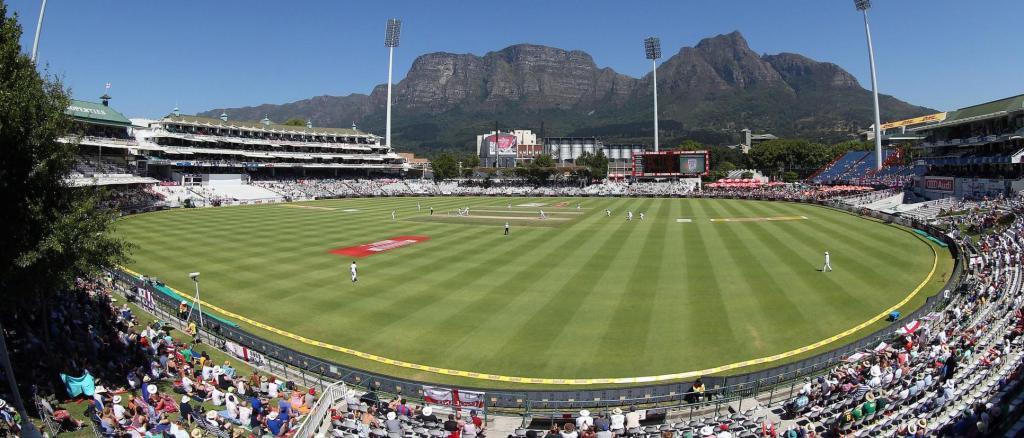
On Friday 9 October 2026 South Africa’s three-match Test series versus Australia began – it was the first Test match between the team at the top of the Test rankings (Australia) versus the team who most recently won the World Test Championship (South Africa) in South Africa since ‘Sandpaper Gate’ in 2018.
Many things have changed in the world since 2018, but not the Australian bowling line-up. Pat Cummins, Nathan Lyon, Mitchell Starc and Josh Hazlewood were at the top of the Australia wicket taking statistics for that series, and all four have tossed aside their zimmerframes and are there again in 2026.
Travis Head appears to have set himself up for a run as an Australian opener but the identity of his partner is unclear. The plan in the first Test has been to go back to the future.
Nic Maddinson has got the call-up. At 34 he fits the Australian Test match age bracket perfectly – the other 10 starters have an average age of 34.
In going back to a man who played his last Test match in 2016, Australia have picked a Test team with all 11 players in their thirties.
In the 884 Test matches Australia have played since 1877, this has never happened before.
| South Africa v Australia – First Test, Durban, 9 October 2026 | |||
| South Africa | Australia | ||
| Player | Age | Player | Age |
| AIden Markram | 32 | Nic Maddinson | 34 |
| Ryan Rickelton | 30 | Travis Head | 32 |
| David Bedingham | 32 | Marnus Labuschange | 32 |
| Temba Bavuma | 36 | Steven Smith | 37 |
| Tristan Stubbs | 26 | Matt Renshaw | 30 |
| Wiaan Mulder | 28 | Alex Carey | 35 |
| Kyle Verrynne | 29 | Beau Webster | 32 |
| Marco Jansen | 26 | Pat Cummins | 33 |
| Simon Harmer | 37 | Mitchell Starc | 36 |
| Keshav Maharaj | 36 | Nathan Lyon | 38 |
| Anrich Nortje | 32 | Josh Hazlewood | 35 |
| AVERAGE AGE: | 31.27 | AVERAGE AGE: | 34 |
The South African team is marginally younger. They have picked four players in their twenties, but no one on the field is in their twenties.
Assuming this means that the next time Australia tour South Africa only a few of these players will be around, I wanted to look to the future.
I have done so for England and for India – let’s do the same for South Africa.
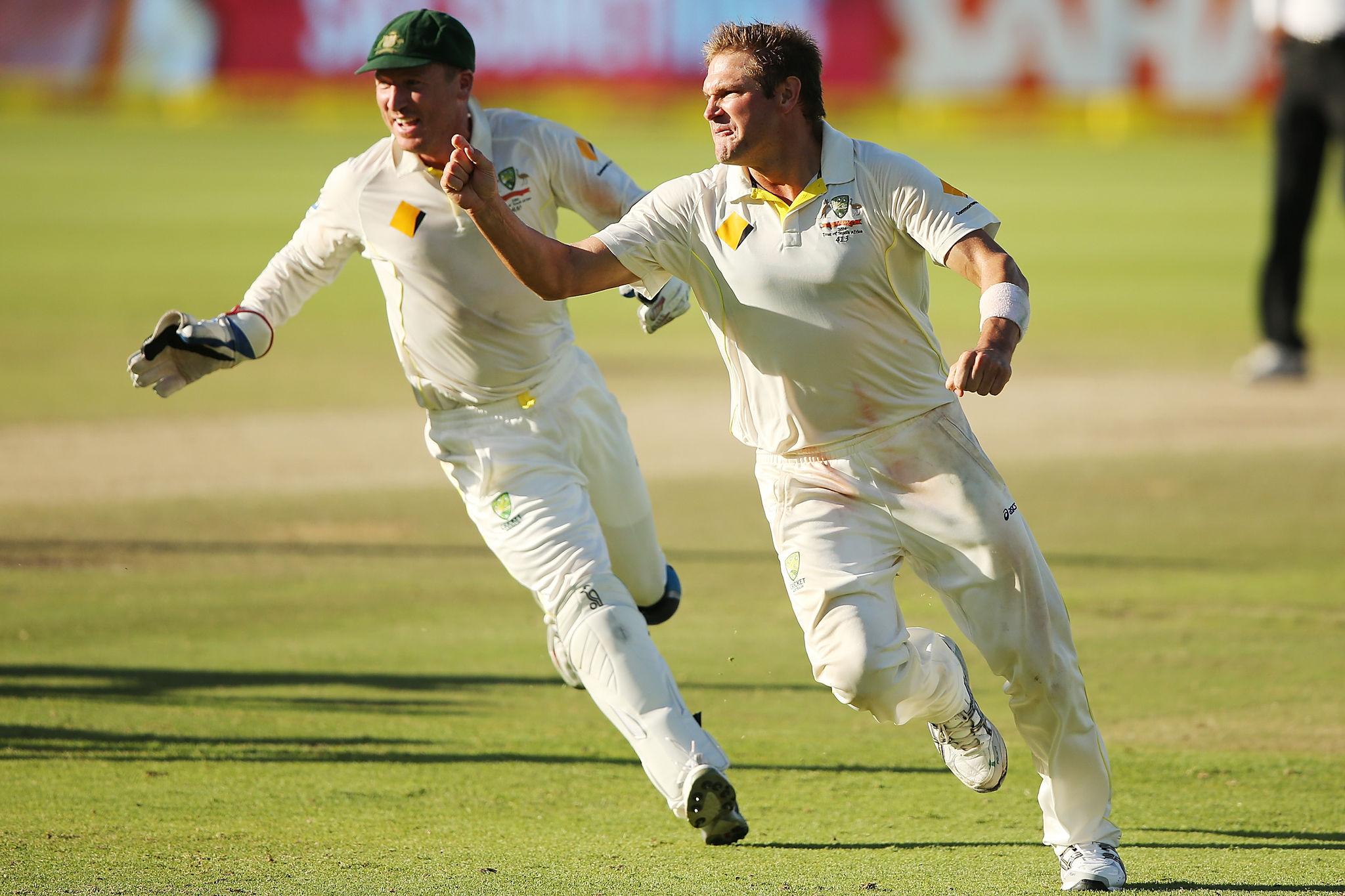
The Future
On 7 October 2026, Joburg Super Kings spent R2.9 million on an 18-year-old cricketer who was still attending school.
Jason Rowles, a talented young South African batter who also bowls left-arm spin, became the most expensive purchase at the SA20 auction. He attracted a higher price than former South Africa captain Faf du Plessis, who was bought for R2.7 million, and established international all-rounder Wiaan Mulder, who cost MI Cape Town R2.6 million.
It was quite a vote of confidence in a player who has barely begun his senior career.
Of course, that doesn’t mean Rowles is currently a better cricketer than either of them. It means somebody is willing to pay a substantial amount of money in the hope that he eventually becomes one.
And that is the difficulty with ranking young cricketers.
How much weight should we give to a teenager scoring double-centuries against international age-group opposition? How does that compare with a 23-year-old who is already taking wickets regularly in first-class cricket? And is a player who has already represented South Africa necessarily a better prospect than somebody who hasn’t?
South Africa has an interesting generation of young players. Dewald Brevis, Lhuan-dré Pretorius and Kwena Maphaka have already demonstrated their abilities on the international stage. Behind them are several less familiar names producing exceptional performances in domestic cricket, as well as teenagers who may still be several years away from fulfilling their potential.
I’ve ranked the 20 best South African cricketers aged 23 or younger on 9 October 2026.
The emphasis is on their potential to become successful international cricketers, rather than simply their current ability or domestic statistics. Age, performances against senior opposition, international recognition and the qualities that might distinguish a player at the highest level have all influenced my decisions.
My simple thought is that a 19-year-old who is tall and can bowl at 85 mph today is more exciting (and a better prospect for international success) than a 22-year-old who is Sam Curran’s height, tops out at 80 mph but has taken 20 domestic wickets.
20. Semal Pillay — 19 — Batsman
- Scored 111 from 163 deliveries against the Warriors in February 2026, his maiden first-class century, while still only 18.
- Has scored 340 runs at 37.77 in his first five first-class matches, all in Division One.
- Shared a substantial partnership with Slade van Staden as the Dolphins successfully chased 365 to beat the Warriors by two wickets.
Semal Pillay is perhaps the most speculative selection in my top 20.
Five first-class matches are hardly enough to establish somebody as a future international cricketer, particularly when a big chunk of his career runs have come from a single innings.
However, scoring a century against an established Division One attack before turning 19 is an achievement worth taking seriously.
The Warriors attack included Matthew Boast and Senuran Muthusamy, both of whom have considerably more professional experience than Pillay. It was not simply a case of a talented teenager scoring heavily against other youngsters.
There are inevitably questions about whether he can reproduce that performance consistently, and there is very little evidence of his abilities in limited-overs cricket.
Nevertheless, Pillay has already demonstrated that he can compete against professional opposition at an age when most cricketers are still making the transition from school cricket.
He narrowly takes the final place on my list.
19. Aphiwe Mnyanda — 22 — Left-arm fast bowler
- Was named Men’s Domestic Newcomer of the Season at Cricket South Africa’s 2026 awards.
- Took nine wickets at 22.11 in the 2025/26 T20 Challenge, with an economy rate of 7.24.
- Recorded figures of 2/48 against the Dolphins in February 2026, dismissing Marques Ackerman and Hanu Viljoen in a Division One one-day match.
Aphiwe Mnyanda is another promising young South African left-arm fast bowler, although his inclusion is based more on recent domestic improvement than exceptional performances at Under-19 level.
His T20 figures are particularly encouraging. Maintaining an economy rate comfortably below eight while taking wickets regularly is no small achievement in a format where even experienced international bowlers can struggle.
However, the most interesting aspect of Mnyanda’s career may be his development over the past couple of seasons.
His performances have earned national recognition, suggesting that he is beginning to establish himself as a reliable professional bowler rather than simply a promising youngster.
South Africa has considerable fast-bowling depth, and Mnyanda’s current record does not suggest that he is on the verge of international selection.
But his left-arm angle offers something different, and another productive season could considerably strengthen his position among the country’s emerging fast bowlers.
18. Muhammad Bulbulia — 20 — Batsman
- Captained South Africa at the 2026 Under-19 World Cup, held in Namibia and Zimbabwe.
- Scored 108 against Tanzania, sharing a 201-run partnership with Jason Rowles as South Africa amassed 397/5.
- Made 98 from 206 deliveries against England Under-19 in the opening Youth Test in July 2026.
Muhammad Bulbulia is one of several young South African batsmen whose performances suggest that they have the temperament to succeed in longer-format cricket.
His innings against Tanzania helped South Africa record their highest-ever total at an Under-19 World Cup.
However, the performance against England is arguably more interesting when attempting to assess his international potential.
Scoring almost a century while occupying the crease for more than 200 deliveries requires a rather different approach from accumulating runs against a weaker attack in a high-scoring one-day match.
The two innings demonstrate an ability to adapt to different situations.
Bulbulia has also been identified as a wicketkeeping option, although he has not always performed that role for South Africa’s age-group sides. For now, I have assessed him primarily as a batsman.
His senior domestic career remains at an early stage, but his leadership experience and ability to construct substantial innings make him an interesting prospect.
17. Bayanda Majola — 19 — Fast bowler
- Took 4/47 against England Under-19 in the opening Youth Test at Beckenham in July 2026.
- His wickets included Ben Dawkins, Jacob Blades, Will Bennison and Caleb Falconer, helping dismiss England for 220.
- Was selected for South Africa’s 2026 Under-19 World Cup squad, before gaining further international age-group experience during the England tour.
Bayanda Majola is another member of South Africa’s promising generation of young fast bowlers.
His performances against England provide particularly useful evidence of his abilities. Taking four wickets in an innings against an international age-group side is encouraging, especially when those wickets come from the opposition’s specialist batsmen.
However, Majola faces a familiar challenge.
The difference between bowling to teenagers and consistently dismissing experienced first-class batsmen is substantial. There are plenty of players who dominate international youth cricket without ever establishing themselves as successful professionals.
Majola has not yet accumulated the senior evidence that supports some of the fast bowlers ranked above him.
Nevertheless, he is only 19 and has already demonstrated his wicket-taking ability against talented young international opposition.
The next couple of domestic seasons should give me a much clearer indication of whether he can develop into a genuine contender for the South African side.
16. Meeka-eel Prince — 22 — Wicketkeeper-batsman
- Scored 492 runs at 37.85 during the 2025/26 Division One four-day competition.
- Recorded a highest score of 142, finishing 12th in the competition’s run-scoring table.
- Was selected for South Africa Emerging’s 2025 tour of Bangladesh, having also been named in Cricket South Africa’s Emerging Academy.
Meeka-eel Prince is one of the more interesting young wicketkeeping prospects in South African domestic cricket.
His batting record is encouraging, particularly because he has already demonstrated an ability to score substantial runs against Division One opposition.
That distinguishes him from several young batsmen whose impressive statistics have been accumulated primarily against weaker Division Two attacks.
However, assessing wicketkeepers is considerably more complicated than simply comparing batting averages.
An international wicketkeeper needs to be capable of performing consistently behind the stumps, often against fast bowling of the highest quality. A good batting record does not necessarily establish that a player possesses those skills.
Prince also faces competition from other promising young wicketkeepers, including Slade van Staden and Joshua van Biljon.
Nevertheless, his combination of age, senior experience and batting ability gives him a reasonable claim to being among the country’s leading young wicketkeeper-batsmen.
15. Tristan Luus — 21 — Fast bowler
- Took 21 wickets at 31.76 in six Division One first-class matches during 2025/26.
- Claimed seven wickets against Boland, returning figures of 4/42 and 3/102.
- Took 5/77 against the Warriors, dismissing established domestic batsmen including Matthew Breetzke, JP King and Senuran Muthusamy.
Tristan Luus has already demonstrated that he can take wickets against experienced professional batsmen.
His five-wicket haul against the Warriors is particularly encouraging, given the quality of the players he dismissed.
That provides a much stronger indication of potential international success than simply taking large numbers of wickets against other teenagers.
Luus was also selected for Cricket South Africa’s Emerging Academy in 2025, suggesting that his abilities had already attracted attention before his subsequent first-class performances.
His overall bowling average is not particularly exceptional, especially when compared with some of the other young fast bowlers on my list.
However, he is still only 21 and has time to improve his consistency.
South Africa has no shortage of young fast-bowling talent, so competition for international recognition will be considerable.
Luus has at least demonstrated that he deserves to be part of that conversation.
14. Liam Alder — 23 — Slow left-arm orthodox spinner
- Was named the overall Division Two MVP for 2025/26 by the South African Cricketers’ Association.
- Took 30 first-class wickets during the season (third highest in the Division), with a best innings return of 5/56.
- Also averaged 35.22 with the bat in four-day cricket, scoring two half-centuries.
Liam Alder is the only specialist spinner in my top 20.
That is interesting in itself, particularly given the number of young fast bowlers appearing throughout the ranking.
Alder enjoyed an outstanding 2025/26 season with the Garden Route Badgers, contributing significantly with both bat and ball.
His MVP award is especially noteworthy because it recognises performances across multiple formats rather than simply an impressive first-class bowling average.
However, there is an important distinction between taking wickets in Division Two and succeeding as an international spinner.
Batsmen at the highest level are generally better equipped to defend accurately, manipulate the field and punish deliveries that offer even a small opportunity to score.
Alder will therefore need to demonstrate that his bowling can succeed consistently against stronger opposition.
Nevertheless, his ability to take wickets while contributing useful lower-order runs makes him an attractive prospect.
South Africa has produced plenty of outstanding fast bowlers. Finding a young spinner capable of offering genuine international quality could prove just as valuable.
13. Wian Ruthven — 20 — Batsman
- Scored 458 runs at 91.60 in just four matches during the 2025/26 Division Two four-day competition.
- Made a career-best 194 against Mpumalanga in January 2026, his maiden first-class century.
- Shared a 260-run partnership with Jason Niemand during that innings, having previously recorded consecutive half-centuries.
Wian Ruthven produced one of the most extraordinary domestic batting records of any young South African cricketer during 2025/26.
A first-class average approaching 100 is unusual at any level, and achieving it at 20 is particularly encouraging.
However, there are two important qualifications.
First, Ruthven played just four matches, meaning the average was calculated over a relatively small number of innings. Second, his performances came in Division Two, where the standard of bowling is not necessarily comparable with South Africa’s top domestic competition.
Those considerations explain why I haven’t placed him considerably higher.
Nevertheless, scoring almost 200 against professional opposition demonstrates the concentration required to construct substantial innings.
If Ruthven can reproduce even a reasonable proportion of his 2025/26 form against stronger bowling attacks, he could climb considerably higher in future versions of this ranking.
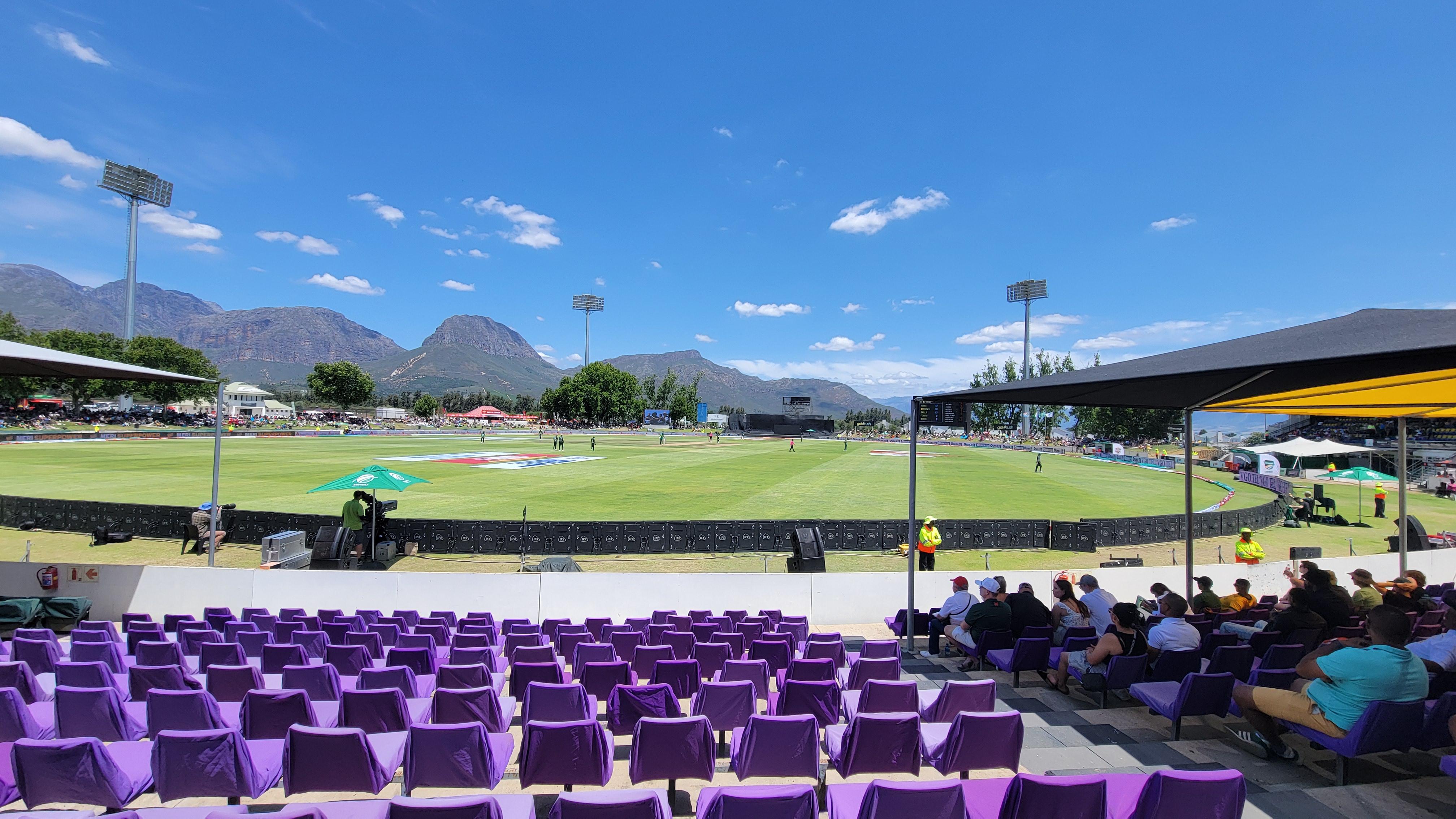
12. George van Heerden — 22 — Batsman
- Scored 444 runs at 55.50 in six matches during the 2025/26 Division Two four-day competition.
- Made an unbeaten 221 against Limpopo, establishing a new individual first-class scoring record for the Garden Route Badgers.
- Captained South Africa Emerging during their 2025 tour of Bangladesh, having previously captained South Africa Under-19.
George van Heerden has already demonstrated both batting ability and leadership qualities.
His double-century against Limpopo is particularly impressive because constructing an innings of that size requires more than simply possessing an attractive range of shots. It demands patience, concentration and an ability to assess different phases of a match.
Van Heerden also has greater senior experience than several of the younger batting prospects in my ranking.
His appointments as captain of South Africa’s Under-19 and Emerging sides suggest that he has been trusted with responsibility throughout his development.
Nevertheless, his most impressive recent batting performances have come in Division Two, and there is an obvious question about how effectively those abilities will translate to stronger opposition.
If Van Heerden can establish himself as a consistent Division One performer, he may eventually attract serious international attention.
For now, his combination of substantial run-scoring and leadership experience earns him 12th place.
11. Matthew Boast — 23 — Fast bowler
- Finished as the leading wicket-taker in the 2025/26 Division One four-day competition, with 43 wickets in eight matches.
- Took a five-wicket haul against the Lions during the February 2026 four-day final.
- Had previously taken ten wickets at 20.90 while representing South Africa at the 2022 Under-19 World Cup.
Matthew Boast is one of the strongest senior domestic performers in my ranking.
Taking more than 40 wickets in eight first-class matches is a remarkable achievement, particularly against Division One opposition.
It also gives me considerably more evidence of his ability than is available for many of the teenagers ranked above him.
Boast has already demonstrated that he can dismiss professional batsmen regularly, rather than simply dominating at international age-group level.
However, there is still a substantial difference between being an outstanding domestic fast bowler and establishing yourself in international cricket.
The best international batsmen are generally more disciplined, and qualities that prove extremely effective in first-class cricket do not always translate to Test or T20 international success.
Boast is also 23, meaning he has less development time ahead of him than some of my younger selections.
Nevertheless, if he continues taking wickets at anything approaching his current rate, South Africa will find it increasingly difficult to ignore him.
10. Andile Simelane — 23 — Fast-bowling all-rounder
- Scored 110 from 70 deliveries against Zimbabwe Emerging in August 2024, including seven sixes.
- Took 5/56 against Bangladesh Emerging in May 2025, helping South Africa secure a ten-run victory.
- Has already represented South Africa in T20 internationals, giving him senior international experience.
Andile Simelane is one of the more difficult players to categorise.
He has regularly been described as an all-rounder, but his senior batting record suggests that fast bowling is currently his strongest route into the national side.
Nevertheless, there is clearly considerable ability in both disciplines.
His century against Zimbabwe Emerging demonstrated his capacity for explosive lower-order hitting, while his five-wicket performance against Bangladesh Emerging showed that he can produce match-winning spells with the ball.
The challenge for any genuine international all-rounder is being good enough in at least one discipline to justify selection.
Simelane’s batting has not yet been sufficiently consistent to establish him as a potential international number six or seven.
However, his existing international experience distinguishes him from many of the other players on my list.
If he can develop greater consistency with the bat without compromising his bowling, Simelane could eventually become a particularly valuable player for South Africa.
9. Dewan Marais — 21 — Batsman
- Scored 377 first-class runs at 75.40 in five matches during the 2025/26 Division Two four-day competition.
- Also accumulated 309 List A runs at a strike rate of 111.15 during the 2025/26 one-day competition.
- Recorded a highest first-class score of 180 not out and earned selection for South Africa Emerging.
Dewan Marais enjoyed an exceptional 2025/26 domestic season.
What makes his achievements particularly interesting is that he demonstrated an ability to score heavily in both red-ball and white-ball cricket.
There are plenty of domestic batsmen capable of accumulating runs in four-day matches, and plenty who can score quickly in limited-overs cricket.
Doing both suggests a broader range of batting skills that could prove valuable at international level.
However, Marais has produced much of his success in Division Two, where the overall quality of bowling is generally lower than in South Africa’s top domestic competition.
His performances are therefore difficult to compare directly with those of players already succeeding in Division One.
Nevertheless, Cricket South Africa has recognised his potential through the Emerging programme.
The next challenge is demonstrating that he can produce similar performances against stronger attacks.
If he does, his ninth-place ranking could eventually look rather conservative.
8. Nqobani Mokoena — 20 — Fast bowler
- Took 13 wickets in ten matches for Paarl Royals during the 2026 SA20, including best figures of 4/34 against Sunrisers Eastern Cape.
- Claimed four wickets on his South Africa A debut against England Lions in June 2026, helping South Africa A win the match.
- Made his T20 international debut against New Zealand in March 2026, subsequently progressing into South Africa’s ODI side.
Nqobani Mokoena has already made the transition from promising domestic cricketer to South African international.
His performances in the SA20 were particularly encouraging because he demonstrated that he could take wickets against experienced professional batsmen in one of the world’s leading franchise competitions.
That provides considerably stronger evidence of international potential than simply performing well against other young cricketers.
His subsequent progress into South Africa A and the senior international side suggests that selectors have been similarly impressed.
There is still considerable competition for places in South Africa’s fast-bowling attack, particularly given the number of talented young bowlers emerging through the domestic system.
However, Mokoena is already demonstrating the ability to compete against experienced opposition.
At 20, he has plenty of time to develop his skills further, and he could become an important member of South Africa’s bowling attack over the next decade.
7. Jorich van Schalkwyk — 19 — Batsman
- Became the first batsman to score a double-century in men’s Youth ODI cricket, making 215 from 153 balls against Zimbabwe Under-19 in July 2025.
- Had scored 164 not out against Bangladesh Under-19 just three days earlier, breaking South Africa’s previous individual Youth ODI scoring record.
- Made his maiden senior List A century in February 2026, scoring 142 from 143 balls for South Africa Emerging against Border.
Jorich van Schalkwyk has produced some extraordinary performances over the past couple of years.
Scoring 164 in a Youth ODI would ordinarily be a career-defining achievement for a young batsman. Breaking that record just three days later with a double-century is something else entirely.
However, international age-group records can be misleading. The difference between the strongest and weakest Under-19 sides is considerable, and a player capable of dominating junior cricket will not necessarily enjoy similar success against professionals.
That is why Van Schalkwyk’s subsequent senior List A century is particularly encouraging.
It suggests that his ability to construct substantial innings is beginning to translate into senior cricket.
At only 19, he has considerable time to develop.
If his early performances are any indication, Van Schalkwyk could become one of the most exciting young top-order batsmen in South African cricket.
6. JJ Basson — 18 — Left-arm fast bowler
- Took 11 wickets for 99 runs on his first-class debut for the Lions against Boland in September 2026.
- His figures of 7/62 and 4/37 were the best match figures by a South African fast bowler on first-class debut, breaking a record dating back 132 years.
- Took 3/50 and 7/73 against England Under-19 in the opening Youth Test in July 2026.
There are few better ways for a young fast bowler to announce himself than taking 11 wickets on first-class debut.
JJ Basson managed exactly that in September 2026.
He was still at school.
His performance was particularly impressive because it came against professional opposition, rather than other teenagers.
Basson is a tall left-arm fast bowler who can move the ball through the air, providing a different threat from many conventional right-arm seamers.
His early performances have even attracted comparisons with some of South Africa’s outstanding previous generations of fast bowlers.
Naturally, one exceptional first-class match does not guarantee an international career.
Fast bowlers must develop the strength and consistency required to maintain their performances over several seasons, and injuries can dramatically alter a promising career.
Nevertheless, taking 11 wickets against professional opposition at 18 is an extraordinary achievement.
Basson is one of the most exciting young fast-bowling prospects in the country.
5. JP King — 23 — Batsman/Off-spinner
- Has accumulated 868 first-class runs at 54.25 across eight matches, including two centuries and five half-centuries.
- Scored 123 from 230 deliveries against the Lions in the February 2026 Division One four-day final.
- Made 203 runs at a strike rate of 161.11 in the 2025/26 domestic T20 Challenge.
JP King is one of the less familiar names near the top of my ranking, but his domestic statistics are particularly encouraging.
His first-class performances demonstrate an ability to occupy the crease and accumulate substantial runs against experienced professional bowlers.
His T20 record, meanwhile, suggests that he is capable of scoring quickly when required.
It is the combination of those two skills that makes King particularly interesting.
Plenty of young batsmen can score heavily in four-day cricket, while others specialise in aggressive limited-overs batting. Doing both suggests a range of abilities that could eventually prove valuable internationally.
His List A performances have been considerably less impressive, so there is still work to do.
King also has relatively little first-class experience, meaning his outstanding average is based on a limited number of matches.
Nevertheless, his achievements against Division One opposition make him one of the country’s strongest young batting prospects.
4. Jason Rowles — 18 — Batsman/Left-arm spinner
- Scored 201 against England Under-19 at Hove in July 2026, during a tour on which he captained South Africa.
- Was South Africa’s leading run-scorer at the 2026 Under-19 World Cup, accumulating 280 runs in five innings.
- Became the most expensive purchase at the October 2026 SA20 auction, joining Joburg Super Kings for R2.9 million.
There is a danger that Jason Rowles’s remarkable SA20 auction fee will overshadow what he has actually achieved on a cricket field.
Fortunately, there is plenty to discuss.
During the Under-19 World Cup, he demonstrated an ability to score substantial runs in limited-overs cricket.
He subsequently produced a double-century in English conditions, an encouraging achievement for an 18-year-old facing an England side containing several talented young county cricketers.
Rowles also bowls slow left-arm orthodox spin, having taken 3/20 in a youth ODI against England during the same tour.
His batting currently appears to be his stronger discipline, but his bowling gives him another potential route into the international side.
There is obviously considerable risk involved in paying R2.9 million for somebody who has barely begun his senior career.
However, professional franchises increasingly recognise the potential value of identifying exceptional talent before it becomes established.
Rowles has already demonstrated enough to suggest that the excitement surrounding him is not entirely unreasonable.
3. Kwena Maphaka — 20 — Left-arm fast bowler
- Took 21 wickets at 9.71 at the 2024 Under-19 World Cup and was named Player of the Tournament.
- Became the first bowler to take three five-wicket hauls at a single Under-19 World Cup, including 6/21 against Sri Lanka.
- Took 4/20 against Australia in August 2025, having previously been recorded bowling at speeds around 150 km/h.
South Africa has produced enough outstanding fast bowlers to make comparisons with previous generations almost inevitable.
Kwena Maphaka has given people plenty of reasons to get excited.
His performances at the 2024 Under-19 World Cup were exceptional, but plenty of young bowlers have dominated age-group cricket without subsequently establishing themselves internationally.
Maphaka possesses something that distinguishes him from many of those players – he bowls genuinely quickly.
Left-arm fast bowlers capable of reaching speeds around 150 km/h are relatively unusual, even in international cricket.
That immediately gives Maphaka an advantage over many other young prospects whose success depends more heavily on movement or accuracy.
He has also begun demonstrating his abilities against senior international opposition.
There are inevitably questions about workload, fitness and whether he can maintain his pace over longer spells.
Nevertheless, Maphaka already possesses one of the fundamental attributes that cannot easily be taught.
If he remains fit and continues developing his control, he has the potential to become one of the outstanding fast bowlers in international cricket.
2. Dewald Brevis — 23 — Batsman
- Scored 506 runs at 84.33 at the 2022 Under-19 World Cup, breaking Shikhar Dhawan’s record for the most runs at a single edition of the tournament.
- Smashed 125 not out from 56 deliveries against Australia in August 2025, the highest individual score by a South African in men’s T20 internationals.
- Scored 101 from 56 balls in the January 2026 SA20 final for Pretoria Capitals, although Sunrisers Eastern Cape ultimately won the match.
Dewald Brevis first attracted international attention at the 2022 Under-19 World Cup.
His extraordinary performances inevitably resulted in comparisons with AB de Villiers, whose attacking style and ability to score in almost any direction had previously transformed South African limited-overs batting.
Comparisons of that kind are rarely helpful to young players.
However, Brevis has already demonstrated that he possesses some exceptional batting abilities.
His century against Australia in August 2025 was particularly impressive, demonstrating that he could dominate established international bowlers rather than simply weaker domestic attacks.
He followed that with another memorable innings in the SA20 final, almost single-handedly keeping Pretoria Capitals competitive while wickets fell around him.
Brevis is no longer simply a promising youngster.
He has already demonstrated the capacity to produce outstanding performances at international level.
The remaining challenge is consistency, particularly in longer-format cricket.
At 23, he could still have another decade of international cricket ahead of him.
He would have topped my ranking were it not for the extraordinary achievements of another young South African batsman.
1. Lhuan-dré Pretorius — 20 — Batsman/Wicketkeeper
- Scored 188 not out from 79 balls against the Knights in October 2026, breaking Chris Gayle’s record for the highest individual score in men’s T20 cricket.
- Made 153 on his Test debut against Zimbabwe in June 2025, becoming South Africa’s youngest Test centurion and the youngest player to score 150 on Test debut.
- Finished as the leading run-scorer in the 2025 SA20, accumulating 397 runs at a strike rate of 166.80 while still only 18.
It is difficult to imagine a more impressive collection of achievements for a 20-year-old cricketer.
In January 2025, Lhuan-dré Pretorius made his SA20 debut for Paarl Royals and scored 97.
By the end of the competition, he was its leading run-scorer.
A few months later, he made his Test debut against Zimbabwe and scored 153, breaking a South African record that had stood for more than 60 years.
Then, in October 2026, he broke one of the most famous records in T20 cricket, surpassing Chris Gayle’s unbeaten 175 with an extraordinary innings for the Titans.
The combination of those achievements is what makes Pretorius particularly special.
There are plenty of talented young batsmen capable of scoring quickly in T20 cricket, and others who appear technically equipped for the demands of Test cricket.
Very few demonstrate such exceptional ability in both formats at such a young age.
Pretorius also has wicketkeeping experience, although it remains to be seen whether that will form a significant part of his international future.
His development will not necessarily be straightforward. He endured a less productive second SA20 season, demonstrating that even exceptional young players experience fluctuations in form.
Nevertheless, Pretorius has already achieved things that most professional cricketers never manage.
At just 20, he has demonstrated the potential to become one of the outstanding South African batsmen of his generation.
He takes first place in my ranking.
Honourable mentions
There were several players who came close to making my final 20.
Michael Kruiskamp was perhaps the unluckiest omission. The 18-year-old left-arm fast bowler represented South Africa Under-19 in England during 2026 and has begun gaining senior domestic experience.
Slade van Staden has a stronger established first-class record than several of our selected players, averaging 37.41across his first 18 matches. However, at 23, he has less time on his side than some of the teenage prospects.
Steve Stolk attracted considerable attention at the 2024 Under-19 World Cup thanks to his aggressive batting. His subsequent senior performances have been less impressive, but there is still plenty of time for him to establish himself.
Oliver Whitehead offers useful pace-bowling all-round potential, while Joshua van Biljon, Richard Seletswane and Vihan Pretorius are other promising young players worth following.
The fact that several of these players missed out demonstrates how difficult it is to compare outstanding age-group performances with established senior domestic records.
What does this ranking tell us about South African cricket?
There are three things that stand out.
1. South Africa has an extraordinary number of promising young fast bowlers
Kwena Maphaka, JJ Basson, Nqobani Mokoena, Matthew Boast, Andile Simelane, Tristan Luus, Bayanda Majola and Aphiwe Mnyanda all feature in the top 20.
That is eight players whose principal route into international cricket is likely to be fast bowling.
Some have already represented South Africa, while others are only beginning their professional careers.
There are also several left-arm options, including Maphaka, Basson, Majola and Mnyanda.
Not all of these bowlers will become successful internationals. Some will struggle with injuries, others may find that their domestic skills do not translate to Test or T20 international cricket, and there simply aren’t enough places in the South African side for all of them.
Nevertheless, it is an impressive group of prospects.
2. There are relatively few obvious specialist spinners
Liam Alder is the only specialist spinner in the ranking, although Jason Rowles offers useful left-arm spin and JP King can contribute off-spin.
That imbalance is interesting. South Africa has traditionally been associated with fast bowling, but an international side also needs reliable spin options, particularly when touring the subcontinent.
It may be that I’m overlooking talented young spinners whose domestic performances have not yet attracted much attention.
Alternatively, there may genuinely be fewer outstanding young spin-bowling prospects coming through the South African development system.
Either way, it is something worth monitoring over the next few years (and it is a similar story when you look at England’s young spinners).
3. Exceptional teenage talent is attracting serious investment
Perhaps the most interesting development is the willingness of professional franchises to invest heavily in players before they have established themselves at senior level.
Jason Rowles’s R2.9 million SA20 contract is the clearest example.
Lhuan-dré Pretorius had already demonstrated the potential rewards of backing a teenager when he finished as the SA20’s leading run-scorer in 2025.
There is obviously a considerable risk involved. Under-19 cricket is full of players who looked exceptional at 17 or 18 but never fulfilled their early promise.
Nevertheless, it is encouraging that young South African cricketers can attract such substantial opportunities relatively early in their careers.
The challenge is ensuring that the excitement surrounding them does not exceed the development required to become successful international players.
Frequently asked questions
Who is the best young South African cricketer in 2026?
I’ve ranked Lhuan-dré Pretorius first, ahead of Dewald Brevis and Kwena Maphaka. Brevis has already demonstrated exceptional ability in international cricket, including his unbeaten 125 against Australia in August 2025.
Who is the best young South African fast bowler?
Kwena Maphaka takes first place among the fast bowlers in my ranking. He was named Player of the Tournament at the 2024 Under-19 World Cup and has already demonstrated genuine pace and wicket-taking ability in senior international cricket.
Who is the youngest player in the ranking?
Jason Rowles is the youngest player in my top 20. Born on 14 April 2008, he is seven days younger than JJ Basson, who was born on 7 April 2008. Both were 18 on our reference date of 9 October 2026.
Which young South African cricketers have already played international cricket?
Several players in my ranking have already represented South Africa at senior international level, including Dewald Brevis, Lhuan-dré Pretorius, Kwena Maphaka, Andile Simelane and Nqobani Mokoena.
Which young South African cricketers have the greatest potential?
Beyond the established international players, Jason Rowles, JJ Basson, Jorich van Schalkwyk and JP King are particularly interesting prospects. All four have produced performances suggesting they could eventually become important members of the South African side.


Leave a Reply